



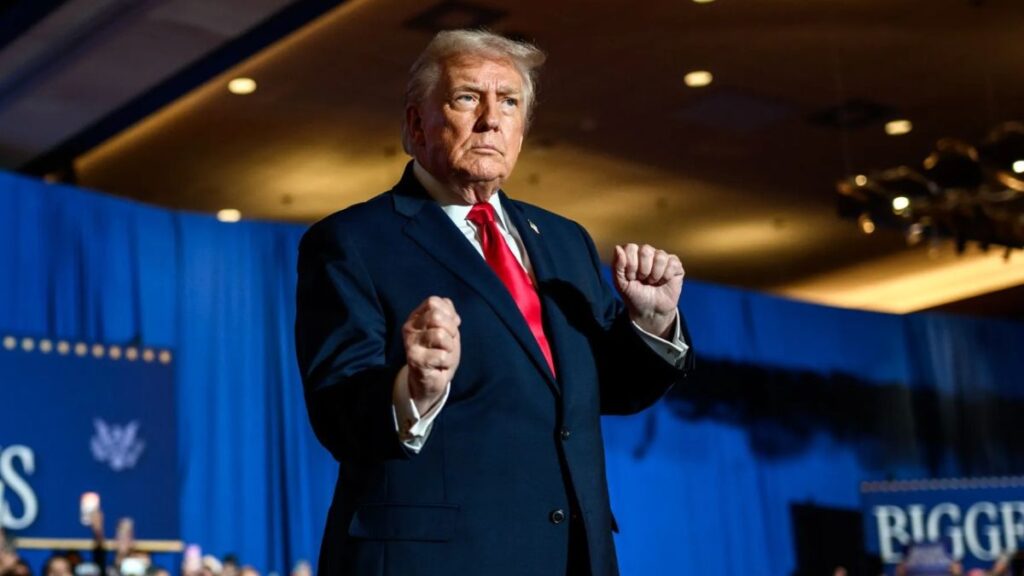
President Donald Trump is back on the road, playing to big crowds from the stage, and soaking in the energy that helped define his political rise. MAGA supporters are thrilled to see him in rally mode again, but inside his circle, the comeback is creating a new problem.
That dynamic was on display Tuesday night in Mount Pocono, Pennsylvania, where the White House and allies wanted Trump to deliver a clear affordability message for voters stressed about prices.
Instead, Trump drifted off script and revived a line he used earlier this year, that American kids should be happy with “two or three” dolls. Politico reported that the remark stirred new concerns among some Trump loyalists and advisers, who worry the president is more comfortable projecting confidence about the economy than acknowledging the financial squeeze many voters say they feel.
Politico also quoted an anonymous former senior Trump adviser who said domestic events are good for the president, but added, “unfortunately I just don’t think Trump is temperamentally capable of reversing himself and saying, ‘Yes, affordability is a concern.’ He’s stubborn.”
The Pennsylvania trip was pitched as a test run of Trump’s affordability argument, taking claims he has made in the Oval Office and on social media and placing them into a campaign-style setting. AP described the rally as a moment where Trump tried to emphasize combating inflation, even as the issue has weighed on his popularity.
President Donald Trump defended his economic agenda and took aim at Democrats for their ‘affordability’ focus at a speech in Mount Pocono, Pennsylvania. pic.twitter.com/KBqPwlOtJq
— Taylor “Patriot” (@amazinggdm) December 10, 2025
Trump used the event to defend his economic record amid frustration over rising prices, while weaving in tariffs and other themes, and at times straying into unrelated topics as he typically does.
Outside the rally bubble, voters interviewed by AP captured the concerns of the cost of living. One attendee, Heddy, 72, told the outlet, “Once the prices get up for food, they don’t ever come back down. That’s just the way I feel. I don’t know how the hell he would do it.”
Another voter, Suzanne Vena, 66, said she blames Trump’s tariffs for making life more expensive and recalled past promises on inflation, adding, “That’s what we were originally told,” and, “Did I believe it? That’s another question. I did not.”
In the same AP report, first-term Republican Rep. Rob Bresnahan, who represents the district and spoke ahead of Trump, framed the pressure in blunt terms, “aren’t asking for partisan arguments, they’re asking for results.”
Politico reported that the White House is increasingly relying on other messengers, including Vice President JD Vance and Treasury Secretary Scott Bessent, to carry the affordability message more consistently, as Trump’s rally instincts pull him toward bragging about economic stewardship rather than validating voter anxiety.
If voters remain angry about day-to-day costs, next year’s midterm elections could become a venue for punishing the party controlling Congress and the White House, and rally clips that sound dismissive can harden that mood. Politico described Trump’s return to the trail as a gamble, as likely to generate campaign fodder for Democrats as it is to motivate his base.
Meanwhile, reporting on the Pennsylvania rally has emphasized the same issue, Trump insists he is fixing affordability, but the issue keeps resurfacing as a measure of whether voters believe it.


