

Republican lawmakers are moving fast to immortalize slain conservative star Charlie Kirk in the halls of Congress, floating a plan to install a statue of the Turning Point USA founder inside the U.S. Capitol. In a draft letter to Speaker Mike Johnson, Rep. Anna Paulina Luna urged leadership to greenlight a Kirk monument as a “permanent testament” to his life and message following his assassination this week at Utah Valley University.
Luna’s appeal, circulating on Capitol Hill, argues that honoring Kirk would signal that political disagreements must never be answered with violence, and that his memory should stand as a symbol of courage and sacrifice.
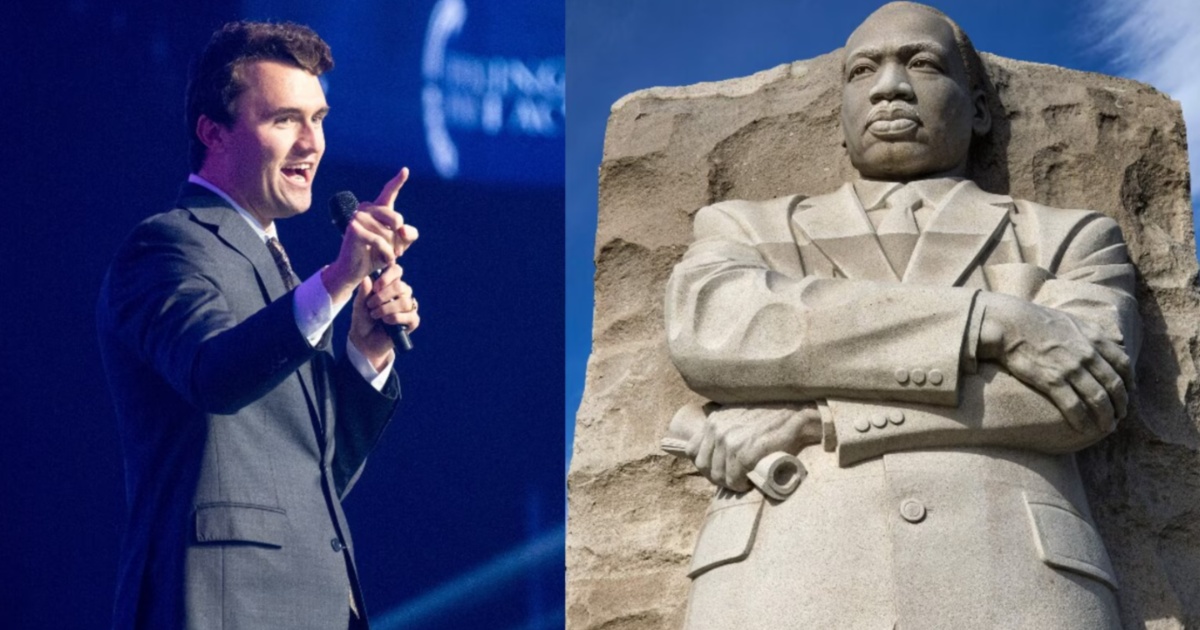
I asked Rep. Andrew Clyde about putting a statue of Kirk in the Capitol and he said it makes sense because “we have a statue of MLK in the Capitol, don’t we?” https://t.co/8ycwFNPZzS
— Reese Gorman (@reesejgorman) September 11, 2025
The idea already has backers. Asked about the push, Rep. Andrew Clyde supported the concept and drew a pointed comparison to existing tributes, telling a reporter, “We have a statue of MLK in the Capitol, don’t we?” The remark instantly touched off debate online, with supporters cheering a rapid memorial for a conservative icon and critics blasting the suggestion as inflammatory given Kirk’s past comments about Martin Luther King Jr.
Kirk, 31, was shot from a distant, elevated position while speaking to students in Orem, Utah, on Wednesday, in an attack Utah’s governor labeled a political assassination. Investigators recovered what they believe is the bolt-action rifle used in the killing and are analyzing it, while a sweeping manhunt continues. Authorities have released additional details as they sift tips and forensics, but no suspect has been publicly identified.
The statue drive lands amid raw national emotions. Thousands watched the shooting unfold on video, tributes poured in from conservative leaders, and federal agents asked the public for help as they track the gunman. The continuing investigation and the Capitol memorial push are now moving in parallel, ensuring the Kirk story stays squarely in the political spotlight.
We need a Charlie Kirk Memorial next to the MLK Jr Memorial. pic.twitter.com/ErYpyF2VaR
— Whitfield (@ReallyWhitty) September 11, 2025
Fueling the uproar is Kirk’s own history with MLK. In 2024, he drew heavy criticism after denigrating King at a Turning Point gathering, calling him “awful” and questioning landmark civil-rights laws, a jarring reversal from earlier years when he praised King as a hero. That about-face, widely reported at the time, is now resurfacing as Republicans cite MLK while pushing to place Kirk in the Capitol.
Luna’s letter frames the memorial as both mourning and message, a stand against political violence and a tribute to a conservative figure who, in her telling, galvanized a generation on campuses nationwide. The draft urges Johnson to act quickly, saying a Kirk statue would embody courage, sacrifice, and a commitment to “the fight for truth.” Other Republicans have echoed that sentiment, arguing the Capitol should reflect contemporary leaders lost to violence, not just figures from distant eras.
Charlie Kirk is a father and a husband. He is a human. I don’t care if you politically disagree with him nothing justifies this sick act. pic.twitter.com/FuygHfLRdm
— kira 👾 (@kirawontmiss) September 10, 2025
Democrats and civil-rights advocates are already signaling resistance, questioning whether Congress should enshrine a provocateur whose rhetoric frequently inflamed culture-war battles. They also note that memorials in the Capitol complex typically follow lengthy procedures and broad consensus, a tall order in today’s climate. Even some on the right concede that any fast-track effort could harden partisan lines and overshadow grief with a fresh brawl over symbolism.
For now, the quest for a statue and the search for a killer are unfolding at once, each stoking the other. If Johnson entertains the proposal, the fight over who gets honored in America’s most storied building will roar back, this time with Charlie Kirk at the center of a culture war he helped define.