


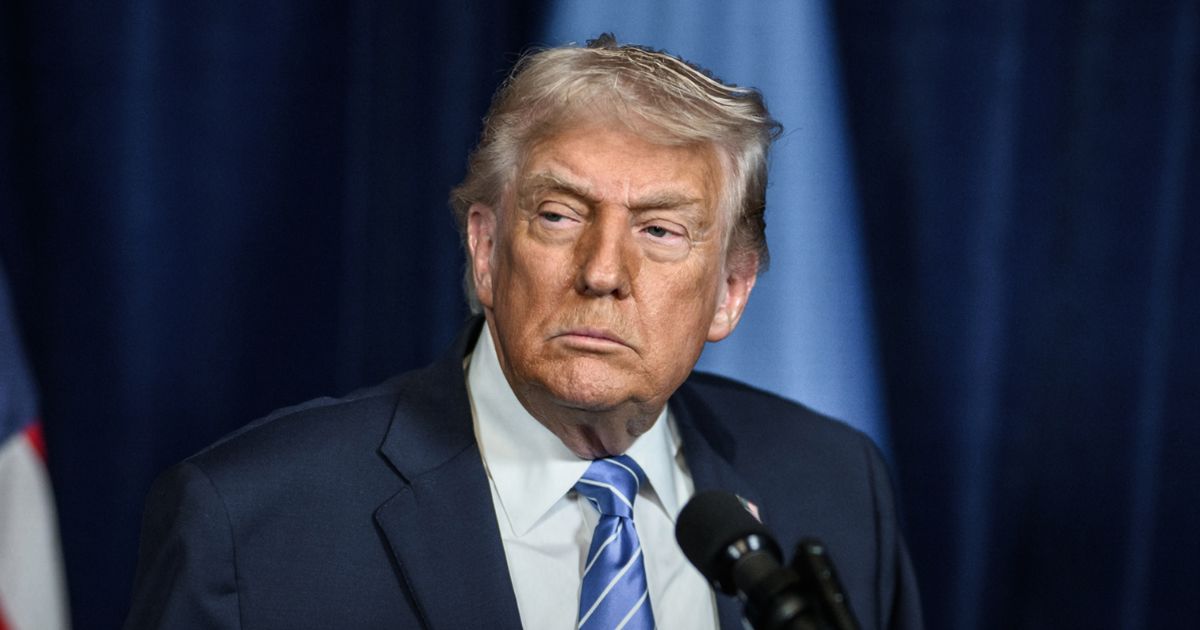
President Donald Trump has filed a $5 billion lawsuit against JPMorgan Chase and its CEO Jamie Dimon, accusing the nation’s largest bank of cutting off his accounts for political reasons.
The lawsuit was filed Thursday in state court in Miami-Dade County, Florida, and centers on JPMorgan’s decision to close Trump’s personal and business accounts in early 2021 after decades as a client. Trump alleges the closures were politically motivated and tied to what the lawsuit calls the bank’s desire to distance itself from him after the January 6 Capitol riot and his departure from the White House.
“Plaintiffs are confident that JPMC’s unilateral decision came about as a result of political and social motivations,” the lawsuit states, accusing the bank of acting on “unsubstantiated, ‘woke’ beliefs,” per CNBC.
BREAKING💥: President Trump has filed a $5 billion lawsuit against JPMorgan Chase and CEO Jamie Dimon in Florida state court, accusing the bank of politically motivated debanking by terminating his hospitality accounts in 2025 after 40 years of service.
The suit alleges the… pic.twitter.com/ZbThMZYYKR
— Melissa Hallman (@dotconnectinga) January 22, 2026
The suit argues JPMorgan believed “the political tide at the moment favored” dropping Trump and his affiliated entities, and claims the decision reflects a broader trend of financial institutions cutting off customers over political views.
Trump and the other plaintiffs are seeking at least $5 billion in civil damages.
At the time of the incident, the bank notified Trump and his businesses in February 2021 that their accounts would be closed, giving them 60 days’ notice before the decision took effect. The suit claims JPMorgan did not provide a clear explanation at the time.
Trump’s filing also says he personally contacted Dimon about the closures and was told the CEO would look into the matter, but that Dimon never followed up.
JPMorgan pushed back quickly. “While we regret President Trump has sued us, we believe the suit has no merit,” JPMorgan spokeswoman Patricia Wexler said in a statement to CNBC. “We respect the President’s right to sue us and our right to defend ourselves — that’s what courts are for.”
🚨JPMORGAN RESPONDS TO TRUMP’S LAWSUIT
President Trump has filed a $5 BILLION lawsuit against JPMorgan Chase & Co. and CEO Jamie Dimon for alleging “debanking” him.
JPMorgan said: “While we regret President Donald Trump has sued us, we believe the suit has no merit.” pic.twitter.com/6UmOjgw6wu
— Coin Bureau (@coinbureau) January 22, 2026
Wexler said the bank does not close accounts based on political or religious beliefs. “We do close accounts because they create legal or regulatory risk for the company,” she said, adding that regulatory expectations often leave banks with limited options.
The lawsuit disputes that explanation, alleging JPMorgan has a “notable history of debanking entities and individuals that have conservative political beliefs.”
Trump has repeatedly raised the issue of debanking since returning to office. At last year’s World Economic Forum in Davos, he publicly criticized Bank of America CEO Brian Moynihan and referenced Dimon by name.
“I hope you start opening your bank to conservatives,” Trump said at the time. “What you’re doing is wrong.”
Jamie Dimon, CEO of US banking giant JPMorgan Chase, said that the Trump administration’s proposed 10% cap on credit card interest rates would spell economic disaster, leaving everyday consumers without access to crucial credit https://t.co/eguuThcVGj pic.twitter.com/p4iJv07W5Q
— Reuters (@Reuters) January 21, 2026
Last August, Trump signed an executive order aimed at punishing banks that restrict services based on political or religious beliefs. Still, as legal experts often note, Americans do not have a guaranteed right to a bank account, and financial institutions operate under strict compliance rules.
Major banks, including JPMorgan, have denied targeting conservatives as a group, even as they’ve welcomed efforts to roll back some regulations. The case now heads to Florida state court, where Trump is betting that what he calls political discrimination will resonate more loudly than JPMorgan’s compliance defense.
For now, both sides are digging in their heels, and neither appears ready to back down. Yet.