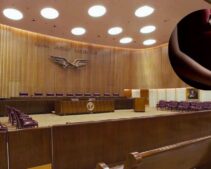



A federal judge in Oregon is weighing whether members of the Trump administration could be held in contempt of court for violating an order that temporarily barred the deployment of National Guard soldiers into Portland. The hearing, held this week in U.S. District Court, centers on allegations that federal officials ignored the judge’s instructions and sent troops into the city anyway.
Judge Karin Immergut issued the restraining order earlier this month, pausing any further deployment of the Oregon National Guard to assist ICE operations. The order came amid growing tension between state and federal authorities over the use of force at protests outside Portland’s ICE facility. Despite the ruling, new evidence shows that Guard members were sent from 11 p.m. on October 4 until 2 a.m. on October 5, roughly six hours after the order went into effect.
“The biggest revelation is that the feds might be in contempt of court for defying the judge’s temporary restraining order,” reported Oregon Capitol Chronicle journalist Alex Baumhardt. Testimony revealed that federal officials failed to notify the court or state authorities about the deployment, sparking accusations that the administration knowingly ignored the judge’s directive.
The Ninth Circuit Court of Appeals has agreed to take up the broader constitutional question of whether President Trump has the authority to federalize Oregon’s National Guard for local enforcement. For now, Judge Immergut must determine whether government officials defied her order, a decision that could carry serious consequences. Contempt penalties can include fines or even jail time.
In court, Portland Police Bureau Commander Franz Schoening described “startling” and “unjustified” use of tear gas and pepper balls by federal officers at an early October protest outside the ICE facility. He testified that the crowd, which included “older” participants, was largely peaceful before agents launched chemical munitions. According to Schoening, one federal munition ricocheted into an elevated position, prompting agents stationed on the roof to return fire with pepper balls that struck protesters and local police alike.
Oregon State Police Captain Cameron Bailey said several officers “suffered exposure” to tear gas fired by federal agents. He added that no warning was given before the chemicals were deployed, contradicting the Justice Department’s claims that federal officers followed proper procedures.
Observers noted that Department of Justice attorneys repeatedly tried to interrupt testimony describing the federal response, but Judge Immergut overruled most of their objections. Witnesses described the federal tactics as “indiscriminate” and “unpredictable,” saying they endangered both protesters and law enforcement.
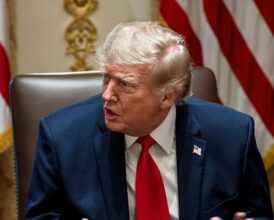
The administration insists the deployment was necessary to protect federal property and ensure order around the ICE site, arguing that local officials could not control the situation. President Trump has defended the use of force in Portland, claiming his “people” told him the city was “burning to the ground.” Oregon officials have dismissed those claims, saying federal intervention only escalated tensions.
The judge’s decision could carry far-reaching implications. A contempt finding would be one of the few times a sitting administration faced punishment for violating a federal order and could strengthen broader challenges to presidential authority. It would also highlight the breakdown between federal and local agencies during one of the most contentious periods of Trump’s presidency.
As the hearing concluded, Judge Immergut said she would issue her ruling “soon.” For now, Oregon remains at the center of a legal battle over accountability, power, and a protest that spiraled into a test of whether the government can ignore a judge and get away with it.