



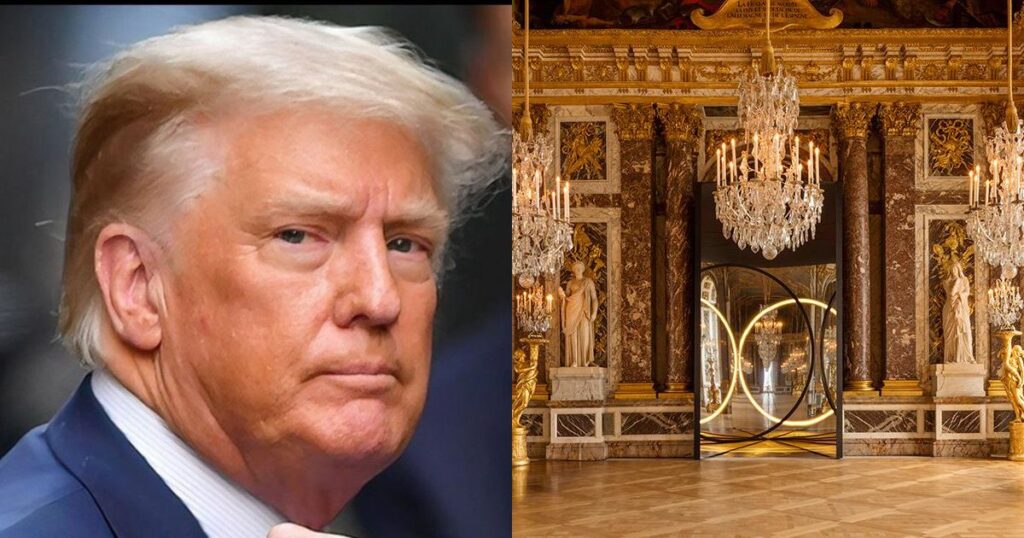
President Donald Trump has ousted the architect he personally tapped to design his massive new White House ballroom, after weeks of behind the scenes arguments over just how big his latest vanity project should be.
James McCrery II, a classical architect known for projects like the U.S. Supreme Court bookstore and the pedestal for Ronald Reagan’s Capitol statue, had been leading the design of Trump’s planned 90,000 square foot ballroom wing since the summer.
But Trump kept pushing him to supersize the already sprawling addition, putting the two on a collision course. According to The Washington Post, McCrery repeatedly urged restraint, warning that the 90,000 square foot structure would dwarf the 55,000 square foot Executive Residence and violate a basic design principle, do not bolt an addition onto a historic building that visually overwhelms it.
On Thursday, the White House made the split official. McCrery is no longer leading the project, and Trump has brought in Washington power architect Shalom Baranes to take over the 300 million dollar ballroom build, which is already under construction where the East Wing once stood.
A White House spokesperson said the change was about capacity and speed, not a personal falling out. Officials told reporters that McCrery’s boutique firm was too small to handle such a large and fast moving job and had fallen behind schedule, and that he would stay on only as a consultant while Baranes and his larger team drive the design from here.
Publicly, the administration is trying to frame the reshuffle as an upgrade. In a statement, spokesperson Davis Ingle called Shalom Baranes “highly talented” and said the firm had been brought in to carry out Trump’s vision for what Ingle described as “the greatest addition to the White House since the Oval Office.”
Behind the scenes, though, reporting from the Post and other outlets paints a picture of a president obsessed with size and spectacle. Trump pressed for a ballroom so large it would eclipse the main residence, despite concerns from McCrery, preservationists, and planners who worried the new wing would look bloated next to the historic mansion and trample long standing review processes.
The ballroom, designed to host close to a thousand guests for state dinners and marquee events, sits on the footprint of the now demolished East Wing. Satellite images and on the ground photos in October showed heavy machinery tearing down the structure even before the project had gone through the usual federal planning reviews, prompting outrage from historic preservation groups and some Democrats in Congress.
Trump has brushed off the criticism, arguing that the White House needs a proper ballroom so he can stop using temporary tents on the South Lawn. The project, now priced at around 300 million dollars after earlier estimates of 200 million, is being funded entirely by private donors, including corporations and wealthy individuals with business before the federal government.
For McCrery, the ballroom was the biggest commission of his career, but also a test of how far he could steer Trump away from pure showmanship. According to the Post, he tried to keep the addition more in scale with the existing complex, even as Trump pushed for more square footage and more visual impact. In the end, the president chose size over subtlety and swapped out the architect who kept telling him no.


