



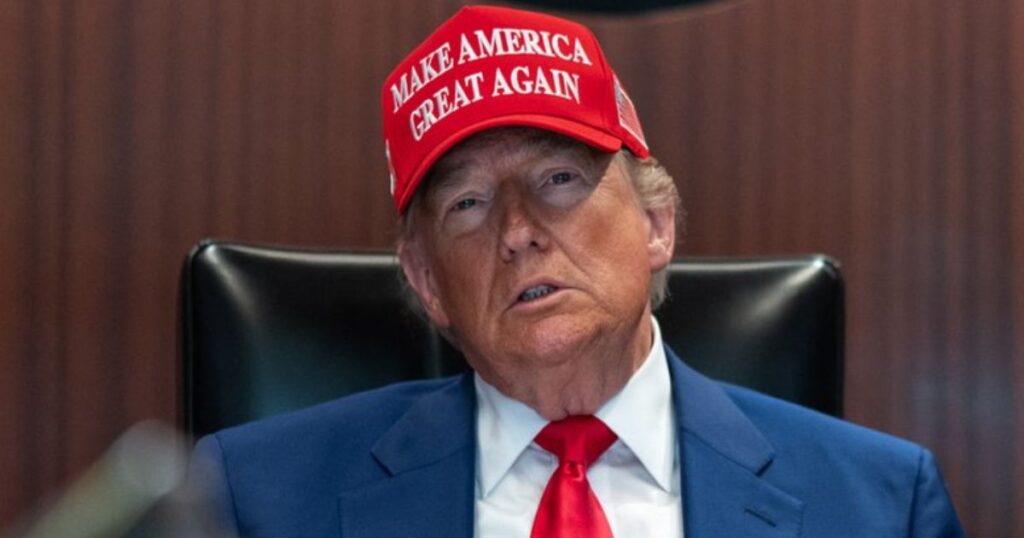
Cuba recently left Donald Trump disappointed by announcing a “state of war” against the United States of America. In retaliation, the Trump administration announced a state of emergency over Cuba, with the President threatening higher tariff over any country that sells or provides oil to the Caribbean nation.
The escalation of tension follows the U.S. capture of former Venezuelan President Nicolas Maduro and his wife, Cilia Flores.
According to The Mirror US, Trump defended his latest executive order by framing it as a necessary move to protect “U.S. national security and foreign policy from the Cuban regime’s malign actions and policies.”
Trump just signed an executive order declaring a national emergency and launching a process to impose tariffs on countries supplying oil to Cuba.
This isn’t just about Cuba.
Declaring a “national emergency” allows the U.S. to fast-track secondary sanctions via tariffs. pic.twitter.com/Xsz1RWGHpn
— EllMusty Market (@AlmustafaJ34392) January 30, 2026
An excerpt from the executive order read “The President is addressing the depredations of the communist Cuban regime by taking decisive action to hold the Cuban regime accountable for its support of hostile actors, terrorism, and regional instability that endanger American security and foreign policy.”
Besides this, the White House has officially shot a barrage of accusations against Cuba. The Trump administration believes that Cuba hosts Russia’s biggest “overseas signal intelligence facility,” aimed at “stealing sensitive national security information from the United States.”
The official statement further underscores “The regime persecutes and tortures political opponents, denies free speech and press, and profits corruptly from the Cuban people’s misery.”
It further adds, “These actions constitute an unusual and extraordinary threat to U.S. national security and foreign policy, requiring immediate response to protect American citizens and interests.”
The US needs political change before Trump and his warmonger team destroy it
Russian Ambassador to the United Nations Vasily Nebenzya said that the United States would face serious obstacles if it attempted to apply a Venezuela-style approach toward Cuba, amid reports that… pic.twitter.com/vnamQDXqSg
— Càitrin Níall (@Kate03986) January 30, 2026
Trump had previously warned Cuba that it would no longer receive Venezuelan oil or money, and demanded the country “make a deal” with the US.
Cuba, once a major beneficiary of Venezuelan oil, was cut off from shipments after U.S. forces began seizing tankers to regulate production.
According to a report by Express, Trump has already ramped up his threats against the communist government and has tightened many of the other sanctions for Cuba.
These include preventing fuel and medical supplies from reaching the nation. Additionally, the U.S. President has accused the island country of propagating state-sponsored terrorism.
Surprisingly, even in the wake of so many escalated threats, the capital city of Havana has firmly dismissed all the assertions of Trump. The President of the island country is regularly seen delivering speeches against U.S. hostility while dressed in fully armed military attire.
President Miguel Diaz-Canel previously said, “Cuba is a free, independent, and sovereign nation. Nobody dictates what we do. Cuba does not attack; it has been attacked by the U.S. for 66 years, and it does not threaten; it prepares, ready to defend the homeland to the last drop of blood.”
He added, “We are millions of Cubans, ready to fight if we are attacked with the same ferocity as our 32 fallen combatants.”
U.S. President Claims Havana “Will Not Be Able to Survive”
Donald Trump accused Cuba of mistreating its people and described the country as a failing state facing an uncertain future. #EuroPost pic.twitter.com/ezTi1DsQIx
— EuroPost Agency (@EuroPostAgency) January 30, 2026
The exorbitant tariff threat set by Trump puts pressure on countries like Mexico, which has been a key oil lifeline for Cuba. As a domino effect, Mexico has already paused some of its oil shipments to the island country, but called it a sovereign decision and not a result of U.S. pressure.
Later, the President of Mexico, Claudia Sheinbaum, insisted that the state oil company Pemex would continue to fulfill contractual obligations for Cuba as promised earlier.
She also said they may even offer oil for humanitarian reasons only. The President added, “The humanitarian aid will continue, as it does to other countries. Mexico has always shown solidarity with the entire world. They are sovereign decisions.”


