

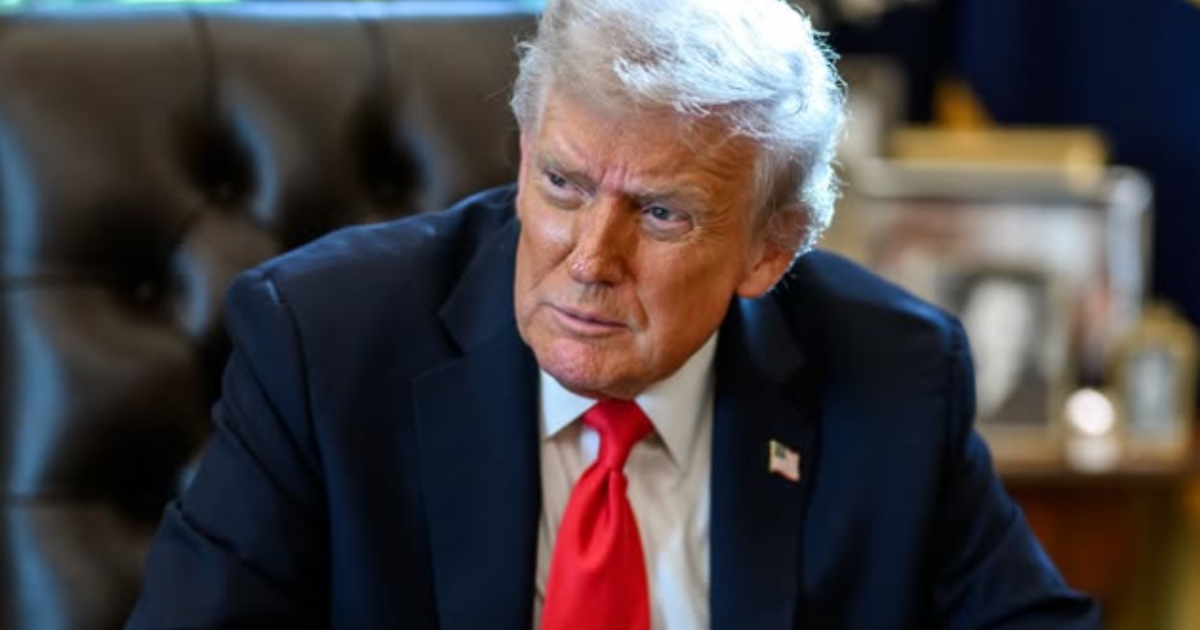
President Donald Trump is pointing the finger at Joe Biden as inflation remains stubborn and economic anxiety continues to frustrate voters. However, some of his White House allies are pushing back.
With rising unemployment and the cost-of-living pain threatening the GOP, some of his top economic officials and Republican allies offered a far more nuanced assessment following Trump’s blame game. National Economic Council Director Kevin Hassett pushed back on the president’s claims stating, “It’s a Trump economy now.”
Hassett’s remarks, reported by MS Now, reveals a growing disconnect between Trump’s public messaging and the reality many Republicans say voters see. After nearly a year back in office, the president owns the economy in the minds of much of the electorate, regardless of who came before him.
Recent polling shows a clear majority of Americans now blame Trump, not Biden, for the current state of the economy, a finding that undercuts the president’s attempt to pin economic pain on the past. The numbers have rattled GOP strategists, some of whom warn that continued finger-pointing risks making Trump appear detached from the reality that everyday Americans are living with.
“The reality of the situation is that the president is now sitting in the Oval Office, Republicans are in control of both chambers, and the perception is that they are in control of the economy right now,” said Matthew Bartlett, a Republican strategist who served in Trump’s first administration.
The first words out of Trump’s mouth blame Biden for his failures pic.twitter.com/CyWm7sV3TY
— Aaron Rupar (@atrupar) December 18, 2025
Doug Heye, a former Republican National Committee official, echoed that view, offering a warning about how Americans are feeling by saying, “You can’t convince people that they don’t feel what they feel.”
Trump’s address was intended as a reset, more disciplined in tone and focused on affordability as the administration pushes its economic agenda heading into the new year. The president touted policy moves and promised relief, but he repeatedly circled back to Biden, even as inflation and weak consumer confidence put the blame on him.
Approval ratings for Trump’s handling of the economy remain underwater, with many voters saying prices are still too high and wages are not keeping up. Even among Republicans, there is quiet concern that insisting the economy is stronger than people perceive could backfire.
One Republican operative close to the White House acknowledged as much, suggesting that the president’s message would land better if it focused less on blame and more on empathy. “Do I think the message could be tighter in the form of acknowledging the pain that the American people are feeling, and not overselling the health of the economy right now? Sure,” the operative said. “We should not oversell the economy when a lot of Americans are not feeling it in December 2025.”
Trump needs to strategize his messaging if the GOP is going to have a chance at the upcoming midterms in 2026.
Unlike his first term, many of his diehard supporters are turning away from him due to the economy and his skills on the mic. Both of which were strong points for the ageing president. As his own advisers and allies quietly concede, calling it Biden’s economy no longer passes the smell test with a public that believes the buck now stops at Trump’s desk.