



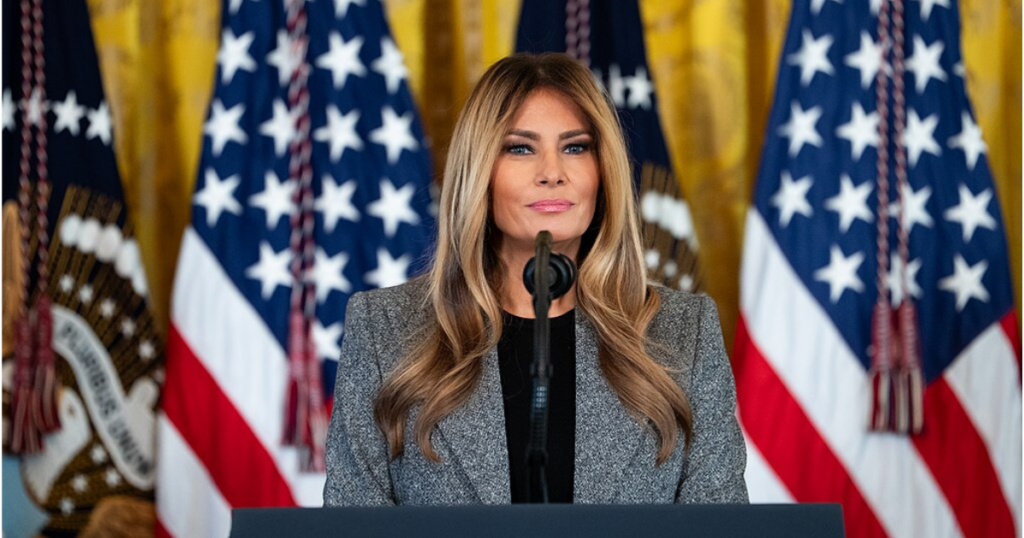
Melania Trump finds herself facing a harsh reality: her public standing has hit rock bottom. Once a figure of high-fashion intrigue and stoic silence, the First Lady is now grappling with an approval rating of just 36 percent, according to the latest YouGov polling.
The numbers are stark—43 percent of Americans openly disapprove of her, while only 18 percent remain neutral. This sharp decline, as The Print reported, marks a significant drop from even her own polarizing exit in 2021, when her approval hovered at 42 percent, already a historical low for a modern First Lady.
The question now looming over the East Wing is simple yet damning: what went wrong?
The reasons behind this plummet go beyond cold statistics. Critics and observers alike point to a tenure defined by distance rather than engagement. Unlike her predecessors, who often embraced visible, hands-on advocacy, Melania Trump’s approach has been described as “transactional” and “minimal.”
Her official White House portrait—captured in a sharp pantsuit with a boardroom-ready stance—perfectly encapsulated this shift. For many, it signaled a First Lady more comfortable with the aesthetics of power than the messy, often emotional work of public service.
This perception of detachment has only deepened during President Donald Trump’s second term. A recurring criticism is her retreat from the traditional, ceremonial duties that typically define the role.
Reports suggest she has spent “less than 14 days” at the White House since her husband’s return to office, a statistic that fuels the narrative of a “part-time” First Lady. For a public accustomed to the constant presence of figures like Michelle Obama or Laura Bush, Melania’s elusiveness reads as indifference.
Compounding this is the glaring contrast between her lifestyle and the expectations of her office. Arriving in Washington as a former model and businesswoman, Melania Trump’s wealth and glamour have always set her apart.
However, in a role that demands relatability and empathy, this gap has become a liability. Analysts argue that without a robust portfolio of advocacy work to bridge the divide, her image feels increasingly out of touch with everyday Americans.
Yet, amidst the criticism, there are glimmers of support from unexpected quarters. Second Lady Usha Vance, whose profile has risen steadily throughout 2025, has emerged as one of Melania’s staunchest defenders.
In a Fox News Digital interview, Vance praised the First Lady as a “role model” and “trailblazer,” particularly for her dedication to child welfare. “She cares about their welfare… every time that she uses her voice… it’s a good thing,” Vance affirmed, highlighting a side of Melania often overshadowed by headlines.
Indeed, there are signs that Melania Trump is preparing to pivot. During a White House holiday party in December, sources hinted at a major new initiative slated for 2026. President Trump himself teased the project, noting it “will have something to do with the kids.”
This suggests a potential expansion of her “Be Best” campaign, aiming to create a lasting legacy focused on child safety and well-being.
Whether this new chapter can reverse her dwindling popularity remains to be seen. For now, Melania Trump stands at a crossroads: a First Lady defined by her distance, yet poised to redefine her impact potentially.