



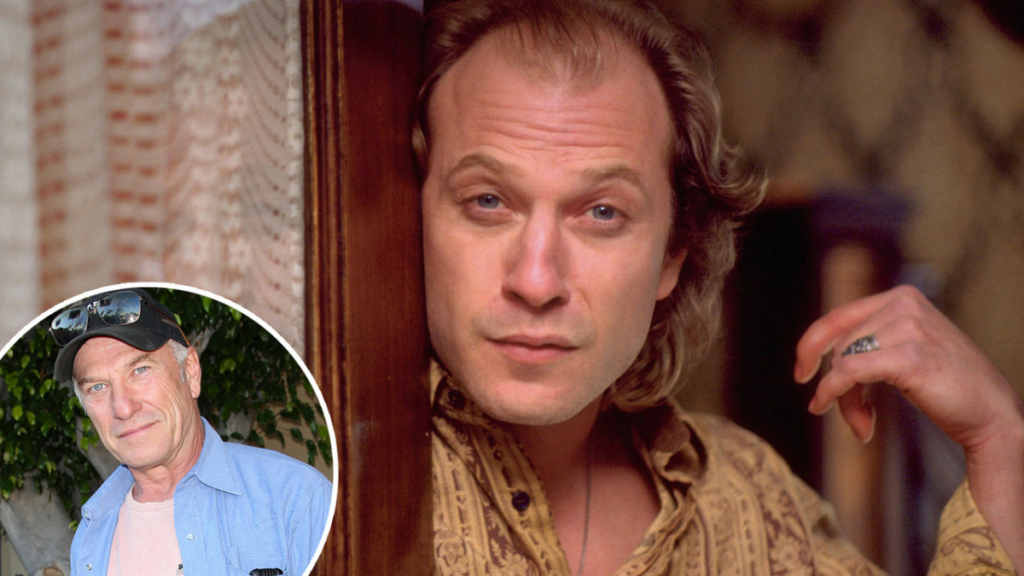
More than three decades after Silence of the Lambs terrified audiences and swept the Academy Awards, one of its most disturbing characters is back in the spotlight — this time over the film’s portrayal of themes tied to transgender identity. The villain in the cult classic movie, Buffalo Bill, was played by Ted Levine.
Ted Levine, who played serial killer Jame Gumb, better known as Buffalo Bill, is now speaking candidly about the controversy that has followed the role for decades. “There are certain aspects of the movie that don’t hold up too well,” Levine told The Hollywood Reporter. “We all know more, and I’m a lot wiser about transgender issues,” the Silence of the Lambs added to the outlet.
35 years ago today, ‘THE SILENCE OF THE LAMBS’ released in theaters. pic.twitter.com/nkRnKayLhR
— DiscussingFilm (@DiscussingFilm) February 14, 2026
“There are some lines in that script and movie that are unfortunate.” “[It’s] just over time and having gotten aware and worked with trans folks, and understanding a bit more about the culture and the reality of the meaning of gender,” Ted Levine said. “It’s unfortunate that the film vilified that, and it’s f–king wrong. And you can quote me on that,” the Silence of the Lambs actor noted. Despite that, Levine said about his performance as Buffalo Bill: “I didn’t play him as being gay or trans. I think he was just a f–ked up heterosexual man. That’s what I was doing.”
It’s February 14th! On this day 35 years ago, The Silence of the Lambs was released! pic.twitter.com/CLk2DOSF8g
— WatchMojo (@WatchMojo) February 14, 2026
The 1991 psychological thriller, directed by Jonathan Demme, followed FBI trainee Clarice Starling, portrayed by Jodie Foster, as she seeks guidance from imprisoned cannibalistic serial killer Dr. Hannibal Lecter, played by Anthony Hopkins. Lecter provides psychological insight to help Starling track down and apprehend Buffalo Bill. Released on Valentine’s Day in 1991, Silence of the Lambs became an international box office sensation and critical triumph. It went on to capture five Academy Awards — Best Actor, Best Actress, Best Director, Best Adapted Screenplay and Best Picture — cementing its place in Hollywood history.
At the center of renewed criticism LGBTQ of Silence of the Lambs is the character’s fixation on transforming himself into a woman by creating a “woman suit,” a plot element that advocacy groups have long argued reinforced damaging stereotypes about transgender individuals.
Ted Levine has previously stressed that the Silence of the Lambs character was not written as transgender. In the film itself, Lecter explicitly states that Gumb “is not a real transsexual,” but rather someone who believes he is. Levine has said that distinction was important to him as an actor.
One of the most beautifully small details that goes overlooked is the poster to The Silence of the Lambs. The back of the moth’s head isn’t that of a Death’s-Head Hawk Moth. It’s a Salvador Dali painting “In Voluptas Mors”. The n-de women representing Buffalo Bill’s victims. pic.twitter.com/xr9V39HuEZ
— CinemaCopa (@CopaExMachina) February 11, 2026
“He wasn’t written as a transgender character,” Levine has explained. “He was written as a deeply disturbed human being.” Still, the actor now acknowledges that cultural standards and awareness have evolved significantly since the film’s release.
Despite its accolades, protests over the Silence of the Lambs transgender implications began even during its original theatrical run. Decades later, as conversations about transgender representation in media have intensified, the debate has resurfaced.
Levine described the role as career-defining but admitted it has carried complicated baggage. “It’s the role people remember,” he has said in past interviews. “For better or worse.”
As Silence of the Lambs continues to be celebrated as a landmark thriller, the renewed scrutiny highlights how shifting cultural conversations — particularly around transgender representation — can reshape the legacy of even the most iconic films.