China launches Shenzhou 24 with first foreign astronaut to Tiangong
Muhammad Zeeshan Ali joins two Chinese astronauts on a mission carrying more than 90 experiments and technology tests.
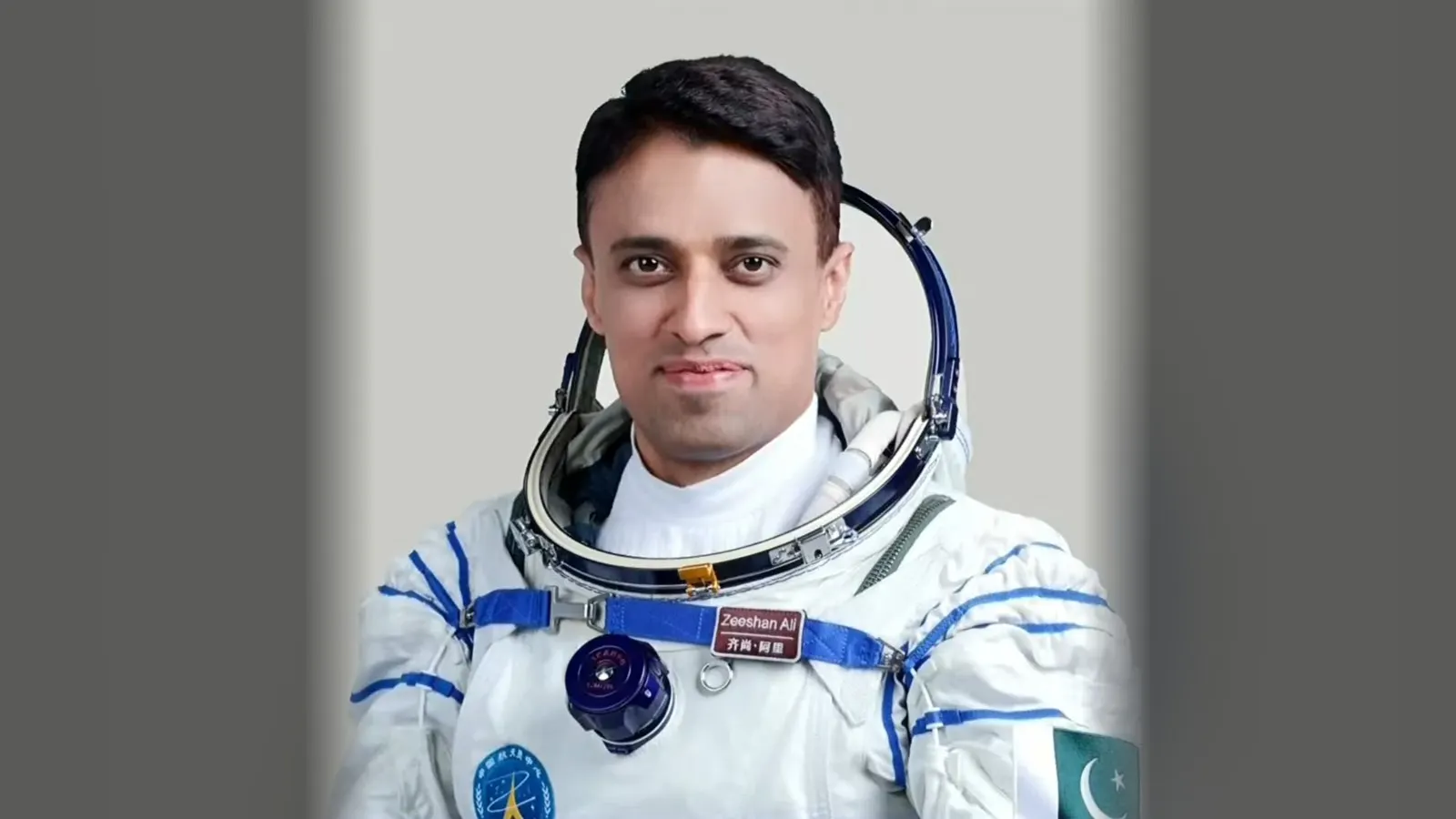
China launched Shenzhou 24 on Wednesday with two Chinese astronauts and a Pakistani crewmate, carrying the first foreign crew member to its Tiangong space station.
Muhammad Zeeshan Ali, 40, joined Chinese astronauts Tang Hongbo, 51, and Wu Yi, 39 aboard the spacecraft. Their mission is the first joint Chinese and foreign astronaut flight in China’s manned space program and is part of an agreement signed by China and Pakistan in February 2025.
Ali spoke Mandarin before reporters, quoting Chinese poetry about going up one story to gain a longer view. “It’s like my daily training. Day after day, reaching new heights,” he said.
Ali then spoke in English about his hopes for Pakistan-China space cooperation, from a single astronaut’s flight to multiple joint missions reaching the Moon, Mars and beyond. Ali and Wu are making their first spaceflight.
A Long March-2F rocket launched the spacecraft from Jiuquan Satellite Launch Center in Gansu province, northwestern China. Liftoff came at 8:18 a.m., according to the China Manned Space Agency.
The rocket climbed at sunrise through clouds of smoke and desert dust. Several hours before liftoff, crowds had assembled for a send-off ceremony, with many raising phones to record it.
The spacecraft subsequently detached from the rocket and reached its predetermined orbit.
The astronauts will perform more than 90 scientific experiments and technology tests on the mission. Ali will conduct an orbital experiment involving photosynthetic cyanobacteria during his short-term stay, then return to Earth on Shenzhou 23, Xinhua reported.
Ali will spend around a week aboard the station, the South China Morning Post reported. During that period, Tiangong will house four astronauts from mainland China, one from Hong Kong and one from Pakistan.
Tang has completed two previous missions and will be the first astronaut to board Tiangong three times.
At a news conference Tuesday, Tang said language and cultural differences had made it harder for the crew to learn to work together. Psychological differences posed challenges too, he said, but efforts on both sides were paying off.
China is preparing for its first crewed Moon landing by 2030. The United States is widely seen as China’s main space rival, with NASA aiming to land astronauts on the Moon in 2028, The Associated Press reported.
Before launch, Pakistani Prime Minister Shehbaz Sharif sent the astronauts his best wishes in a Tuesday post on X. “Pakistan-China friendship is surpassing the heights of the Himalayas in its journey to outer space,” Sharif wrote.
Pakistan’s Minister for Planning, Development and Special Initiatives, Ahsan Iqbal Chaudhary, told reporters at the launch center that he hoped the flight would begin a period of greater cooperation. He thanked Chinese President Xi Jinping, the Chinese leadership, and China’s scientists and engineers.
Asked whether Pakistan could eventually send astronauts independently, Chaudhary said, “Certainly that day will come.”
Sources
- CBS News: China's Shenzhou 24 mission lifts off, carrying first foreign astronaut to its space station
- The Independent: China launches Shenzhou 24 spacecraft carrying 2 Chinese and a Pakistani astronaut
- AP News: China launches Shenzhou 24 spacecraft carrying 2 Chinese and a Pakistani astronaut
- South China Morning Post: China’s Shenzhou-24 spacecraft lifts off with first foreign astronaut on board
- BBC News: Shenzhou 24: Pakistan's first astronaut goes to space aboard Chinese rocket