COP31 climate talks fail as EU and vulnerable countries reject draft
The European Union and climate-vulnerable countries rejected a draft from summit hosts Turkey and Australia.
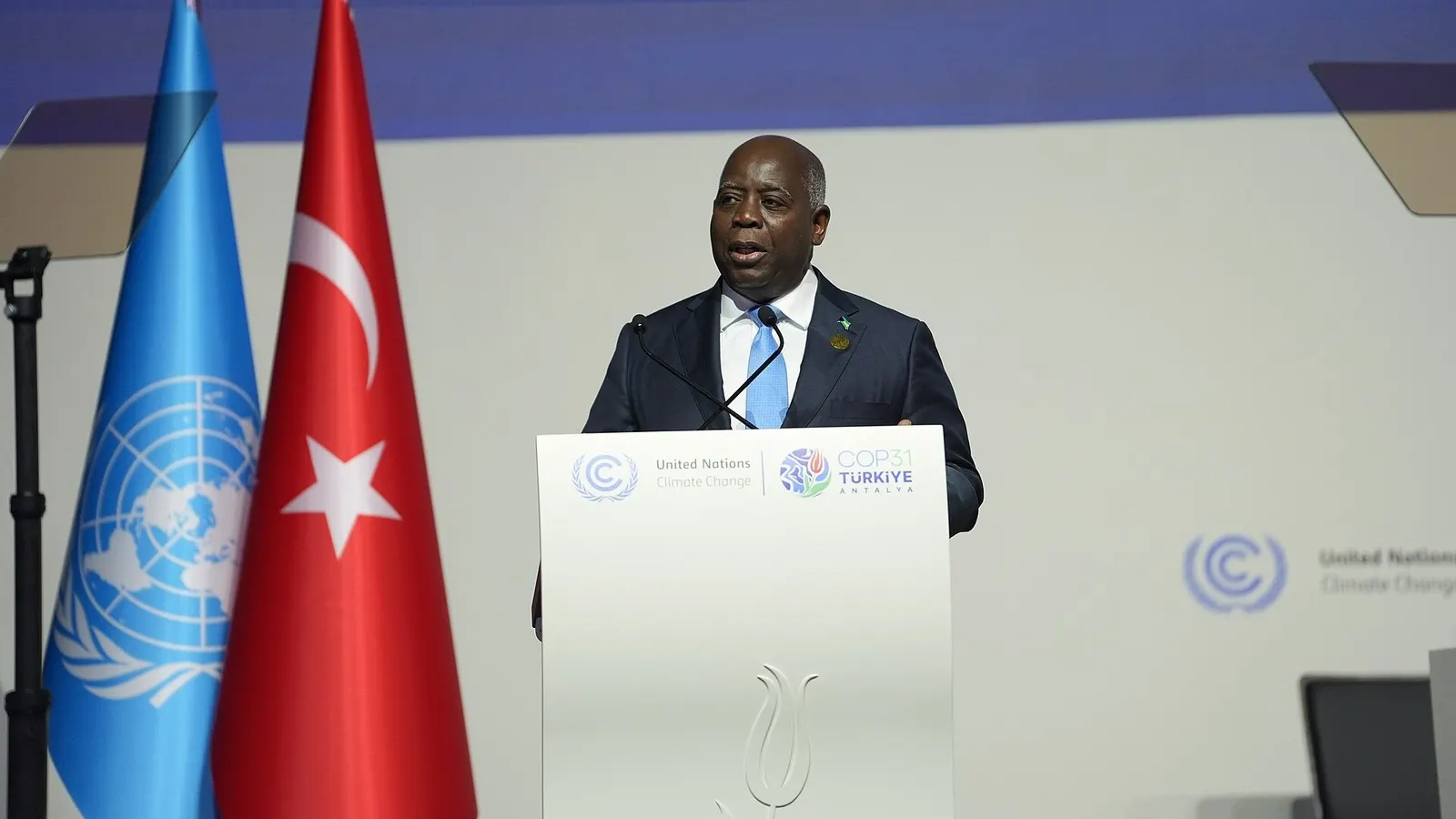
COP31 climate talks ended Sunday in Antalya, Turkey, without an overarching agreement after the European Union and climate-vulnerable countries rejected a draft from hosts Turkey and Australia.
The collapse marked the first failure to adopt a final agreement at United Nations climate talks since COP15 in Copenhagen in 2009. The summit became the longest on record and made headway on smaller matters, but it produced no main agreement, known as a cover decision.
A dispute over fossil fuels lay at the center of the breakdown. A group of oil producers led by Saudi Arabia that included Russia blocked references to fossil fuels in the final text, according to The New York Times.
The Turkish-Australian proposal omitted fossil fuels while recalling the entire Dubai agreement, according to The Associated Press. Agence France-Presse described a veiled reference to fossil fuels in the hosts’ final text as a bid for compromise.
Ireland’s Darragh O’Brien, speaking for the EU, said the proposal “fails to meet the moment” and could not be accepted by the bloc in its existing form.
“It is unconscionable that we would have a climate act that makes no reference to fossil fuel, no reference to transitioning away from fossil fuels,” O’Brien said. “And we will not accept a COP that greenwashes fossil fuel.” The hall applauded his intervention.
Former Irish President Mary Robinson, who served as a UN climate envoy, criticized the co-presidents earlier, as the talks approached their scheduled close. “We have co-presidents who haven't really been stepping up and giving that leadership,” she said.
The final proposal reached negotiators after 3 a.m., leaving little time to object. Many countries and observers blamed the failure on the Turkish-Australian leadership, the AP reported.
The draft did spell out a goal for carbon capture and storage for industrial polluters. Many nations and activists said that would weaken efforts to cut overall emissions. Cat Abreu, director of the International Climate Politics Hub, told ABC News the idea had been “parachuted into COP31 by fossil fuel interests.”
Saudi negotiator Mohammad Ayoub defended the approach. “We believe that climate change requires all solutions on the table,” he said.
Panama and the Marshall Islands objected to the final text. The United Kingdom and Norway rejected it too, while more than 130 countries had sought an endorsement of the transition away from fossil fuels, according to The Guardian.
Far more nations accepted the proposal than opposed it, often reluctantly, saying agreement on something mattered more, the AP reported. The Africa group, China and Pakistan raised no objection, though some had reservations.
“Climate action is not a menu from which we can select only what suits us,” Pakistan’s delegation told the conference.
Antwi-Boasiako Amoah, chair of the African Group of Negotiators, addressed COP31 President Murat Kurum on the conference floor. “With all due respect, Mr. President, you have not shown respect to a group of 54 countries (from Africa) and my country (Ghana) for that matter,” he said.
Kurum, Turkey’s environment minister, later made a public apology. A hot mic also caught him telling UN climate chief Simon Stiell “to sit down” as Stiell tried to advise him onstage, the AP reported.
“We recognise that there is no consensus on this document. Therefore, these decisions have not been adopted,” Kurum said. AFP reported that Kurum brought down the gavel more than 49 hours after the summit’s scheduled end. The AP said Kurum was absent when the deal fell apart, leaving Elchin Allahverdiyev of Azerbaijan to announce its failure.
“We have done our utmost,” Kurum said. He said the presidency had neither imposed the text nor issued a take-it-or-leave-it ultimatum.
Chris Bowen, Australia’s climate minister and COP31 president of negotiations, said “unbridgeable red lines” over fuels and climate finance prevented a deal. “Australia left nothing on the field,” he said.
The Dubai agreement’s call to move away from fossil fuels remains in force, Bowen said, and the transition is happening in the real world. “It's happening at speed and it's irreversible,” he said.
UN Secretary-General António Guterres said he was deeply disappointed by the outcome. “There may be no consensus in the negotiating room. There is no ambiguity in the science,” he said.
The rejected draft invited countries to electrify their economies and called for wealthy nations to provide adaptation finance to poorer ones. It also urged countries to keep any rise beyond the Paris agreement’s 1.5C threshold to a minimum. Former U.S. Vice President Al Gore called the COP31 failure “an outrage.”
Bill Hare, chief executive of Climate Analytics, told The Guardian that rejecting the deal felt like “a real line in the sand moment.”
Mohamed Adow, director of Power Shift Africa, called COP31 “the worst Cop ever” and criticized the European Union. “Europe's hypocrisy is staggering. Its governments demand fossil fuel roadmaps from others while expanding fossil fuels themselves,” he said.
Earlier agreements and fossil fuels
COP final decisions had omitted fossil fuels for over 25 years until a deal in the United Arab Emirates, according to Alden Meyer of the think tank E3G. That agreement called for a transition away from fossil fuels three years ago, but no COP decision has named them explicitly since.
In April, around 60 countries attended a first-of-its-kind conference on phasing out fossil fuels. Close to 200 countries later met under the Turkish-Australian presidencies in Antalya, where a deal needed the support of almost all participants.
Issues deferred to Ethiopia
The talks had been due to finish Friday but continued two days beyond the deadline, as sleep-deprived negotiators rebooked flights and bargained behind closed doors. Unresolved matters largely left for next year’s negotiations in Ethiopia included details on moving away from fossil fuels and funding adaptation in poorer countries.
Turkey made electrification its signature issue and proposed increasing electricity’s share of total final energy consumption to 35% by 2035. Nearly 100 nations joined a separate pledge, though CNBC said the target was included in the failed deal.
The collapse does not wipe out obligations from earlier UN conferences or dismantle the frameworks governing multilateral climate action, CNBC reported.
“Mother Nature decided to comment on the collapse of #COP31 climate negotiations in failure by setting a new record,” University of Pennsylvania climate scientist Michael Mann wrote on X. Berkeley Earth said October 2026 was 1.8 C warmer than preindustrial levels, the largest such increase recorded for any month.
Berkeley Earth put the chance of 2026 becoming the warmest year on record at 97%.
Sources
- The New York Times: COP31 Talks Collapse in Turkey in a Clash Over Fossil Fuels
- AP News: Why the failure to reach a major deal at UN climate talks matters as extreme weather worsens
- Agence France-Presse: Climate deal collapses in chaotic end to COP31
- CNBC: UN climate talks collapse as EU and others reject deal
- The Guardian: Cop31 climate talks break down as key deal rejected
- Abcnews: COP31 struggles to reach deal with parties at odds over fossil fuels