


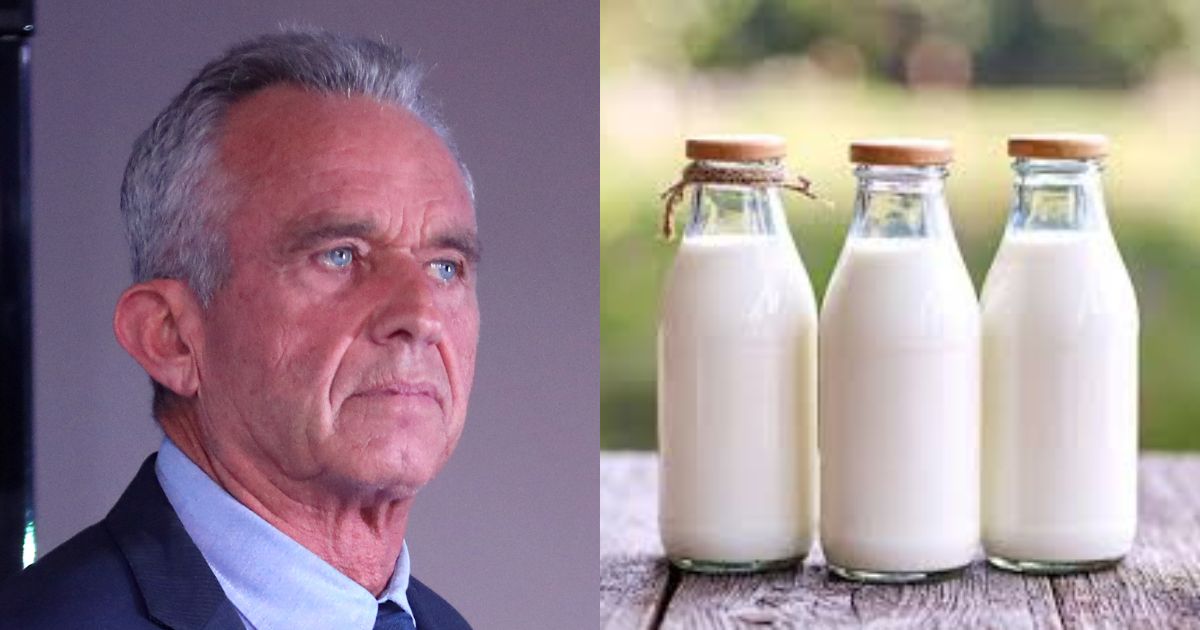
Robert F. Kennedy Jr. (better called RFK Jr.) recently shared an unusual AI-generated video of himself taking a sip of whole milk, followed by a weird sequence of nightclub dancing with a milk moustache.
The video, captioned “When you take that first sip of whole milk,” has drawn significant attention and highlights RFK Jr.’s involvement in the signing of the Whole Milk for Healthy Kids Act.
The video coincides with the national debate over whole milk, heightened by recent actions from the Trump administration. The President recently signed a bill reversing 2012 restrictions on higher-fat milk in schools, urging Americans to “Drink Whole Milk.”
According to The Mirror U.S., RFK Jr. called the new law “a long-overdue correction to school nutrition policy.” However, netizens were far from impressed with the Health Secretary’s video.
— Secretary Kennedy (@SecKennedy) January 15, 2026
One user said, “This is so weird,” while another added, “You are an embarrassment to your family.” A third commentator asked, “Why is the entire administration suddenly obsessed with milk? At least drink local raw milk.”
One commented, “Someone with a brain has to figure out how to stop government accounts from posting AI slop because this is getting out of hand. Absolutely humiliating look for America.”
While another said, “if your beverage is making you hallucinate chances are it’s not fresh whole milk.”
You are an embarrassment to your family.
— 𝓔𝓶 ♡ (@emkenobi) January 15, 2026
Critics argue that whole milk is unhealthy and more likely to cause obesity than low-fat varieties. Meanwhile, Trump supporters counter that many children dislike low-fat milk, leaving it untouched and wasting both food and nutritional benefits.
As reported by ABC News, the new bipartisan Whole Milk for Healthy Kids Act affects approximately 30 million students in the National School Lunch Program.
The Senate passed it last fall during Trump’s leadership. The debate centers on whether drinking whole milk benefits or harms children’s health. Whole milk provides protein, calcium, and vitamins, but it’s higher in saturated fat, which can raise bad cholesterol (LDL).
Consuming it in excessive amounts can lead to issues that can raise cholesterol levels and, in turn, increase the risk of a heart attack or stroke. Dietitian Maya Feller, who has worked with schools, called the policy “an interesting move.”
View this post on Instagram
Feller also said that policy should consider more than milk, such as offering balanced meals and reducing processed foods. She added, “It’s good for children to have options; for many, this may increase the likelihood they drink milk, which is nutrient-dense.”
Feller explained that the fat in whole milk helps the body absorb fat-soluble vitamins like A, D, E, and K when consumed with other foods. The new law adds whole milk to school lunch programs while requiring schools to continue offering 2%, 1%, and lactose-free milk.
Meanwhile, non-dairy options like fortified soy milk may also appear in cafeterias in the next few months, expanding options for children with dietary restrictions or any other issues.