



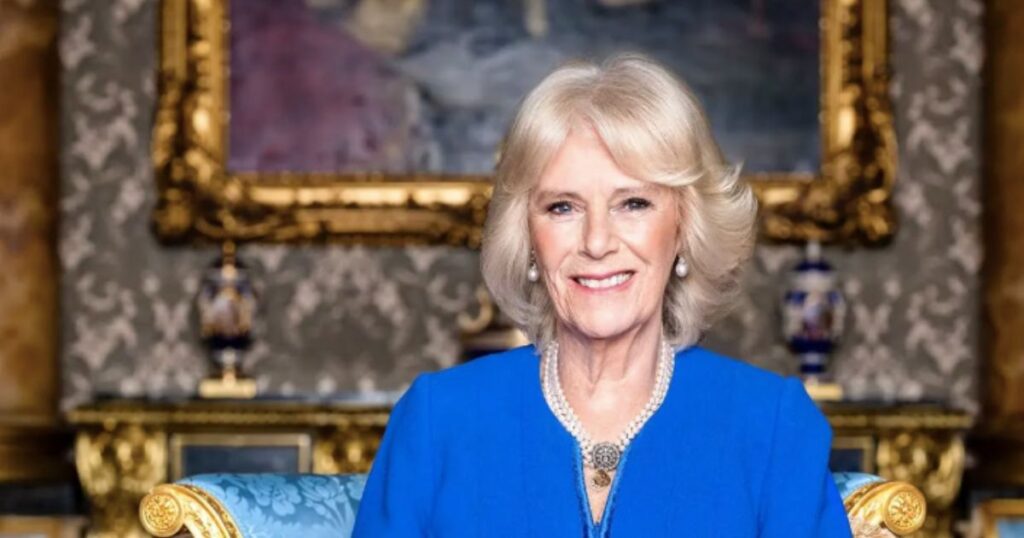
Queen Camilla has spoken publicly for the first time about being sexually assaulted as a teenager, revealing an experience she says shaped her lifelong focus on violence against women.
Speaking in a group interview reported by the Associated Press and aired by the BBC, Camilla Parker-Bowles recalled being attacked by a man on a train in the 1960s while reading a book. She said she fought back, then got off the train shaken, with her coat torn and her hair disheveled. Her mother immediately noticed something was wrong.
“I was furious,” Camilla said, via ABC News, “But I kept it quiet for years.”
Queen Camilla speaks about horror train attack, where she fought off groper as teen, for first time https://t.co/Dj1gd3s4E3
— Charlotte Richardson (@CharlotteR1061) December 31, 2025
The queen said she stayed silent for decades because, at the time, sexual assault was rarely discussed and often dismissed. She explained that hearing other women tell similar stories later in life made her realize how common the experience was — and how little had changed.
Her remarks came during a conversation with family members of Louise Hunt, 25, her sister Hannah, 28, and their mother Carol, 61, who were murdered by Louise’s former partner in July 2024 outside London. Camilla praised Louise’s father, former racing commentator John Hunt, and sister Amy for turning their grief into advocacy against domestic violence.
Queen Camilla: “I was reading my book and this boy, man, attacked me, and I did fight back”
— Sky News (@SkyNews) December 31, 2025
While this was the first time Camilla has spoken publicly about her own assault, it was not entirely unknown. British royal correspondent Valentine Low previously reported the incident in his book Power and the Palace, based on what Camilla privately told then–London mayor Boris Johnson years earlier. According to the book, she struck the attacker with her shoe and reported him upon arriving at Paddington Station, where he was arrested.
Camilla has made combating domestic abuse one of her most consistent royal causes, often without speeches or major campaigns. She has supported organizations including Women’s Aid and SafeLives and has hosted survivors and frontline workers privately at Clarence House. Until now, she had never publicly explained why the issue mattered so personally.
These IRL Photos of Camilla Parker Bowles as a Young Woman Prove She’s Always Been Royal AF https://t.co/BjLzyEBsas pic.twitter.com/gOYXjH5KMs
— REDBOOK (@redbookmag) November 21, 2020
“I thought, well, if I’ve got a tiny soapbox to stand on, I’d like to stand on it,” she said. “There’s not a lot I can do except talk to people and get people together.”
There is no public record of domestic violence involving Camilla’s family or personal relationships beyond her own account. Royal historians have long noted that her advocacy appeared rooted in empathy rather than personal disclosure — a choice consistent with a generation taught to endure quietly rather than speak openly.
Her comments land at a time when Britain continues to grapple with high rates of domestic abuse and femicide. Campaigners have repeatedly warned that violence against women remains widespread but underreported, often hidden behind social discomfort and stigma.
Queen Camilla says she was ‘so angry’ after assault on train when a teenager-a moving interview by Queen Camilla and how the RF gets important messages to a wide audience. The Guest Editor Teresa May chose superbly @RoyalFamily @BBCRadio4 https://t.co/CkpVRGu3Sm
— Richard Fitzwilliams (@RFitzwilliams) December 31, 2025
Camilla acknowledged that silence was once expected — and that breaking it now is deliberate.
“For so long it’s been a taboo subject,” she said. “People don’t realize how bad the situation is.”
The queen did not call for policy changes or offer solutions. She did not frame herself as a survivor-hero. She simply told a story she had kept to herself for more than half a century — and explained why she no longer would.


