

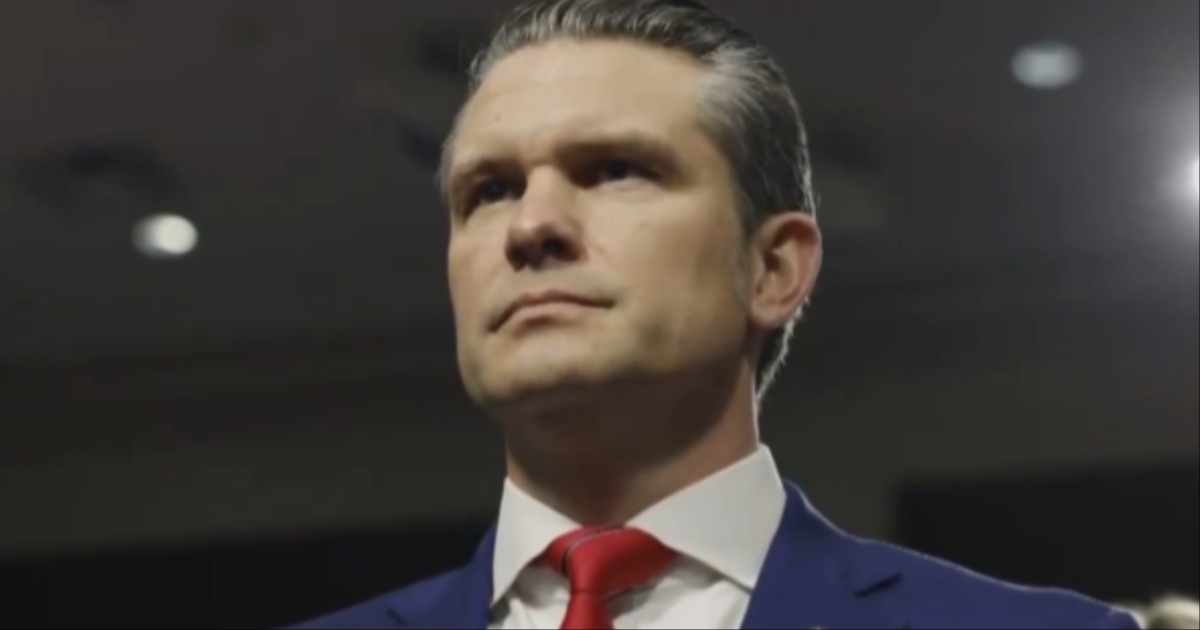
Pete Hegseth reportedly has a plan that could redraw the military’s command map in ways few defense secretaries have dared to try.
According to people familiar with the discussions per The Washington Post, Hegseth is considering a drastic overhaul that would trim the number of top-level commands and pull several powerful regional headquarters under new umbrella structures.
The idea began circulating earlier this year, when Hegseth asked his team for options to simplify command and control. His allies keep coming back to the same frustration: a system stacked with layers, crowded with chiefs, and slowed by procedure. At a moment when threats move quickly, the Pentagon still moves like it has all the time in the world.
Under the proposal now being reviewed, U.S. Central Command, U.S. European Command, and U.S. Africa Command would lose their status as stand-alone units. Instead, they would be grouped under a new entity called U.S. International Command. The change would affect the power structure inside the Pentagon, reducing the autonomy those commands have become accustomed to.
On the other hand, the Western Hemisphere would move closer to the center. U.S. Northern Command and U.S. Southern Command would be brought together under a new headquarters, U.S. Americas Command, often shortened to Americon. The change mirrors a growing focus on operations closer to home, including ongoing military activity in the Caribbean and pressure on Venezuela.
There was also discussion of creating a separate Arctic command, reflecting the region’s growing importance as ice recedes and competition increases. That idea appears to have been set aside, at least for now, a reminder that the plan is still being shaped behind closed doors.
If the overhaul moves forward, the number of combatant commands would drop from 11 to eight. Fewer four-star generals and admirals would report directly to the defense secretary. The remaining commands, including Indo-Pacific, Space, Strategic, Special Operations, and Transportation, would remain intact.
Supporters of the effort describe it less as a power grab than a course correction, as they say the current structure has become slow and self-protective, and that hard calls often get buried under tradition. One senior defense official framed it as an attempt to break habits that no longer serve the mission.
The proposal also fits comfortably with President Donald Trump’s outlook. His administration has been straightforward about its frustration with long-standing allies and skeptical of the idea that the United States should continue carrying so much of the global security load. That view is spelled out in the administration’s national security strategy, which argues that America can no longer prop up the world order on its own.
Any final version of the proposal would need White House approval and would likely spark debate in Congress. But even in draft form, it has already made clear that the old arrangements are not the way things will go under Hegseth.
Hegseth’s tenure has been controversial to say the least. He has brought his own brand of command and began with a meeting of all top generals, which was unprecedented. He is also heading the controversial drug boat attacks, which has brought international debate about the laws of engagement.