



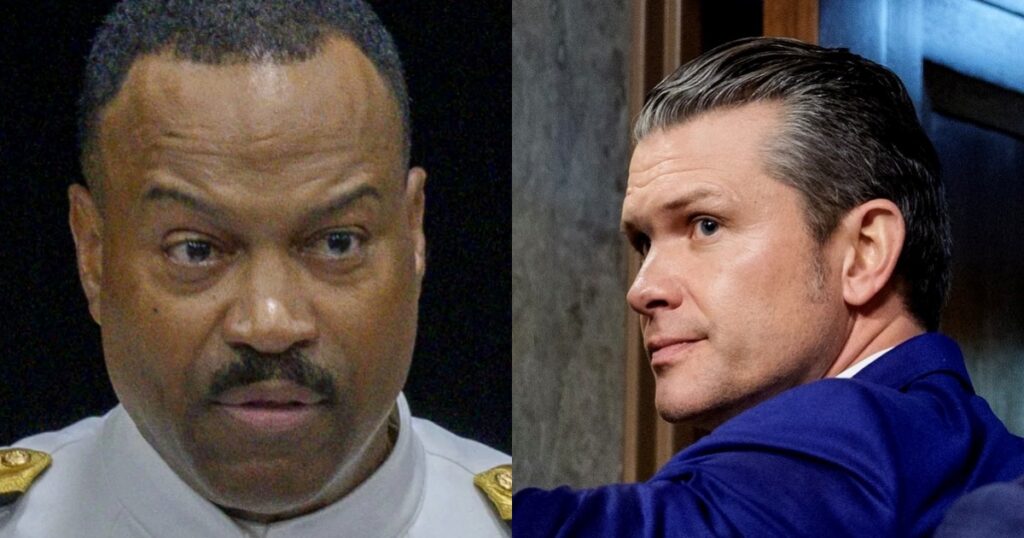
Adm. Alvin Holsey is back in the spotlight, this time behind closed doors on Capitol Hill, as lawmakers quietly dig into Defense Secretary Pete Hegseth’s most explosive controversy yet.
Holsey, who was forced out earlier this fall as the top U.S. military commander overseeing operations in Latin America, briefed a small group of key lawmakers on Tuesday in a series of classified calls, according to several people familiar with the discussions. The meetings are the clearest sign so far that Congress is pursuing a bipartisan inquiry into the September 2 boat strike in the Caribbean Sea, an operation that left two survivors dead after a second, deliberate hit on their capsized vessel.
According to the officials, Holsey spoke remotely with Sen. Roger Wicker and Rep. Mike Rogers, the Republican chairmen of the Senate and House Armed Services Committees, as well as Sen. Jack Reed and Rep. Adam Smith, the top Democrats on those panels. It was the first time lawmakers had a chance to question him directly since public revelations that U.S. forces, acting under orders, killed two men who had already survived the initial strike on their suspected drug boat.
The September 2 operation, carried out under Hegseth’s watch, has been called everything from war crime to murder. The Pentagon initially described the mission as a textbook case of maritime interdiction, saying U.S. forces targeted a vessel believed to be transporting narcotics for a transnational criminal organization. But that story began to fray as details emerged about the second strike.
Navy Adm. Alvin Holsey, who leads U.S. military operations in Latin America, is expected to brief members of Congress on Tuesday in remarks delivered remotely https://t.co/UccCreF1Bw @alexbward @lindsaywise
— Dave Brown (@dave_brown24) December 9, 2025
According to reporting that surfaced last month, U.S. aircraft hit the boat, sending it up in flames and into the water. Two men survived and were later seen clinging to the overturned hull. Instead of attempting a rescue, U.S. forces launched a second strike that killed them. That decision sparked outrage from human rights groups and calls for an investigation into whether the military violated the laws of war by targeting survivors who no longer posed a clear threat.
Holsey, who previously headed U.S. Southern Command, was in the chain of responsibility for operations in the region at the time. His departure was officially described as a routine transition, but later reports claim that he was forced out by Hegseth due to his objection to the boat strikes. His conversations with Congress suggest there is far more to the story than the Pentagon has said publicly.
Lawmakers in both parties have stated that they want answers about whether Hegseth pushed for a more aggressive rules of engagement that blurred the line between standard combat protocols and execution. Hegseth has defended the operation, saying forces acted to “neutralize a hostile threat at sea” and insisting the mission was “conducted in full accordance with our authorities.”
Holsey’s testimony could help fill in crucial gaps as members and aides say they want a detailed timeline of the operation, the intelligence underpinning the decision to hit the boat in the first place, and any legal guidance commanders received as the situation unfolded. They also want to know whether Holsey or other officers raised objections when the second strike was proposed.
For now, the inquiry is unfolding mostly out of public view with a small circle of lawmakers is gathering information, step by step, before deciding whether to press for something more public.
If Holsey’s account contradicts Hegseth’s public defense of the mission, pressure will grow for open hearings and a full blown investigation. Whatever the result of the inquiriy, it is unlikely that the controversy will die down anytime soon.


