

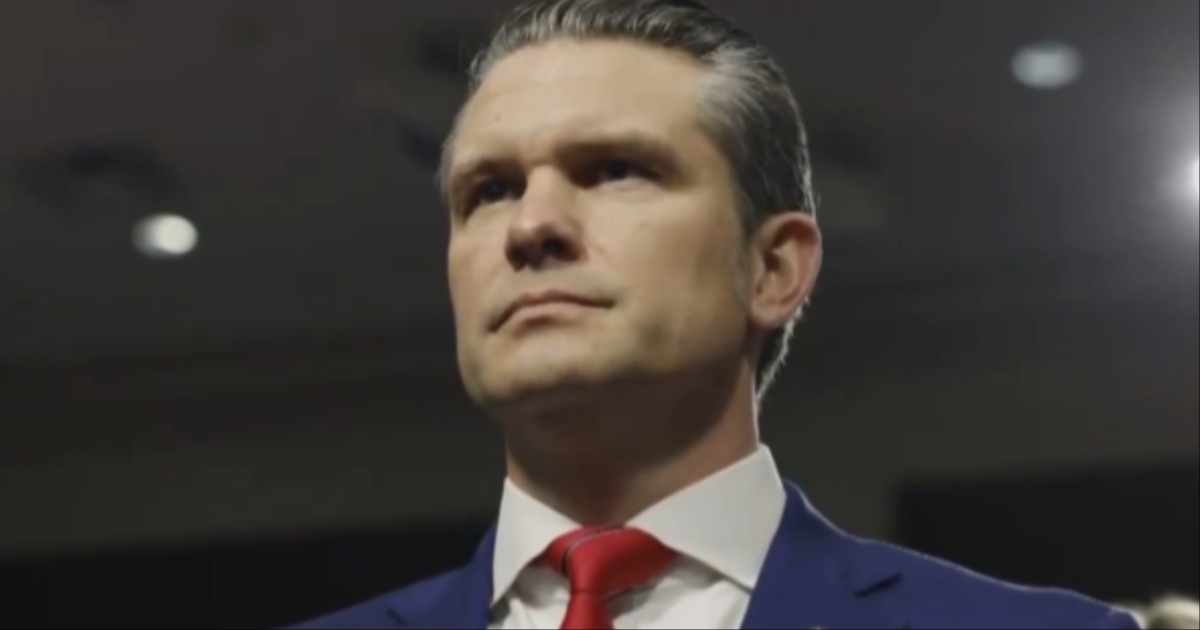
Defense Secretary Pete Hegseth is under fire after the Pentagon’s watchdog found he put U.S. troops at risk by sharing sensitive war plans over the Signal messaging app. The newly disclosed inspector general report says Hegseth used a group chat in March to talk about the timing of upcoming airstrikes on Houthi targets in Yemen.
The review was first sent to Congress in classified form, and an unclassified version is now circulating in Washington. The chat included some of the most senior figures in Donald Trump’s national security inner circle, and, by mistake, a journalist who was never supposed to see any of it.
In the unclassified summary, the inspector general lays out exactly what was sent. “The Secretary sent nonpublic DoD information identifying the quantity and strike times of manned U.S. aircraft over hostile territory over an unapproved, unsecure network approximately 2 to 4 hours before the execution of those strikes,” the report states. It adds that “using a personal cell phone to conduct official business and send nonpublic DoD information through Signal risks potential compromise of sensitive DoD information, which could cause harm to DoD personnel and mission objectives.”
The watchdog then spells out what that means in plain language. According to the report, “the Secretary’s actions created a risk to operational security that could have resulted in failed U.S. mission objectives and potential harm to U.S. pilots.”
A Pentagon watchdog report has found that Defense Secretary Pete Hegseth put U.S. service members at risk when he used the Signal messaging app to talk about a military strike in Yemen earlier this year.
His use of Signal came to light when a journalist was accidentally added to… pic.twitter.com/o297JWJ0TF
— PBS News (@NewsHour) December 3, 2025
Those findings track with what outside experts had already suspected after The Atlantic revealed that Jeffrey Goldberg, its editor in chief, was accidentally added to the Signal chat where the Yemen strike plans were being discussed. Screenshots later published from that conversation showed Hegseth texting about timing and methods for the attack only hours before the operation began.
Senator Mark Warner, the top Democrat on the Senate Intelligence Committee, said the report confirmed his worst fears. “An objective, evidence-based investigation by the Pentagon’s internal watchdog leaves no doubt: Secretary Hegseth endangered the lives of American pilots based aboard the USS Harry S Truman as they prepared to launch a mission against terrorist targets. By sharing classified operational details on an unsecure group chat on his personal phone, he created unacceptable risks to their safety and to our operational security,” Warner said in a statement.
Warner also pointed to other Signal use by Hegseth that surfaced in the report. “The report also notes that the IG is aware of several other Signal chats Hegseth used for official business, underscoring that this was not an isolated lapse. It reflects a broader pattern of recklessness and poor judgment from a secretary who has repeatedly shown he is in over his head,” he added.
Representative Adam Smith, the top Democrat on the House Armed Services Committee, did not hold back either. “This report is a damning review of an incompetent secretary of defense who is profoundly incapable of the job and clearly has no respect for or comprehension of what is required to safeguard our service members,” Smith said.
Hegseth refused to sit for an in person interview with the inspector general and instead submitted written responses. In public, he is trying to turn the report into a victory. On X, he wrote, “No classified information. Total exoneration. Case closed.”
The watchdog’s document notes that the information came from material that was classified at the time, even if Hegseth, as defense secretary, had authority to declassify it. It also records that the Pentagon could not recover most of his Signal messages and had to rely heavily on screenshots already made public.