


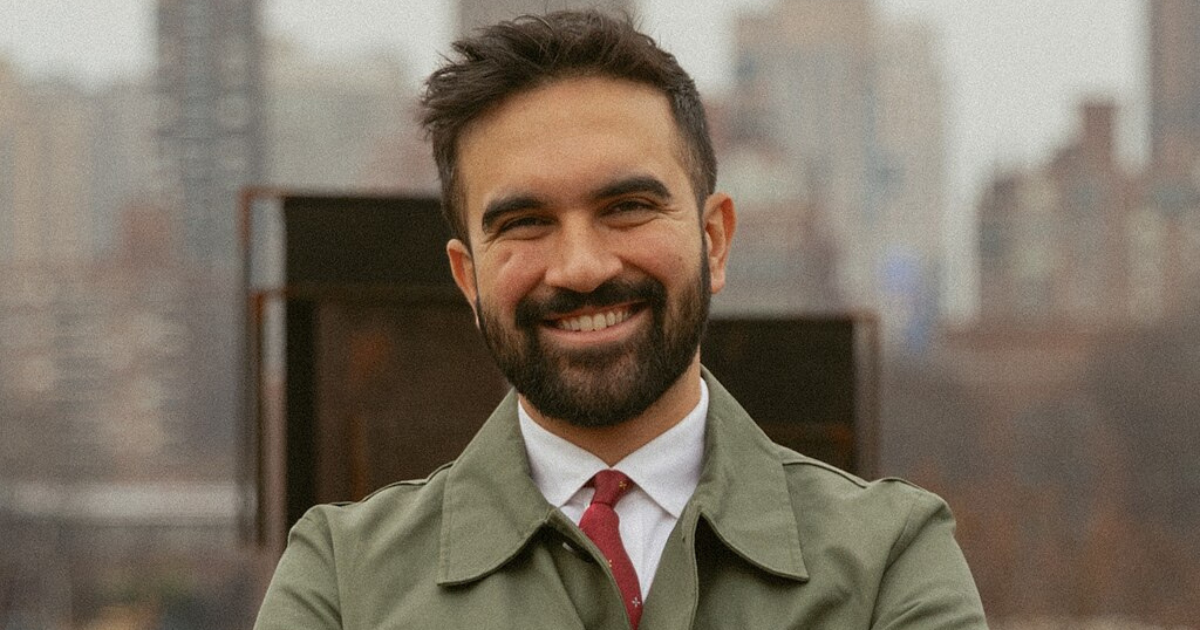
As a blustery New Year’s Day wind whipped through Lower Manhattan, Zohran Mamdani stood on the steps of City Hall, not just as New York City’s newest mayor, but as the face of a bold, and perhaps polarizing, experiment in American governance.
With Senator Bernie Sanders—the patriarch of the progressive movement—administering the oath, Mamdani’s inauguration wasn’t merely a ceremonial transfer of power. It was a declaration of intent.
The 34-year-old democratic socialist, accompanied by his wife, artist Rama Duwaji, wasted no time in shattering any illusions that he might pivot to the center. Instead, he doubled down on the very promises that swept him into office: taxing the rich to fund universal childcare, freezing rents, and making the city’s buses “fast and free.”
Bernie Sanders publicly swears in Zohran Mamdani as NYC mayor pic.twitter.com/mPYmwwx00o
— Aaron Rupar (@atrupar) January 1, 2026
Mamdani’s inaugural address was a study in unapologetic idealism. Rejecting the traditional political playbook of cautious moderation, he framed his administration as a crusade against the “frigidity of rugged individualism,” offering in its place the “warmth of collectivism.”
“We will govern without shame and insecurity, making no apology for what we believe,” Mamdani thundered to the shivering crowd. “I was elected as a democratic socialist and I will govern as a democratic socialist. I will not abandon my principles for fear of being deemed radical.”
For a city long defined by its stark divide between the ultra-wealthy and the working class, Mamdani’s vision strikes at the heart of New York’s identity crisis.
“Who does New York belong to?” he asked, his voice echoing off the limestone facade of City Hall. “For much of our history, the response from City Hall has been simple: It belongs only to the wealthy and well-connected.”
He painted a grim picture of the status quo—crowded classrooms, broken elevators in public housing, and wages stagnant while corporate profits soar—and promised an administration that would refuse to be a “tale of two cities.”
Central to his agenda is the concept of “abundance,” a term popularized by thinkers like Ezra Klein and Derek Thompson to describe a liberalism that builds rather than restricts. Mamdani co-opted this language, pledging an agenda of “safety, affordability, and abundance” in which the government actively improves lives rather than merely manages decline.
“City Hall will deliver an agenda… where government looks and lives like the people it represents,” he vowed.
Yet, the path from rhetoric to reality is fraught with obstacles. Many of Mamdani’s signature proposals—from universal childcare to free mass transit—require cooperation from Albany, where state lawmakers may not share his fervor. His plan to tax the wealthiest New Yorkers to fund these initiatives is sure to face fierce resistance from the city’s powerful financial elite.
Still, the atmosphere at City Hall was electric with the possibility of change. As chants of “tax the rich” erupted from the crowd during Sanders’ introduction, it was clear that Mamdani’s base expects nothing less than a revolution.
He promised to “reform a long-broken property tax system,” crack down on “bad landlords,” and ensure that the cost of childcare no longer discourages young adults from starting families.
“For too long in our city, freedom has belonged only to those who can afford to buy it,” Mamdani concluded, setting the stage for a mayoralty that promises to be as combative as it is ambitious. “Our City Hall will change that.”
Whether he can deliver on these lofty promises remains the ultimate question. Still, on day one, Mayor Mamdani made one thing abundantly clear: he intends to govern exactly as he campaigned—expansively, audaciously, and without apology.