



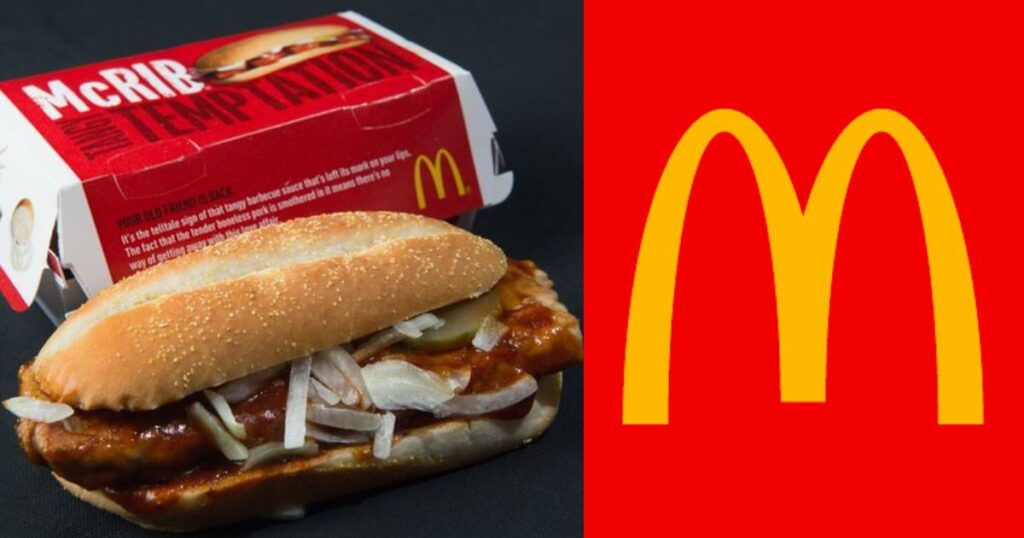
McDonald’s is facing a new class-action lawsuit that takes aim at one of its most polarizing menu items, alleging the McRib isn’t quite what its name suggests.
The lawsuit, filed in federal court in Illinois in late December, claims the McRib “does not contain any actual pork rib meat,” despite being marketed in a way that leads reasonable customers to believe otherwise, according to NBC Chicago. The plaintiffs argue that the sandwich’s name, shape, and limited-time hype create a misleading impression of premium pork.
According to the complaint, the McRib patty is made from ground pork products such as pork shoulder, heart, and scalded stomach, rather than rib meat traditionally considered a higher-value cut. The suit argues that distinction matters, especially because the McRib is often priced as one of the most expensive individual items on McDonald’s menu, reaching nearly $8 at some locations.
#McLAWSUIT: McDonald's is facing legal trouble as diners in Illinois claim 'false advertising' over the franchises' McRib sandwich.
They say there's no actual rib meat in the meal, but McDonalds says it never claimed there to be⬇️ pic.twitter.com/fAsIGWUK21
— Paige Ellenberger (@PaigEllenberger) January 5, 2026
“The name ‘McRib’ is a deliberate sleight of hand,” the lawsuit states, accusing McDonald’s of omitting material facts about the sandwich’s contents while shaping the patty to resemble a rack of ribs. The plaintiffs allege that visual cue is doing a lot of heavy lifting.
And then they go in guns blazing with the accusation that “McDonald’s willfully, falsely, and knowingly omitted various material facts regarding the quality and character of the McRib — namely, that despite its name and distinctive rib-like shape, it does not actually contain any actual pork rib meat. McDonald’s knew these facts would be material to reasonable consumers but still chose not to disclose them.” Shots were indeed fired, but nigh a pig was seen.
McDonald’s pushed back strongly, saying the claims distort both the facts and the food. In a statement provided to NBC Chicago, the company said its McRib is made with “100% pork sourced from farmers and suppliers across the U.S.” and that it has always been transparent about ingredients.
On its website, McDonald’s describes the McRib as a “seasoned boneless pork patty” dipped in barbecue sauce and served on a toasted bun — language the lawsuit argues is technically accurate but strategically vague. The meat may be pork, the plaintiffs say, but it’s not the pork customers think they’re buying.
McDonald’s employee shows how they make the McRib
– The McRib is made from restructured meat
– The meat is from pork trimmings (shoulder/“picnic”), heart, and scalded stomach that are ground up, mixed with salt/water, and re-formed into a rib-like shape using binders
– A single… pic.twitter.com/7mddx39Am0
— Wall Street Apes (@WallStreetApes) December 6, 2025
The McRib’s long, stop-and-start history also plays a role in the case. First introduced in 1981, the sandwich has repeatedly disappeared and returned, often announced with countdowns and farewell tours. The lawsuit argues that this scarcity-driven marketing creates urgency that discourages scrutiny, a limited window to enjoy something “special” before it’s gone again.
CBS News reports that the strategy helped turn the McRib into a cult favorite, tracked obsessively by fans through online “McRib locators” and celebrated with merchandise when McDonald’s briefly claimed the sandwich was gone for good in 2022. Its latest return began in November 2025, once again for a limited time.
According to Top Class Actions, the plaintiffs are seeking class certification for anyone who purchased a McRib in the past four years, along with damages, restitution, and court-ordered changes to how the sandwich is marketed. Claims include fraud, breach of contract, and violations of consumer protection laws in multiple states.
For now, the McRib remains on menus in select cities, sauced, shaped, and hotly debated. Whether it’s comfort food or consumer confusion may soon be up to a judge — not the drive-thru.