

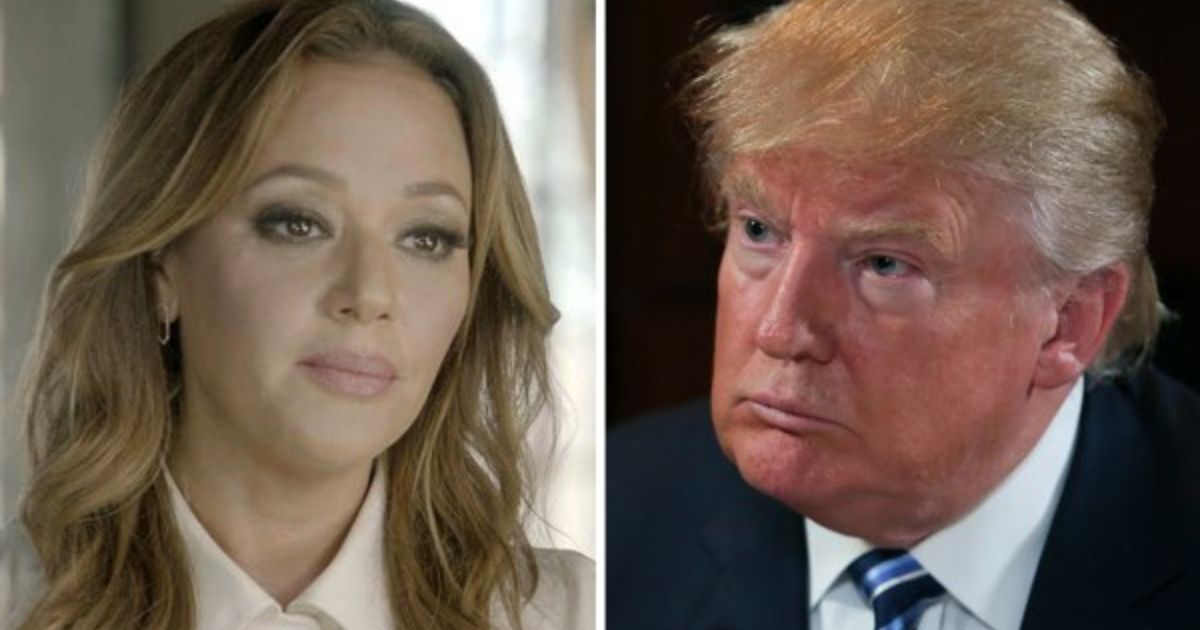
Actor and former Church of Scientology member Leah Remini sounded a public alarm on social media Tuesday, saying it is “very scary” to see what she described as Scientology adherents around President Donald Trump and within the broader federal government.
Remini, who left the Church of Scientology and has spent years publicly criticizing it, made the comment in response to conservative commentator Erick Erickson, who noted “a lot of Scientologists hanging out in the President’s orbit lately.” In her reply on X (formerly Twitter), she wrote: “Yes, this is accurate, Erick, and very scary… Thank you for always being aware of the dangers of Scientology and their successful infiltration of the Trump administration and the federal government overall.”
Lot of Scientologists hanging out in the President’s orbit lately.
— Erick Erickson (@EWErickson) December 30, 2025
The Scientology and the Aftermath host and de-conversion advocate rose to national attention after leaving the church, a controversial religious organization founded by L. Ron Hubbard that counts several Hollywood names among its members, per Mediaite. Remini’s activism has included a long-running critique of scientology practices and influence. In 2023 she filed a harassment lawsuit against the Church of Scientology and its leader David Miscavige, alleging coordinated psychological intimidation and surveillance that she says has impacted her life and career.
The church has historically and repeatedly denied Remini’s claims, calling her criticisms unfounded and characterizing her work as motivated by hostility toward the organization. Scientology News published a lengthy statement about the actor saying, “Leah Remini needs to move on with her life and career and stop blaming the Church and others for all of her personal and professional setbacks.”
“Whistleblowers Leah Remini and Mike Rinder open up on the links between Donald Trump, the Nation of Islam, and the Church of Scientology, from loans and donations to fundraising.”https://t.co/5g7VcVISRn
— artisbrutal2021 (@artisbrutal2021) August 14, 2023
But this isn’t the first time that Remini has voiced her concerns about Scientologists infiltrating the Trump administration. In 2019, via Decider, she made a statement that “Scientology hopes to take over our government.”
In 2017, she also spoke out about how close Scientologists were to those in high positions. “[Trump administration officials] have no idea what they’re dealing with.” Remini went on to explain that she believed that Scientologists have a pre-set agenda and that they actively work their plan. She then had some advice for them, saying, “They should do some research.”
Militant Scientologist Grant Cardone spoke at Trump’s Madison Square Garden rally today.
This is the second time this month that Cardone has spoken at a Trump rally.
Cardone and his wife, Elena, are among the most powerful Scientologists and are one of the few to have direct… pic.twitter.com/UvGhnrmTnA
— Yashar Ali 🐘 (@yashar) October 27, 2024
Remini continued, “There’s a policy in Scientology dealing with the public image … and it’s to infiltrate real churches, control governments, control government agencies. This is all part of the policy of Scientology, which is to infiltrate to take over.” The host then added the final nail in the coffin by again stating that the religion apparently wanted to have control of the government.
Remini’s warning about Scientology “infiltration” comes as political commentators and critics of the religion continue to debate how former members of the church interact with political figures. Conservative radio host Erickson’s original comment referenced individuals with links to Scientology seen at public events or in media related to the Trump administration — though no official list of Trump administration staff identified as Scientologists has been published.
While Trump himself has not publicly discussed the church, Remini’s comment reflects ongoing tensions between former Scientologists and the institution they left, casting a spotlight again on the fringe religion’s cultural and political footprint in the United States.