Fed Chair Kevin Warsh maps 3 AI scenarios, including job losses
The Fed chair said the possibilities were illustrative scenarios, not forecasts, as staff study AI's economic effects.
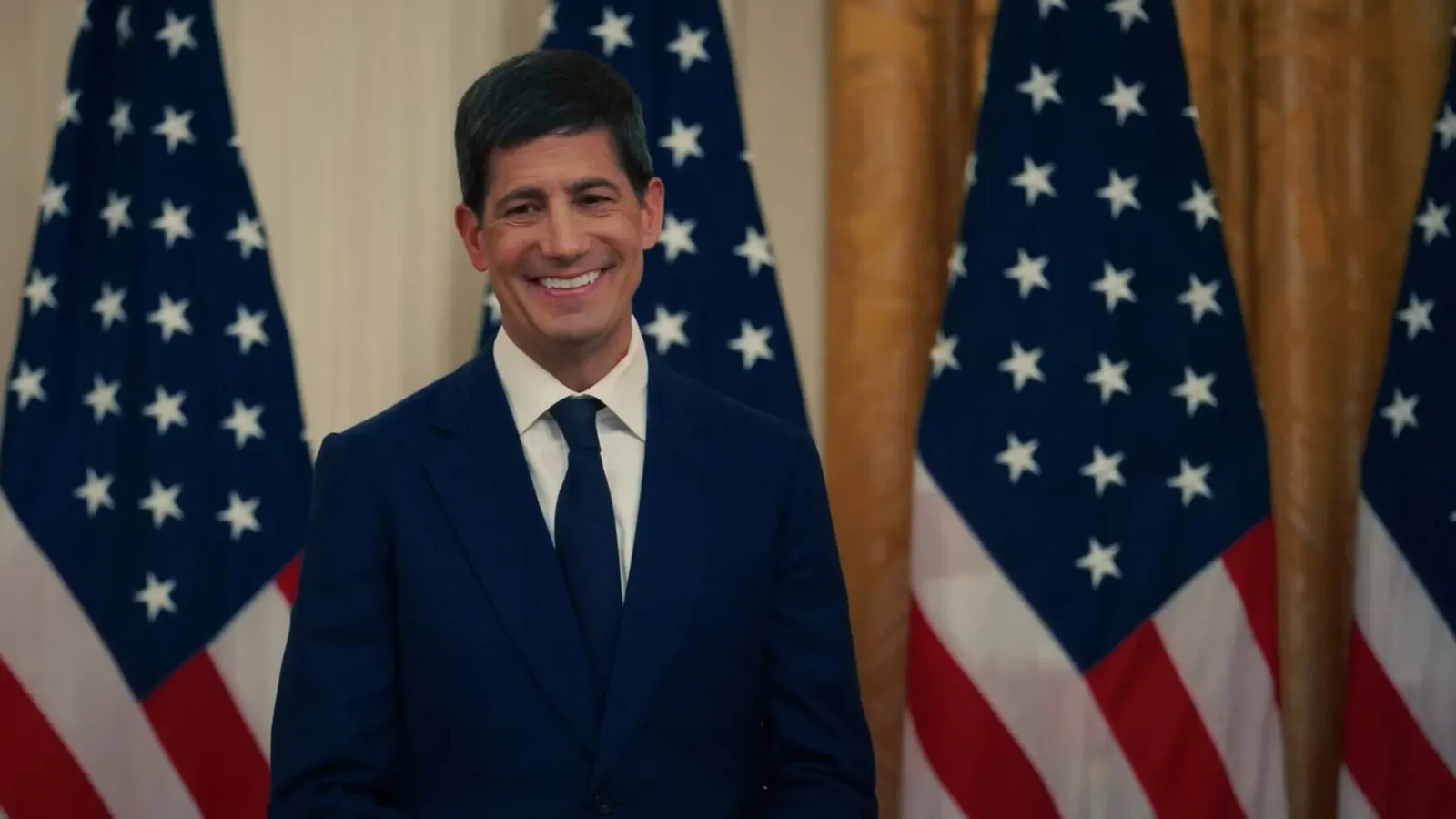
Federal Reserve Chairman Kevin Warsh outlined three possible paths for an economy reshaped by artificial intelligence on Monday, including job displacement and a decline in stock values.
Warsh delivered his opening remarks in San Francisco at the Fed's Productivity and Jobs Task Force Conference, hosted by the Federal Reserve Board and the Federal Reserve Bank of San Francisco. He said wider adoption of the technology has "important implications for monetary policy."
Under the most optimistic scenario, AI lifts productivity and spreads the benefits widely among workers and owners of capital, Warsh said. "In that event, real GDP growth rises persistently above its long-run average, and the U.S. stays close to full employment," he said.
"An SI-driven expansion could bring substantial labor market disruption as some jobs are displaced, rather than complemented, by technology," Warsh said, describing a less positive possibility. He said growth would remain above its long-term average, but automation and labor market frictions could raise unemployment beyond levels consistent with full employment.
"After significant capital investment and stock market gains, expected returns could turn down and equity valuations could fall, leading to an economic slowdown and a more notable rise in unemployment," Warsh said of a third scenario in which AI disappoints.
"In time, the economy would recover, but without the productivity gains," he said.
Warsh described the possibilities as "illustrative scenarios, not forecasts" and said Board staff had started using stylized, model-based frameworks to assess AI contingencies. "We can't know the future and ought not to pretend otherwise," he said.
The prospect of advances in AI has lifted stock valuations and prompted companies to raise money so they can continue competing. Axios reported that multitrillion-dollar spending on AI technology and data centers has helped U.S. growth, but its vulnerabilities have come into sharper focus in recent weeks.
Warsh referred to artificial intelligence as "super intelligence," or SI, throughout his remarks. President Donald Trump prefers that name, and CNBC reported that he recently ordered the government to use it almost exclusively.
Warsh called SI "an entirely new force in economic life and society" and said the present period could bring more transformation than any other in his adult life. "What might set SI apart, as an economic influence, is that it could supercharge idea generation," he said.
U.S. productivity growth has been reasonably strong in recent quarters, Warsh said, "but it hasn't yet broken out definitively and structurally to the upside."
He said the Fed's role was "neither advocacy nor opposition." Because SI also empowers bad actors, Warsh said, the Fed is paying particular attention to potential vulnerabilities in infrastructure.
"Humans are the designers and the builders, and humans must be the deciders," Warsh said, adding that "there is no replacing the minds and the hands of men and women."
Warsh has convened five task forces as chairman, including the one focused on productivity and jobs. Marc Andreessen, co-founder of Andreessen Horowitz, leads it alongside two people Warsh identified as Chad and Asha. Warsh and Andreessen were scheduled to close the conference with a fireside chat.
Warsh did not mention inflation, although many Fed colleagues attribute faster price increases to the data-center buildout and its increased demand for chips, electronic components, electricity and copper, The Associated Press reported.
Government data released last week showed that smartphone prices climbed in October at the fastest pace on record.
Warsh has argued since before he was nominated as chair that AI could raise productivity and serve as a disinflationary force.
After recent inflation data, many members of the Fed's rate-setting committee have backed further rate increases, including at its next meeting in December, the AP reported.
Sources
- CNBC: Fed Chairman Kevin Warsh stresses importance of AI to economy, but says it could ‘disappoint’
- Board of Governors of the Federal Reserve System: Opening remarks by Chairman Warsh at the Federal Reserve’s Productivity and Jobs Task Force Conference
- AP News: Warsh grapples with AI’s potential economic impact, steers clear of its inflation risk
- Axios: Fed's Warsh sees risk of stock bust if AI boom disappoints