

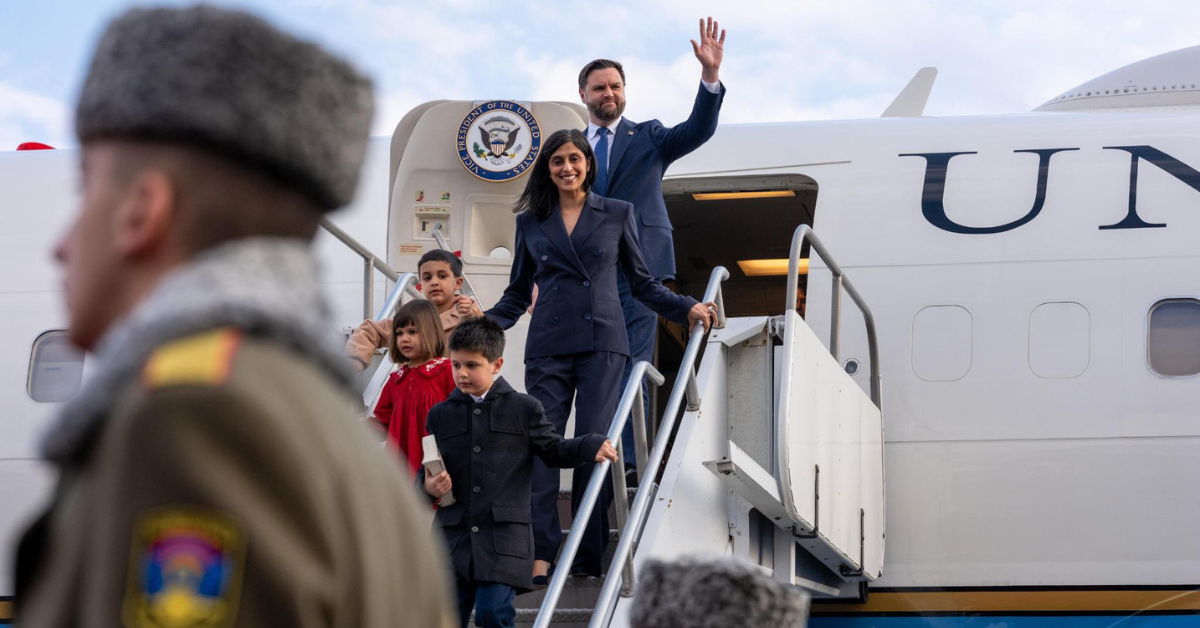
Vice President JD Vance has completed a historic first visit by a sitting U.S. vice president to Armenia, a trip that the Trump administration and Armenian leaders alike described as a major milestone in bilateral relations and regional security cooperation. The visit comes amid heightened unrest on Armenia’s border with Azerbaijan and comes with clear U.S. commitments to support Armenia’s sovereignty and democratic development.
In remarks to reporters at the start of his trip, JD Vance said he was “honored to be the first vice president to visit Armenia,” emphasizing that the visit reflected America’s long-standing partnership with the nation. “Armenia’s sovereignty and security are priorities for the United States,” Vance said, underscoring Washington’s backing for Armenia at a critical moment in its modern history.
JD Vance visits Armenia’s genocide memorial complex, committed by the brutal Ottoman Turks at the time.
Yet the Turkish state still refuses full accountability for the Ottoman-era genocide, and does everything to ensure the survival of the Islamic Republic.
History doesn’t… pic.twitter.com/XdzV9wprpa
— JohnnyNash (@JohnnyNash77) February 10, 2026
Vance’s visit included meetings with Armenian Prime Minister Nikol Pashinyan and other senior officials in Yerevan. In those engagements, he reiterated U.S. support for Armenia’s territorial integrity and condemned recent violence that has flared along the border with Azerbaijan — violence that has displaced civilians and deepened regional tensions.
In a joint appearance with Prime Minister Pashinyan, JD Vance stated plainly that the United States “stands with Armenia.” He said that the United States and Armenia share “values that bind us together,” and stressed the importance of peace and security in the Caucasus. “We will continue to support Armenia and its people,” Vance told assembled officials and press.
The vice president pointed specifically to ongoing security challenges, declaring that “there is no military solution to this conflict” and urging dialogue and diplomacy. By framing his remarks this way, Vance aligned closely with both U.S. strategic interests and Armenia’s desire for peaceful resolution of border tensions, while emphasizing the necessity of international cooperation.
In discussions with Armenian officials, JD Vance also highlighted American commitments to economic and democratic support. He said that “the United States is committed to supporting inclusive economic growth” in Armenia and reiterated promises of continued U.S. engagement in democratic reform efforts. “We will be a partner for Armenia’s prosperity,” Vance stated.
His historic status as the first sitting vice president to visit the nation was reflected in public remarks by Armenian leadership as well. Prime Minister Pashinyan welcomed Vance’s visit with gratitude and underscored Armenia’s appreciation for U.S. support. Calling the visit “significant,” the Armenian leader affirmed that “Armenia attaches great importance to its relationship with the United States,” while thanking Vance for his personal engagement.
The trip also included high-level discussions with Armenian foreign policy figures and parliamentarians, where Vance reiterated U.S. interest in both immediate security needs and long-term stability in the region. “We seek a peaceful and stable Caucasus,” he said, tying U.S. diplomatic objectives to Armenia’s strategic environment.
Throughout his visit, JD Vance was clear in asserting that the United States’ relationship with Armenia extends beyond momentary diplomatic gestures. “This visit is a demonstration of our enduring commitment,” he stated, noting that “we will continue to work with Armenia on issues of mutual interest and shared values.”
📸Vice President Vance and @SLOTUS in Yerevan, Armenia, where VP Vance and Prime Minister Nikol Pashinyan signed a historic civil nuclear agreement. pic.twitter.com/ggLWck4soV
— Vice President JD Vance (@VP) February 9, 2026
The vice president’s team also highlighted the strategic significance of deepening cooperation in areas ranging from defense to economic development. U.S. officials noted that Armenian communities, both inside the country and among the diaspora, regard American engagement as vital to stability and prosperity.
Vance’s visit marked not only a historic first in vice presidential travel but also a clear signal of U.S. policy priorities at a time of heightened geopolitical tension. By meeting with senior Armenian officials, delivering forceful public support for sovereignty and security, and reinforcing promises of economic cooperation, Vance underscored Washington’s intent to be an engaged partner for Armenia going forward.
As JD Vance prepared to depart Yerevan, he reaffirmed that the United States and Armenia “will continue this partnership” and that American support for Armenia’s independence and democratic future remains steadfast. With his historic visit complete, Vance has set a new benchmark for bilateral engagement, and his remarks are likely to resonate in both capitals as the region navigates ongoing security challenges