

The United States of America, under the Donald Trump administration, has been one of the most volatile and controversial leadership models, leading to continuous global media scrutiny. The superpower has launched several policies, altered judgments related to those policies, and carried out significant operations.
For better or worse, it looks like President Donald Trump’s wish to retain the spotlight has been successful, as he is set to complete one year of his tenure in January 2026.
Despite negative backlash toward the Republican government, leaders of the MAGA movement have stuck to their ideologies of removing illegal immigrants from the country (even though reports claim the policy has caused significant outrage and bias), making policies align with the GOP motto.
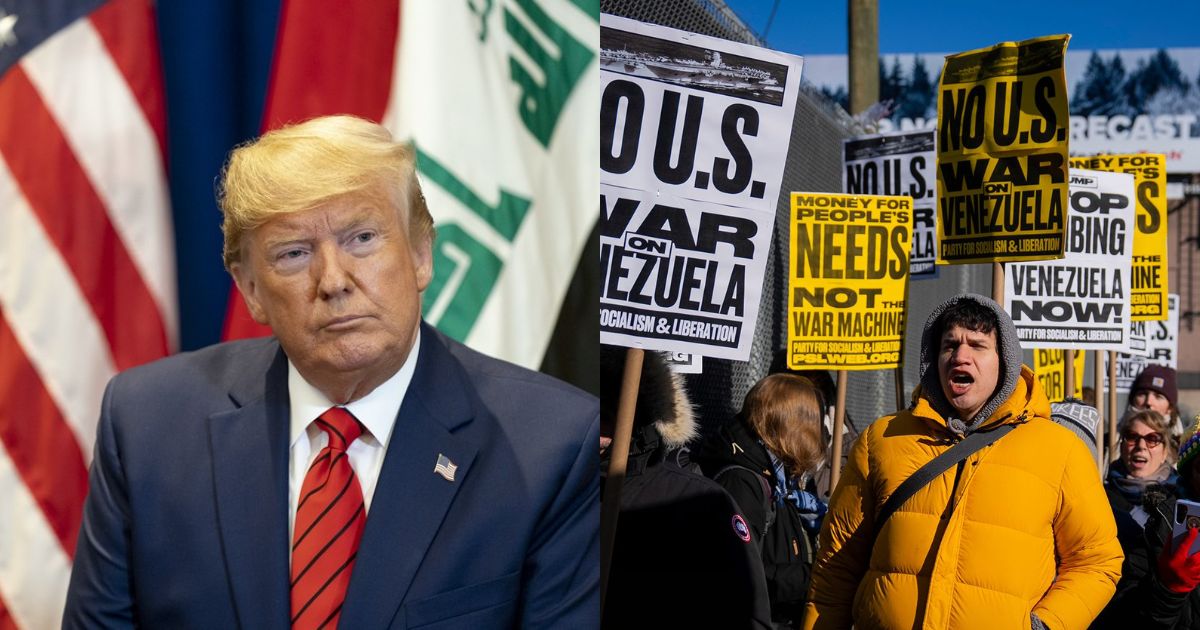
Talking about illegal immigrants and Trump’s mass deportation policies, the U.S.-Venezuela relationship has been rocky for quite a while. With Trump allegedly blaming Venezuelan people for illegally entering the country to abruptly arresting and deporting them, making them stay in isolated detention centers, the political differences do not seem to normalize.
In fact, the United States reportedly captured Venezuelan President Nicolás Maduro and his wife,, First Lady Cilia Flores, from their Caracas residence on January 3, 2026. Donald Trump confirmed the news via Truth Social as media outlets flocked to cover it.
View this post on Instagram
The Trump administration has blamed 63-year-old Maduro for running a corrupt government, citing falling oil prices, international sanctions, alleged drug trafficking, and illegal immigration, all of which have affected America’s economy and global image.
The move has drawn global attention, with President Donald Trump praising it as “one of the most stunning, effective, and powerful displays of American military might and competence in American history” during a press conference at Mar-a-Lago.
As the operation further escalates pre-existing tensions between the two countries, many people have questioned America’s prolonged aim at capturing countries with rich natural resources.
From gold, diamonds, and oil, these valuable resources have been an asset to snatch since World War II. Even during the Cold War, control over oil, cobalt, copper, and uranium shaped conflicts in the DRC and Angola.
Historical examples, such as colonial resource-driven wars, reinforce a pattern mirrored today. With Venezuela holding 303 billion barrels of proven oil reserves, resource control remains central to the U.S. approach, connecting past and present strategies.
View this post on Instagram
Venezuela’s oil is primarily heavy, sour crude, which requires specialized equipment and expertise to extract and refine. In contrast, the U.S. has the capacity to produce sweet crude, which is ideal for gasoline but not for certain industrial products. Heavy, sour crude like Venezuela’s is crucial for diesel, asphalt, and fuels used to run heavy machinery.
Diesel fuel is relatively scarce but remains in high demand. Meanwhile, according to CNN, Donald Trump has allegedly claimed that Venezuela’s oil-producing potential is a “total bust” because the country produces far less than its capacity.
While Maduro has been removed, key figures within his regime, including Defense Minister Vladimir Padrino López and Interior Minister Diosdado Cabello, remain at large.
As the U.S. is set to take over the administration of Venezuela temporarily, leaders of other major nations have expressed mixed reactions to the operation. UK Prime Minister Keir Starmer said the UK supports a transition of power but refrained from commenting on the legality of the operation.
As oil prices remain uncertain, the question now is not about annexing a nation for its natural resources, but how those resources will be managed—through diplomacy, economic pressure, or military force. Whatever happens next will shape Venezuela’s future and define the success of these U.S. operations.