



Someone knew. That’s the only rational conclusion from the cryptocurrency prediction market activity that unfolded in the hours before the United States military captured Venezuelan President Nicolás Maduro.
On a blockchain-based betting platform called Polymarket, mystery traders had wagered hundreds of thousands of dollars on Maduro’s ouster—at odds so favorable they could only make sense if those placing the bets had advance knowledge of what was coming.
The bet that caught everyone’s attention was placed on December 27, when a brand-new account was created on Polymarket and immediately funded with $32,538. The account’s sole focus: betting that the United States would invade Venezuela and remove Maduro from power by January 31.
At the time those bets were placed, the probability of this happening was estimated at just six percent. The shares were trading for roughly seven cents each.
Then, on January 3, the unannounced U.S. military operation occurred. Maduro was captured and flown to New York City for arraignment. Within hours of the announcement, that $32,538 investment had ballooned to $436,750—a return of 1,242 percent.
A mystery trader made $400K betting on Venezuelan Dictator Nicolás Maduro’s capture, and an X user joked it was Barron Trump. https://t.co/QulPggwBPV
— Radar Online (@radar_online) January 7, 2026
What makes this more than just lucky timing is the pattern. Blockchain analyst Lookonchain examined three separate online wallets that placed similar Venezuela-related bets in the hours before Maduro’s capture. All three accounts had been created and pre-funded days in advance. Combined, they netted $630,484 in profits.
This isn’t market volatility. This is someone—or some group—betting with near-certain knowledge of classified military operations. Eric Feigl-Ding, an epidemiologist and public health researcher, didn’t mince words on social media.
“A suspicious new Polymarket account has now profited $150K+ via betting on Maduro ouster—the mystery account scooped up ‘YES’ positions for ~7 cents a share as the largest single shareholder,” he wrote. “It’s now at 99 cents post-invasion. Disgusting.”
Another X user laid out the timeline with damning clarity: “A brand-new Polymarket account quietly loads up $32,537 on ‘Maduro out by January 31?’ at just 7¢ per share. Less than 24 hours later—after an unannounced U.S. special forces operation extracts Maduro from Caracas overnight—the market resolves Yes. Nothing to see here.”
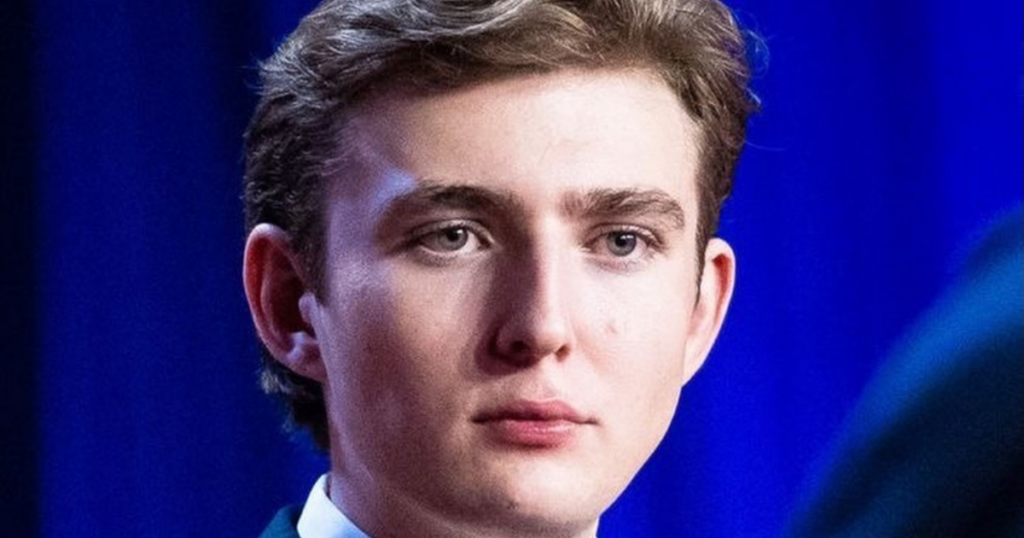
The mystery deepened when internet sleuths began speculating about who might have placed these bets. One popular theory: Barron Trump, the 19-year-old college student and youngest member of the Trump family.
A Polymarket Account Made $400K on Maduro’s Capture. A Small Corner of the Internet Thinks It’s Barron Trump
Someone saw it coming.
On December 27, a new account appeared on Polymarket, the cryptocurrency-based prediction market. Over the next few days, it placed a series of… pic.twitter.com/bPhIvH8ro2
— News Flash (@NewsFlash_12) January 5, 2026
The theory is entirely speculative and has zero evidentiary support, but it gained traction online because the Trump family does have documented connections to prediction markets.
Donald Trump Jr., the president’s eldest son, is a strategic advisor to Kalshi, an online prediction market, holding a paid position there since January 2025. He also joined Polymarket’s advisory board in August 2025 after his venture capital firm made an eight-figure investment in the platform.
These connections, while not proof of wrongdoing, certainly provide the family with both motive and opportunity.
The core issue isn’t Barron Trump or any other individual suspect. It’s whether someone with access to classified information about the Venezuela operation—information not available to the general public—placed bets knowing what would happen. That’s textbook insider trading, regardless of the medium.
Kalshi responded to inquiries by insisting it has policies prohibiting anyone with “material non-public information” from trading on its platform. Polymarket has yet to comment on the bets or whether it’s investigating the suspicious account activity.
The timing of these bets takes on additional significance given Trump’s recent comments about who’s “in charge” of Venezuela. When asked during an interview who was controlling the country after Maduro’s capture, Trump said his answer would be “very controversial” and then declared, “We’re in charge.”
If American officials knew with enough certainty to authorize military action, someone in or near the Trump administration clearly had advance knowledge of the operation.
The question that matters isn’t whether Barron Trump made a lucky bet. It’s whether the people with access to classified information about the Venezuela operation violated federal law by trading on that information before the operation became public.