



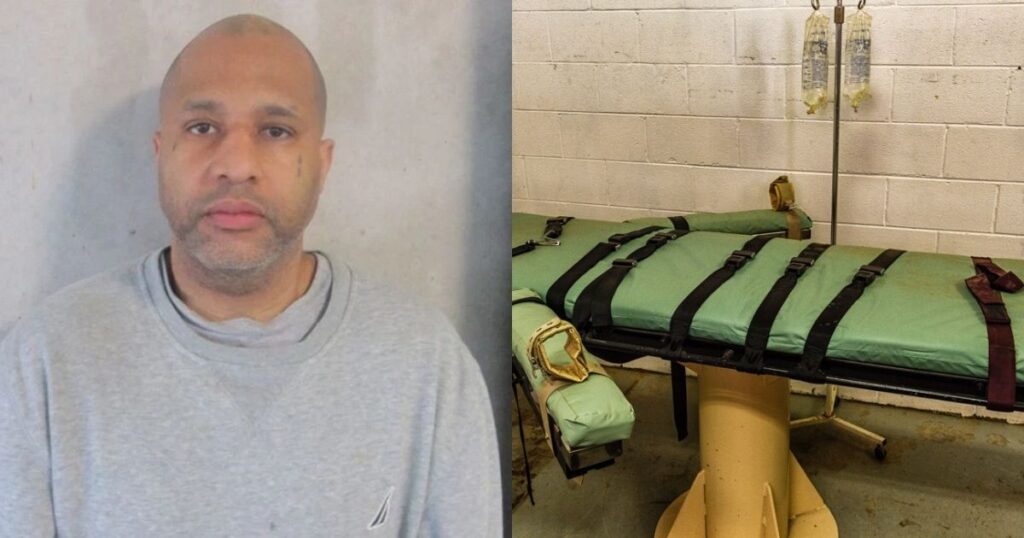
Death row inmate Kendrick A. Simpson is scheduled to be executed next month in Oklahoma. In an effort to reduce his execution to a life sentence, his lawyers had requested clemency, which was denied.
The legal process for his clemency bid was long and contentious, but it didn’t end the way Simpson had been hoping for, with his pleas being rejected by a 3-2 vote. Simpson, 45, appeared in front of the state’s pardon and parole board in recent hearings. He made emotional pleas for mercy.
FOX 25’s Sophia Cabrera is at the scene where the Oklahoma Pardon and Parole Board has denied clemency for Kendrick Simpson. His execution is set for Feb. 12. Read more here: https://t.co/dpcvbNO0IG pic.twitter.com/X3YNVd4x6N
— KOKH FOX 25 (@OKCFOX) January 14, 2026
Simpson, who is scheduled for execution via lethal injection at the Oklahoma State Penitentiary in McAlester on February 12, 2026, has acknowledged his responsibility for the 2006 drive-by shooting. Two young men were killed that night after a club dispute.
During his hearing for clemency, Simpson broke down as he apologized to the victims’ families and said, “I’m not the worst of the worst; I’m not a monster.”
Simpson’s legal team has been trying for his clemency, presenting his difficult upbringing, trauma, and mental health issues. They also claimed that due to substance abuse, Simpson had lost the capability of making rational decisions. They stated that Simpson also has PTSD, yet these claims did not deter the five-member board, and they voted 3-2, allowing the execution to proceed.
Hoping for Mercy, and Naming Names — The Kendrick Simpson Case https://t.co/qlwgeoMWnR By Pat McGuigan https://t.co/vu8ip9gGvp pic.twitter.com/wso2e3hNrF
— darla shelden (@darlajane) January 12, 2026
The board also ignored Simpson’s claims that childhood adversity had made him incapable of making correct decisions in his youth and requested a more lenient punishment from the board.
As the board announced its decision, the reaction from the victim’s families was mixed; however, they all seemed in favor of execution. Some of the family members acknowledged Simpson’s remorse, yet they believed that the final decision by the board had given them the much-needed closure. However, other members accepted that even execution will not give them closure, and that the pain and grief of losing a family member will forever haunt them.
“Our family continues to live with the loss every day,” one survivor said. It showcased how losing a family member to such a violent crime forever remains with those left behind.
Kendrick Simpson was sentenced to death for the 2006 drive-by killings of Glen Palmer and Anthony Jones in Oklahoma City. https://t.co/dpcvbNO0IG
— KOKH FOX 25 (@OKCFOX) January 14, 2026
The case and the ongoing legal battle for clemency not only affected family members but also impacted people across state borders. The case had caused discussions about the severity of crime and the state’s use of the death penalty. Many were not satisfied with the board rejecting clemency pleas.
Capital punishments are often a topic of debate and division among the general public. While many believe that capital punishments are necessary so that society learns that taking a life is not acceptable, many believe that humans have no right to take away someone else’s life and play God.
In recent times, the number of executions and death sentences has increased in the U.S., prompting debate among the public over whether certain crimes warrant such a harsh sentence.