

One of President Donald Trump’s key policies in his second term is stirring backlash in areas where Republicans usually face little opposition.
In the rural West, conservative voters are turning against the administration due to significant cuts to public land agencies. They warn that what was promoted as “efficiency” now threatens their livelihoods.
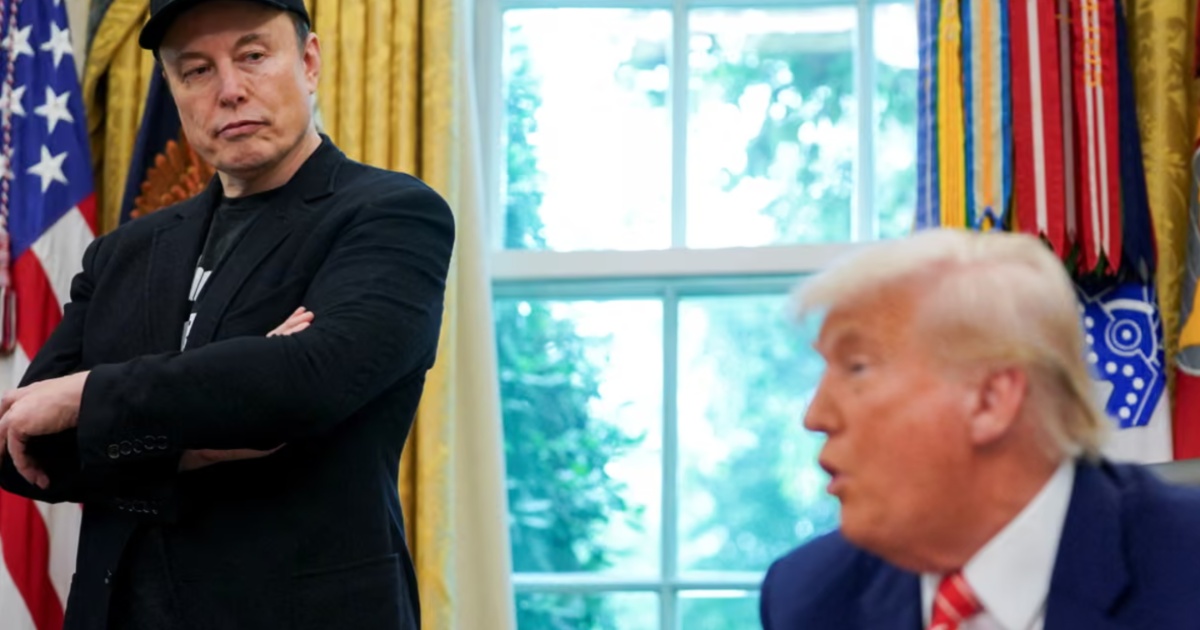
The controversy focuses on Elon Musk’s Department of Government Efficiency (DOGE), which has made major staffing reductions across the agencies that manage about 640 million acres of federal public land. An estimated 5,200 workers have already lost their jobs in agencies like the Bureau of Land Management, the Forest Service, and the Fish and Wildlife Service. More cuts are expected next year. For rural communities that depend on those agencies, the impact is immediate and personal.
In small Western towns, federal land jobs are not just abstract symbols of government bureaucracy; they are vital economic foundations. Steve Ellis, chair of the National Association of Forest Service Retirees, noted that these jobs support entire communities by helping to pay local taxes, fund schools, and keep hospitals running. When these jobs disappear, Ellis warned, the consequences extend far beyond the agencies themselves.
The effects are already visible as trail maintenance has slowed or stopped in some areas after Forest Service crews were sent home. Hunters and hikers report clearing paths themselves. Others worry about the long-term effects on wildlife management and wildfire prevention following cuts to agency scientists and specialists.
This backlash is significant because it is not coming from liberal activists or coastal Democrats. Ranchers rely on public lands for grazing. Outfitters and guides depend on access for tourism. Forestry workers need agency coordination for wildfire prevention and timber management. Hunters and anglers see access to public land as a key conservative value.
“Both the rich and the poor get to use public lands,” said Terry Zink, a 57-year-old third-generation houndsman and lifelong conservative. “The wildlife belongs to us, the people.”
Zink mentioned to Politico that the cuts have already changed how people use the land, and he worries it will only worsen as staffing continues to decline. Despite his conservative beliefs, Zink feels the policy has crossed a line.
“You won’t find anyone more conservative than me, and I didn’t vote for this,” he said.
This sentiment poses a political risk for Republicans in states like Montana, Idaho, and Utah, where conservation and public land access often unite voters across different viewpoints. Conservation groups caution that weakening land management agencies may lead to failure, which could justify privatization or sell-offs down the road.
Sarah Lundstrum, glacier program manager with the National Parks Conservation Association, explained that cutting staff, slashing budgets, and changing agency priorities can create the impression that the government cannot manage public land. She warned that this feeds arguments for private interests to take over, a goal that has been promoted in conservative circles for a long time.
Concerns grew earlier this year when Sen. Mike Lee of Utah included a provision in Trump’s “Big Beautiful Bill” that would have paved the way for selling public lands. This measure was ultimately removed after pushback, including from Republicans in Montana and Idaho.
He recalls Montana’s 2018 elections when GOP gubernatorial candidates lost after supporting Trump-linked efforts to cut national monuments and expand drilling and mining on public land. He believes a similar political backlash could happen again.
“If we get poked too hard on this,” Zink said, “they’re going to get primaried and voted out.”
In solidly red states, public land remains a politically sensitive issue, and the signals that the GOP is going to have a hard time in the midterms continue to grow.