



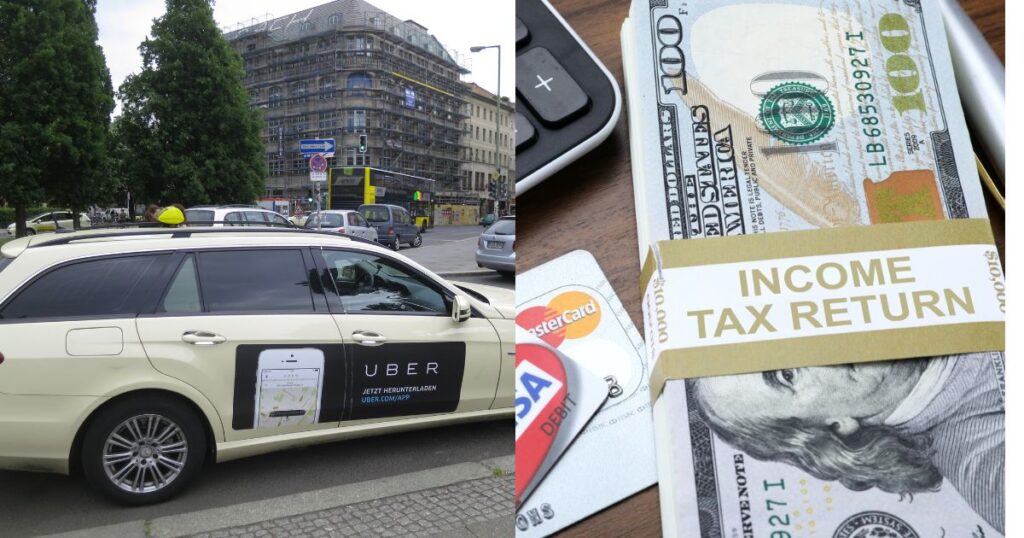
A California man says he learned his identity had been stolen in the most unexpected way — through tax forms showing income he never earned. The documents, tied to Uber driving activity, listed thousands of dollars under his name. What began as a confusing letter soon turned into a battle with the IRS.
Vahik Tatoosi, who lives in the San Fernando Valley, said the first sign of trouble came in September 2025. A welcome packet from Uber arrived at his home congratulating him on becoming a driver.
There was just one problem: no one in his household drives for Uber.
“At first, we laughed it off,” Tatoosi told CBS Los Angeles. “Like, what is this?” But the laughter faded quickly. The couple said they tried contacting Uber, though reaching a live representative proved difficult. Eventually, they communicated through the Uber app and were told the matter had been escalated.
Months later, the situation became more serious. In January, the couple received two IRS 1099 tax forms. The documents showed that someone had used Tatoosi’s name and Social Security number to earn thousands of dollars driving for Uber. One of the forms reportedly listed nearly $7,000 in income.
Vahik Tatoosi and his wife first learned of the alleged identity theft in September 2025. https://t.co/PQTJsisKin
— CBS News (@CBSNews) February 12, 2026
“This is scary,” Tatoosi said. “It’s your identity.”
His wife, Anna Kojoyan, said the discovery raised more than just financial concerns.
“I thought this is a serious matter, not just for identity theft but for public safety as well,” she said. “People, young women, kids, teenagers, they use Uber thinking that all drivers are background-checked. But apparently you never know who’s picking you up.”
According to Uber’s website, drivers must submit a Social Security number, full name, date of birth, government-issued identification and a live profile photo before being approved. The company uses third-party vendors to conduct background checks and says drivers are re-screened annually.
In a statement, Uber said, “The methods of scamming and defrauding companies are constantly evolving. At Uber, we’re committed to investing in robust anti-fraud systems and detection capabilities to keep up with new and enhanced fraud techniques.” The company said Tatoosi’s complaint had been escalated.
Hey @Uber, thanks for the 1099-K for the employment I never had. I followed your fraud reporting steps to the letter and got absolutely zero response. Not even a confirmation email. I’m trying to file my taxes and y’all are playing hide and seek. @Uber_Support can I get a human?
— CazNee (@NeethThe) February 9, 2026
Identity theft experts say this type of fraud is known as employment identity theft. Eva Velasquez, president and CEO of the Identity Theft Resource Center, said the rise of remote and app-based jobs has made it easier for criminals to misuse personal information.
“We have to understand that our data is out there. It’s in the wild,” Velasquez said. She explained that Social Security numbers can be used to obtain work under someone else’s name, leaving the real person responsible for sorting out tax records and possible credit damage.
The issue is not isolated. In 2024, a Kern County man filed a lawsuit after receiving a tax form showing $53,000 in Uber earnings he said he never made. That case reportedly took about a year to resolve with the IRS.
For Tatoosi and Kojoyan, the focus now is cleanup. They have frozen their credit, enrolled in credit monitoring and are working with the IRS to correct the fraudulent income listed under Tatoosi’s name. “The income is being reported under our name,” Kojoyan said. “Now we have to contact the IRS and let them know what’s going on, because they’re going to expect us to pay taxes on it.”
For now, the couple says they are waiting. And watching their mailbox a little more carefully than before.