



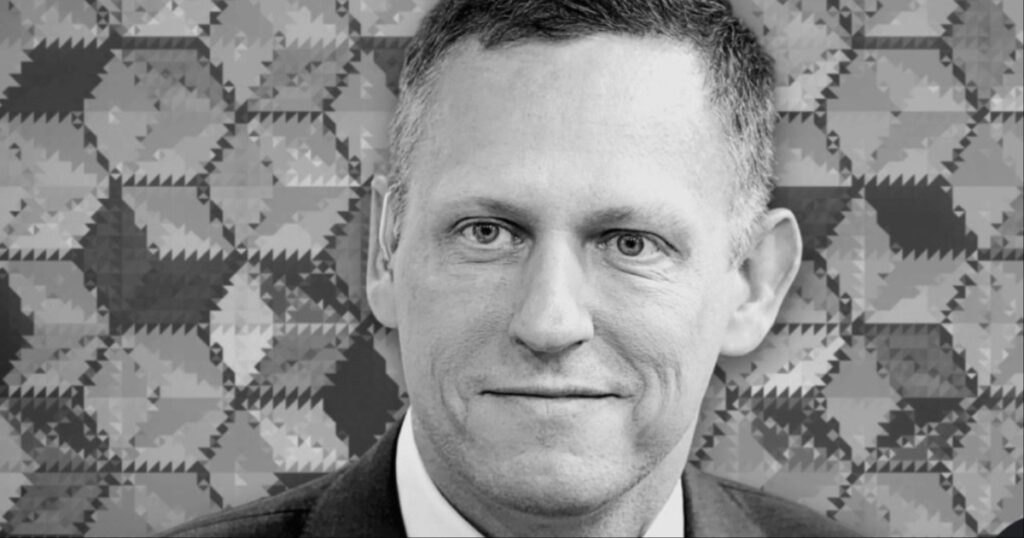
Foreign-born billionaire Peter Thiel is hinting that he might be ready to cut ties with California, and it’s not because he no longer enjoys the sunshine; it’s about taxes.
A new ballot initiative, pitched as an emergency tax on the ultra-wealthy, is still gathering signatures. However, the mere possibility of it appearing on the 2026 ballot is already unsettling the state’s billionaires, including Thiel and Google co-founder Larry Page, according to The New York Times.
Rep. Ro Khanna (D-Calif.) took aim at Thiel with a sarcastic jab with a statement on X.
“Peter Thiel is leaving California if we pass a 1% tax on billionaires for five years to fund healthcare for the working class facing steep Medicaid cuts,” Khanna wrote on Friday, continuing. “I echo what FDR [Franklin D. Roosevelt] said with sarcasm about economic royalists when they threatened to leave, ‘I will miss them very much.’”
The proposal is often referred to as the “2026 Billionaire Tax Act” or “California Billionaire Tax Act.” Simply put, it would impose a one-time 5% wealth tax on individuals with a net worth exceeding $1 billion, based on residency status on a specific date.
A fuller explanation here: https://t.co/Aw6BRkyOd9
— Ro Khanna (@RoKhanna) December 27, 2025
California’s nonpartisan Legislative Analyst’s Office summary states that billionaires living in California on January 1, 2026, would owe a one-time tax equal to 5% of their net worth, due in 2027. They have the option to spread payments over five years, but that would come with extra costs.
For the initiative to make it to the statewide ballot, supporters must gather hundreds of thousands of valid signatures, and the campaign is currently in that demanding phase.
The initiative is a focused rescue plan for public needs, such as healthcare funding, and the union backing the initiative has described it as a one-time “emergency” assessment targeting approximately 200 people with over $1 billion in wealth.
Khanna’s post described the concept as “1% … for 5 years,” which suggests spreading a one-time tax liability over several years, even though the policy is generally summarized as a one-time 5% tax. However, the community notes on X states, “The proposed California billionaire tax is a one-time 5% levy on net worth exceeding $1 billion for residents as of January 1, 2026 (optionally payable over 5 years with interest), not a 1% annual tax for 5 years.”
Thiel is not just any rich Californian complaining about taxes; he is a foreign-born billionaire from Frankfurt, who made his fortune in the politically charged atmosphere of Silicon Valley. He has a long history of support for Donald Trump, including a $1.25 million donation in 2016 and a position on Trump’s transition executive committee after the election.
Forbes currently estimates Thiel’s net worth at around $27 billion. Thiel co-founded Palantir, which has seen significant growth in its government business in recent years, including a notable U.S. Army agreement with a reported ceiling value of $10 billion.
This is just the latest chapter in the endless debate on whether billionaires are paying their fair share amid the high cost of living and a shrinking middle class. Some argue that innovation should be incentivized and the billionaires create jobs, while others feel that, regardless of the mega wealthy’s impact on the economy, they should pay taxes more than the average middle-class American, not less.


