EU rejects 4th COP31 draft over lack of fossil fuel reference
Panama and the Marshall Islands also opposed the draft, and summit president Murat Kurum said no decisions had been adopted.
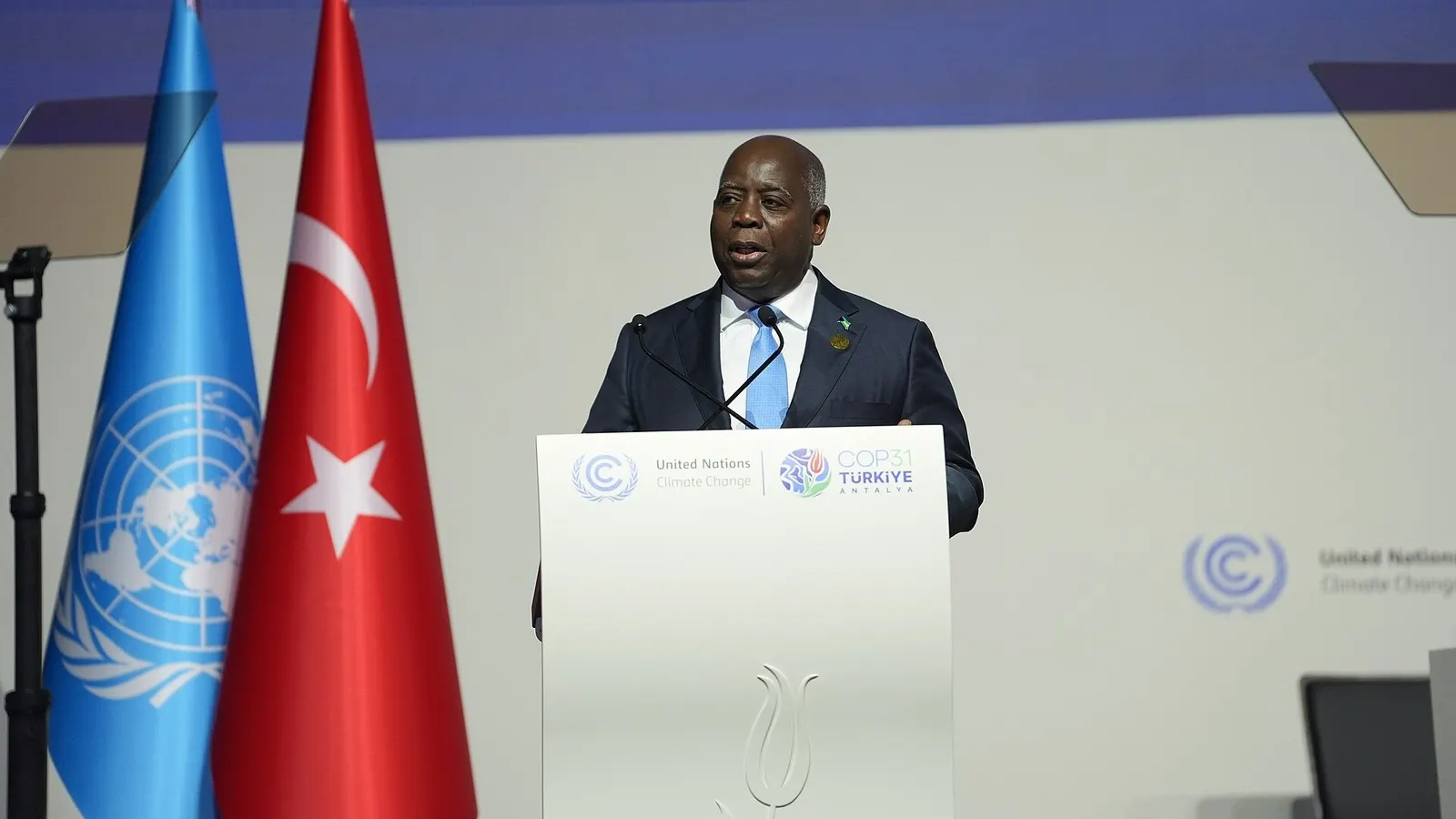
The European Union rejected the latest draft COP31 climate deal in Antalya, Turkey, on Sunday, and summit President Murat Kurum said there was no agreement and the decisions had not been adopted.
The fourth draft, presented by co-hosts Turkey and Australia, made no mention of fossil fuels. “It is unconscionable that we would have a climate pact that makes no mention of fossil fuels,” Irish climate minister Darragh O’Brien told the plenary on the EU’s behalf.
Panama and the Marshall Islands joined the opposition, while German climate minister Carsten Schneider said he would reject the text as written. A deal requires the agreement of nearly 200 nations.
The gathering has already exceeded COP25 in Madrid as the longest-running UN climate summit in history. At the Antalya venue, catering outlets and exhibits had already been taken apart.
The main decision, named the “Antalya Pact,” would, if approved, for the first time recognize that warming is on track to pass 1.5C and call for accelerated development of carbon-removal technologies.
It was not immediately clear whether the talks would be suspended, carried over to the next summit or reconvened, or what would become of decisions already agreed.
A meeting fails to bridge the divide
Turkey and Australia called a hurried meeting between the EU and Saudi Arabia after walkout threats on Saturday, but it produced no compromise, Agence France-Presse reported.
Kurum had offered a more optimistic assessment before Sunday’s plenary. “From what we can see, there is a large majority consensus... there is compromise on the horizon,” he said. He told reporters, “If it is not adopted, I believe those who push the COP process into a deadlock will need to reflect on their position.”
As he opened the closing plenary, Kurum said, “No one got everything they wanted but everyone can find something of themselves in this text. This is what consensus means.”
O’Brien, whose country holds the rotating EU presidency, told delegates, “We want to formally object to the Antalya pact because it fails to meet the moment.” Nongovernmental groups at the back of the hall cheered as he called the text “greenwashing.”
Panama’s representative drew the room’s biggest cheer so far, saying, “Before Paris, the world was heading towards 4C. Current policies point towards 2.8C. That is clear progress. But 2.8C is not safe.” The representative said Panama would not abandon its position because “the atmosphere does not negotiate, the planet does not negotiate.”
The Marshall Islands said it, too, would formally object. “Our needs are so great, but the gap keeps growing. People are dying, the seas are rising,” its representative said.
A Saudi delegation representative defended the draft’s references to carbon capture and storage, asking whether the UN climate science panel was greenwashing and saying it had made clear the technology would be needed.
“If climate change is as some have mentioned today so important, it makes no sense that concrete solutions will be taken off the table,” the Saudi representative said.
Pakistan wanted further work on the text. “Climate Action is not a menu from which we can select only what suits us,” its representative said.
Fossil fuel references removed
Nearly 200 countries arrived in Turkey for COP31 on Nov. 9. The first draft, published Monday, used “fossil fuel” or “fossil fuels” six times, BBC News reported. The second draft, published Thursday, removed every such reference, angering many countries, especially the most vulnerable.
Panama had threatened to block a final deal if its demands went unmet and said the conference had been “hijacked by petroleum.” It joined France and other countries in a Friday letter seeking “a clear transition away from fossil fuels,” The Independent reported.
The latest text instead recalls “the United Arab Emirates Consensus in its entirety,” an indirect reference to the COP28 deal reached in 2023 to move away from fossil fuels. AFP reported that the draft seeks to increase electricity’s portion of total final energy use to 35% in 2035, without expressly requiring renewable power.
Developing nations were angered by the removal of a $120 billion climate adaptation target.
Li Shuo, an Asia Society Policy Institute analyst, told Channel NewsAsia this month that the main dispute concerned fossil fuels and carbon capture. “There are several fights but the primary one is still the one between mostly the EU and Saudi Arabia,” he said.
Observers of the closed-door talks said Saudi Arabia and other major oil producers pushed to exclude fossil fuels from the text and retain carbon removal, The Independent reported.
BBC climate editor Justin Rowlatt reported that Saudi Arabia, Russia and India opposed any reference to fossil fuels because the fuels are central to their economies and a quick phase-out commitment could pose a financial risk.
The Saudi representative told the plenary that the Arab group would “continue to be constructive,” citing Arab states’ small historical share of carbon emissions.
Former German climate minister Jennifer Morgan said the presidency “ignored the views of 150 countries and tabled a very weak text.” Mohamed Adow of Power Shift Africa said the text “recognises” the crisis 40 times but “decides” on action only five times. Bill Hare of Climate Analytics called the rejection “a real line in the sand moment.”
Pakistan took a different position, telling the plenary that the rest of the pact should not be sacrificed because some countries objected to a few items.
AFP said the summit had run over its planned closing time by more than 40 hours and risked losing the numbers needed for any decision as delegates departed for home.
Under rule 16, unfinished COP business passes to the next summit. The Guardian’s Fiona Harvey wrote that a declaration by some countries, like the one at COP25, would isolate those unwilling to commit to moving away from fossil fuels.
If consensus remains out of reach, the negotiations could be suspended until next year, something that has happened only once before at a COP summit, BBC News reported.
Sources
- Agence France-Presse: COP31 teeters on the brink as fossil fuel rift deepens
- The Guardian: Cop31 live: EU rejects deal as longest climate summit ever faces collapse
- BBC News: COP31 climate talks in Antalya, Turkey in jeopardy as EU rejects latest draft - follow live
- The Independent: COP31 climate talks on brink of collapse as EU rejects deal over fossil fuel omission
- Channel NewsAsia: Fossil fuel dispute threatens to scupper climate deal
- Euronews: Why one tiny country could dictate the outcome of COP31