

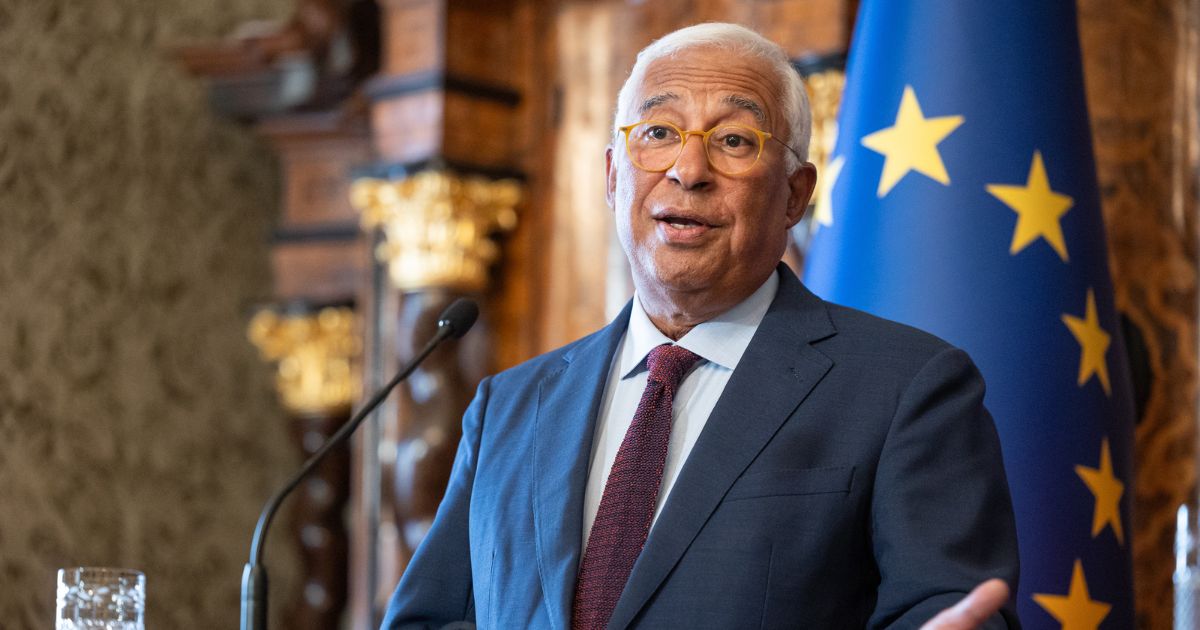
European Council President António Costa publicly warned the United States to stay out of Europe’s internal political scene on Monday. According to ABC News, Costa’s shot across the bow came in response to a newly released U.S. national security strategy that many in Europe interpret as meddling in the continent’s democracy.
Speaking at the Jacques Delors Institute, a think tank, in Paris, Costa said plainly, “Allies don’t threaten to interfere in the domestic political choices of their allies.” He stressed that only European citizens have the right to decide which parties govern them. And, according to Euro News, rejected any outside pressure.
What is the new U.S. national security strategy that has Costa up in arms? The U.S. document, which was published last week, questioned certain European policies, especially on immigration and free speech, as dangerous paths that could lead to what Washington calls “civilizational erasure.” The document offers support for far-right parties in the future, per AP News. Number 47 also implied that European allies were weak.
Allies must act as allies.
We must respect each other’s sovereignty.
Europeans do not share the same vision as the Americans on various issues. This is natural. What we cannot accept is the threat of interference in Europe’s democratic life. pic.twitter.com/ayzVM3Fkdv
— António Costa (@eucopresident) December 8, 2025
Costa, who is the former president of Portugal, continued, “What we can’t accept is the threat of interference in European political life. The United States cannot replace European citizens in choosing what the good or the bad parties are.” Using clear, forthright speech, he reaffirmed Europe’s right to choice, no matter what the Trump administration said.
“The United States cannot replace Europe to say what vision we have, and what is the freedom of expression,” Costa stated before adding, “If you want to be strong on the international stage, you have to be strong at home.” Costa also encouraged Europe to have confidence in its own strength and abilities.
On the topic of freedom of speech, Costa pointed out, “history has taught us that you can’t have freedom of speech without freedom of information.” He then added, “There will never be free speech, if the freedom of information of citizens is sacrificed for the aims of the tech oligarchs in the United States.”
What I see is that there are so many people trying to undermine Europe. Why? Because the EU is strong. And we are working to make it even stronger.
We have taken bold steps to build the Europe of defence and enhance our strategic autonomy.
We have stood by Ukraine’s side, as…
— António Costa (@eucopresident) December 8, 2025
Fabian Zuleeg, head of the European Policy Centre think tank, expressed concern over those elements. He warned the strategy could embolden far-right parties and accelerate efforts to hollow out the European Union from within.
Zuleeg said, “Pro-European liberal forces need to finally wake up: Trump’s America is not an ally, but an adversary to Europe’s freedoms and fundamental values. His objective is to replace our democratic system with the illiberal populism now entrenched in the U.S.”
Still, Costa tried to strike a balance: he reaffirmed that the U.S. and Europe remain historical partners. He argued Europe must strengthen its own sovereignty, but not adopt “illiberal populism” just to appease foreign pressure.
Germany’s government echoed that partnership-but-principles line. A spokesperson said Berlin values long-standing transatlantic ties. but stands firm on safeguarding political freedoms. The representative, Sebastian Hille, stated, “Europe and the U.S. are historically, economically and culturally linked, and remain close partners. But we reject the partly critical tones against the EU.”
The exchange marks a notable escalation in transatlantic relations. However, Costa’s remarks sent a clear message: European citizens and only they — will shape Europe’s future.