



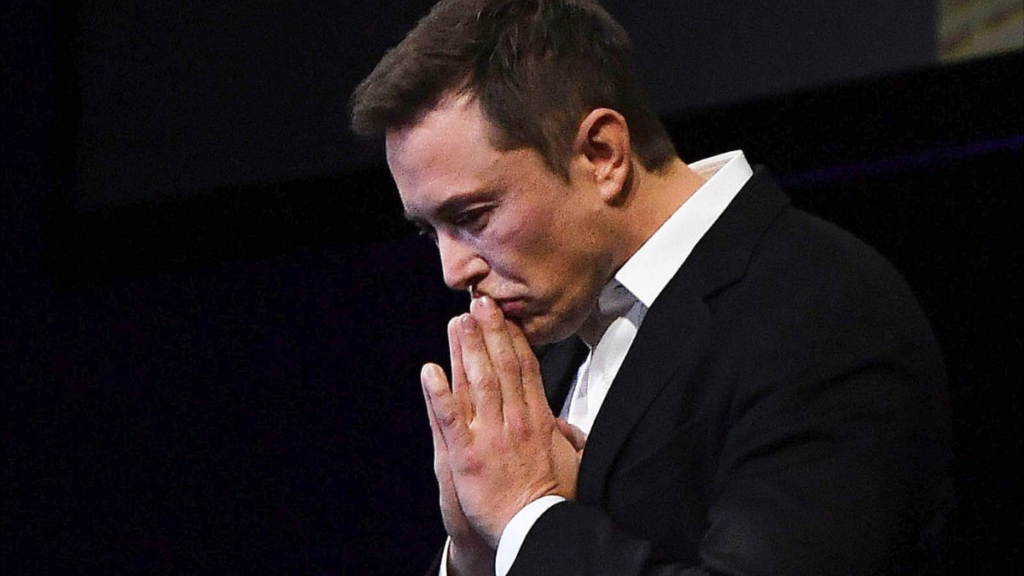
Elon Musk has once again set the internet ablaze — this time after a cryptic comment led some online followers to compare the billionaire tech mogul to Jesus. The Tesla and SpaceX CEO triggered a storm of speculation after responding to a post on X (formerly Twitter) with a remark that many users interpreted as loaded with religious undertones.
Within hours, screenshots of the Elon Musk exchange were circulating widely, prompting a flood of reactions ranging from disbelief to outright praise. His short but pointed response was enough to send conspiracy-minded corners of the internet into overdrive, with some claiming the billionaire was subtly aligning himself with messianic imagery.
The post asked who would ‘evangelize Elon Musk’ with a simple statement: ‘I agree with the teachings of Jesus’ Social media users quickly amplified the moment, with posts speculating whether Musk was intentionally leaning into comparisons or merely responding in his typical tongue-in-cheek style.
Elon Musk: I agree with the teachings of Jesus.
Drop a big Amen 🙏 for Jesus. pic.twitter.com/t3BLLDoFgl
— Godly Nation (@GodlyNations) February 18, 2026
His mother, Maye Musk, shared the X post and a bit of insight on the family’s religious background. “My three children were christened in the Methodist Church. I taught them at Episcopalian Sunday school. I went to a Protestant Sunday school and was married to a Christian minister. We were taught to love everyone.”
Elon Musk has long cultivated an online persona that blends humor, provocation, and unpredictability. With more than 100 million followers on X, his posts frequently move markets, influence cultural conversations, and ignite political debate.
This latest episode proved no different. Within hours of the comment gaining traction, hashtags tying Musk’s name to biblical references began trending. Some supporters praised him as a visionary figure reshaping humanity’s future through electric vehicles, space exploration, and artificial intelligence. Critics, meanwhile, mocked what they described as cult-like behavior among certain fans.
Elon Musk has not issued a formal clarification regarding the comment, leaving observers to debate whether the reaction was overblown or entirely predictable.
Musk’s personal faith journey has evolved over decades and has often reflected a complicated relationship with religion. He has previously said he lost his religious belief around the age of 14 after grappling with larger existential questions about life and the universe. During that period, he described feeling depressed and uncertain about purpose, and he was frequently characterized as either an atheist or agnostic.
“I agree with the principles that Jesus advocated, there's great wisdom, I agree with those teachings things like Forgiveness is important, treating People as you wish to be treated and Love thy Neighbor as thyself are very important”
-Elon Musk
pic.twitter.com/QHGrPbvNTB
— SMX 🇺🇸 (@iam_smx) February 15, 2026
In a 2013 conversation with actor Rainn Wilson, Elon Musk acknowledged that while there are “certainly things we don’t understand about the universe,” he remained skeptical of traditional religious doctrine. He said he was “less convinced that there’s some super consciousness watching over our every movement and kind of evaluating it against some criteria and deciding whether we’re going to one place or another when we die. I think that’s unlikely.”
Nearly a decade later, however, Musk’s tone appeared to shift slightly. By 2022 and 2023, he began expressing a broader appreciation for Christian teachings — while still stopping short of identifying as religious.
“I would say I generally agree with the teachings of Christianity, but I’m not religious,” he said, drawing a distinction between moral philosophy and formal faith practice.
At times, he has also injected humor into the subject, joking that he was “okay with going to hell,” signaling what many interpret as a detached or non-committal stance toward traditional religious belief.
Throughout various interviews and public remarks, Elon Musk has emphasized that he finds value in the ethical and moral teachings attributed to Jesus, focusing more on principles than on devotional or institutional aspects of religion.
The billionaire has previously made bold statements about humanity’s future, often framing his work at companies like Tesla, SpaceX, and Neuralink as part of a broader mission to safeguard civilization. He has repeatedly emphasized the importance of becoming a “multi-planetary species,” describing colonization of Mars as critical to long-term survival. Those grand ambitions have contributed to the mythic aura that surrounds him in some circles.
The Daily Mail reports that online communities quickly began dissecting the wording of Musk’s reply, searching for hidden meaning or coded intent. Screenshots were shared widely, and some users pointed to Musk’s past references to simulation theory and technological destiny as evidence that the remark could be interpreted symbolically.
Musk is no stranger to controversy involving religion or philosophy. He has previously commented on Christianity, artificial intelligence ethics, and the existential risks facing humanity. His remarks often spark heated exchanges between supporters and detractors alike.
In a 2024 interview with Jordan Peters, Musk offered further insight into his evolving views on faith and religion. “While I’m not a particularly religious person, I do believe that the teachings of Jesus are good and wise,” he said. He went on to explain that he is “a big believer in the principles of Christianity,” specifically highlighting ideas such as loving one’s neighbor and turning the other cheek.
The following year, Musk again addressed spiritual questions — this time focusing on the origins of the universe and whether the concept of God fits into his worldview.
“I’m open to the idea of God… If you say, where did the universe come from? How is it created? I suppose there would be some entity that you could call God,” he said, signaling a willingness to entertain the possibility of a higher power.
Still, Musk made clear that his perspective is grounded in evidence and scientific reasoning rather than doctrine. “I’m open to believing in things proportionate to the information that I receive,” he explained, describing what he called a “physics view of reality” instead of a firm or traditional religious commitment.
In this instance, the speed at which the narrative escalated underscores Musk’s outsized influence in the digital age. A single sentence was enough to dominate discussion across platforms.
Musk has not directly addressed the comparisons, and there is no indication that he intended to present himself in religious terms. Still, the reaction highlights how closely his words are scrutinized — and how rapidly online communities can build elaborate narratives around even the briefest comment.
For now, the billionaire appears content to let the internet debate rage on. As with many Musk moments, what began as a short online reply has evolved into a full-blown cultural conversation — proving once again that when Elon Musk posts, the world watches.