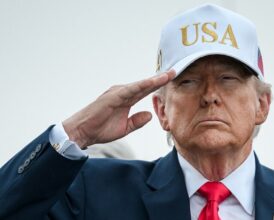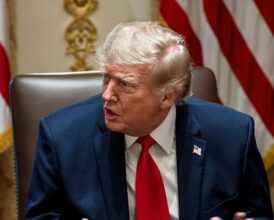


President Donald Trump announced that he will require voters to show identification for the 2026 midterm elections, even if Congress does not pass a law. He indicated that he plans to pursue an executive order that would test the limits of presidential power over election administration.
In a series of Truth Social posts on Friday, Trump supported a House-passed bill requiring proof of citizenship to register to vote in federal elections. He stated he would take action himself if the Senate blocks it. “If we can’t get it through Congress, there are legal reasons why this scheme is not allowed. I will present them shortly, in the form of an executive order,” Trump wrote. In another post, he added: “There will be voter ID for the midterm elections, whether approved by Congress or not!”
Trump did not explain the legal basis for the executive order in the posts. The White House has also not provided the text of a new directive. Reuters reported that Trump’s announcement came as the voter eligibility bill he supports faces long odds in the Senate.
The Constitution mainly assigns election administration to the states. Article I, Section 4, known as the Elections Clause, states that the “Times, Places and Manner” of congressional elections are determined by state legislatures, while Congress has the authority to “make or alter” those rules. The Constitution Annotated notes that the clause addresses how elections are handled and that the power to change state rules lies with Congress, not the president.
Election law groups and state officials have indicated that any effort to impose a national voter ID rule through executive action would likely lead to immediate lawsuits. The National Conference of State Legislatures has asserted that states and local governments run elections, although presidents have occasionally issued executive orders affecting federal election activity, typically concerning access or federal agency practices instead of directing state operations.
Trump has frequently included voter fraud claims in his political messaging. Reuters noted that his recent comments show a continued focus on tightening voting rules before the midterms. Trump’s posts claimed that Democrats oppose voter ID requirements, which he has connected to his wider criticisms of election administration.
In recent years, Congress has looked into the legal limits of executive orders related to elections. A Congressional Research Service legal analysis of a past Trump executive order on elections in 2025 outlined constitutional and statutory limitations and summarized existing litigation challenging that order’s provisions. The CRS analysis characterized election administration as an area where federal and state authority overlap, but where states have primary responsibility unless there is valid congressional action.
Reuters reported that Trump’s statement about requiring voter ID “regardless of Congress” faces the practical reality that most voting rules for federal elections are implemented by state and local election officials under state law. States already differ significantly on voter identification requirements. Some require photo ID at polling places, while others accept non-photo identification or even allow voters to cast ballots without ID, sometimes with extra verification steps.
Trump mentioned he will present his reasoning in an executive order, but he did not clarify whether the order would aim to force states to change polling-place rules, condition federal election funding, direct federal agencies to enforce rules, or focus on federal elections conducted on federal property. None of these details were included in his social media posts, and Reuters reported that the president did not provide further information.
Any new directive is expected to become part of a larger debate on election policy as November 2026 approaches. With control of Congress at stake, both parties are positioning themselves on voting access, ballot security, and the role of federal authority in elections.