


The Justice Department has quietly retreated from one of the most dramatic allegations the Trump administration used to justify its campaign against Venezuela’s Nicolás Maduro, the claim that he led a formal drug cartel known as the Cartel de los Soles.
In a revised indictment unsealed after Maduro was captured, federal prosecutors dropped language that had previously described the Cartel de los Soles as a real, organized criminal group with Maduro at its head. Instead, the filing recasts the term as a label for a corrupt system, not a cartel in the traditional sense, marking a clear shift from the government’s earlier posture.
The accusation traces back to a 2020 grand jury indictment that portrayed Maduro as the leader of a cocaine-trafficking organization working with armed groups and seeking to push drugs into the United States. That framing later migrated into policy. In July 2025, the Treasury Department designated the Cartel de los Soles as a foreign terrorist organization. In November, Secretary of State Marco Rubio ordered the State Department to do the same.
Experts on Latin American crime have long argued that the term never described a discrete cartel. It originated in Venezuelan media in the 1990s as slang for officials, particularly in the military, who were corrupted by drug money. The revised indictment appears to acknowledge that distinction.
Rather than describing a cartel with leadership and structure, prosecutors now say drug profits “flow to corrupt rank-and-file civilian, military and intelligence officials, who operate in a patronage system run by those at the top, referred to as the Cartel de los Soles or Cartel of the Suns.” The phrase, the indictment explains, refers to the sun insignia worn by senior Venezuelan military officers.
The difference from the earlier filing is striking. Where the 2020 indictment mentioned the Cartel de los Soles 32 times and described Maduro as its leader, the new version refers to it twice and says Maduro, like his predecessor Hugo Chávez, “participated in, perpetuated and protected” the system.
Elizabeth Dickinson, deputy director for Latin America at the International Crisis Group, said the revised description reflects reality in a way the original indictment did not.
“I think the new indictment gets it right, but the designations are still far from reality,” Dickinson said. “Designations don’t have to be proved in court, and that’s the difference. Clearly, they knew they could not prove it in court.”
The Justice Department’s pullback has not been matched across the administration. In a Sunday interview on NBC’s “Meet the Press,” Rubio again described the Cartel de los Soles as an active cartel and called Maduro its leader.
“We will continue to reserve the right to take strikes against drug boats that are bringing drugs toward the United States that are being operated by transnational criminal organizations including the Cartel de los Soles,” Rubio said. “Of course, their leader, the leader of that cartel, is now in U.S. custody and facing U.S. justice in the Southern District of New York. And that’s Nicolás Maduro.”
The label has never appeared in the Drug Enforcement Administration’s annual National Drug Threat Assessment, nor in the United Nations Office on Drugs and Crime’s World Drug Report, two of the most comprehensive surveys of global trafficking networks.
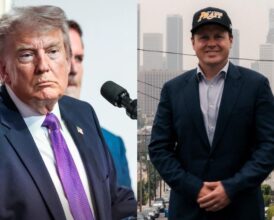
The revised indictment also adds the leader of the Venezuelan prison gang Tren de Aragua as a defendant, casting him as a co-conspirator with Maduro. The alleged link is limited to phone calls in which the gang leader offered protection services for drug shipments moving through Venezuela.
Jeremy McDermott, a co-founder of the crime and security think tank InSight Crime, said that inclusion mirrors political rhetoric more than operational reality.
“It reflects President Trump’s rhetoric,” McDermott said, adding that his organization’s research shows the gang does not control major cocaine shipments.