



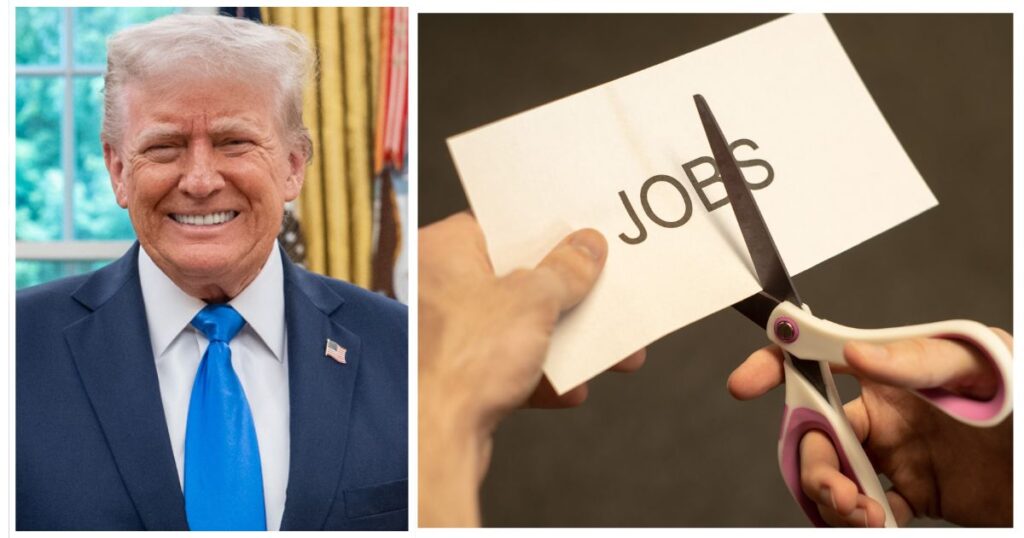
The government finally coughed up the jobs numbers, weeks late and right on time to ruin Donald Trump’s day.
After the 43-day government shutdown froze parts of the federal statistical machinery, the Department of Labor released a two-month snapshot on Thursday that landed with a thud, a sharp loss in October, a weak bounce in November, and a jobless rate drifting higher.
The Bureau of Labor Statistics reported the economy shed 105,000 jobs in October and added just 64,000 in November, a combined reading that left Washington parsing whether the labor market is cooling gently or starting to slip. The unemployment rate rose to 4.6 percent in November, up from 4.4 percent in September, the highest since September 2021. No unemployment rate was produced for October because the shutdown disrupted the household survey used to calculate it.
The topline numbers also undercut the idea that the economy is gliding along on autopilot. Trading Economics forecasts circulating ahead of the report had penciled in modest gains for both months, and the October drop effectively erased the previously reported September payroll increase in the public conversation, even before revisions darkened the picture further.
The BLS also revised August and September down by a combined 33,000 jobs, another reminder that the late data was not simply delayed, it was messy, and subject to the kind of second looks that can turn “fine” into “fragile.”
The Chairman of the Federal Reserve Jerome Powell has admitted that the job creation numbers are wrong by 60,000 jobs per month now! This is the Administration misinforming the American people to hide how bad the economy really is in this Country now! pic.twitter.com/heINCQ5Uhl
— Suzie rizzio (@Suzierizzo1) December 16, 2025
According to the BLS, October’s figures were hammered by layoffs and separations inside government, particularly as deferred resignation offers took effect and federal employees who accepted them came off payrolls. The AP reported federal employment fell by 162,000 in October, a shock to the system big enough to swamp otherwise steady gains in parts of the private sector.
Kevin Hassett, the director of the White House National Economic Council, tried to reframe that jump in unemployment as a temporary artifact of those departures. “Probably what’s going on is the 250,000 federal government workers who took the buyout are staying in the labor force and looking for work,” Hassett told reporters, meaning they are counted as unemployed until they land somewhere else.
But even if you set the federal churn aside, hiring has slowed, and people can feel it. The AP noted job creation has averaged about 35,000 per month since March, down from roughly 71,000 in the year ended in March. Wages also showed less snap, with average hourly earnings up just 0.1% from October, and up 3.5 percent from a year earlier, the lowest pace since May 2021.
The report also arrives as President Trump keeps selling a sunnier story.
At a campaign-style rally in Pennsylvania last week, Trump argued his policies were “creating jobs” and said, “I have no higher priority than making America affordable again.” In an interview excerpt released the same day, he was asked what grade he would give the economy. “A-plus-plus-plus-plus-plus,” Trump replied.
The polling, though, has not matched that confidence. A new AP-NORC poll published last week found just 31 percent of U.S. adults approve of how Trump is handling the economy, down from 40 percent in March.
Even the Federal Reserve has been signaling unease about what it is seeing in the labor data. After the Fed’s most recent move, Chair Jerome Powell said hiring may have been overcounted by about 60,000 jobs a month since spring, and added, “You can say that the labor market has continued to cool gradually, maybe just a touch more gradually than we thought.”
In other words, the late jobs report did not just fill in the blanks left by the shutdown. It delivered a headline the White House did not want.