

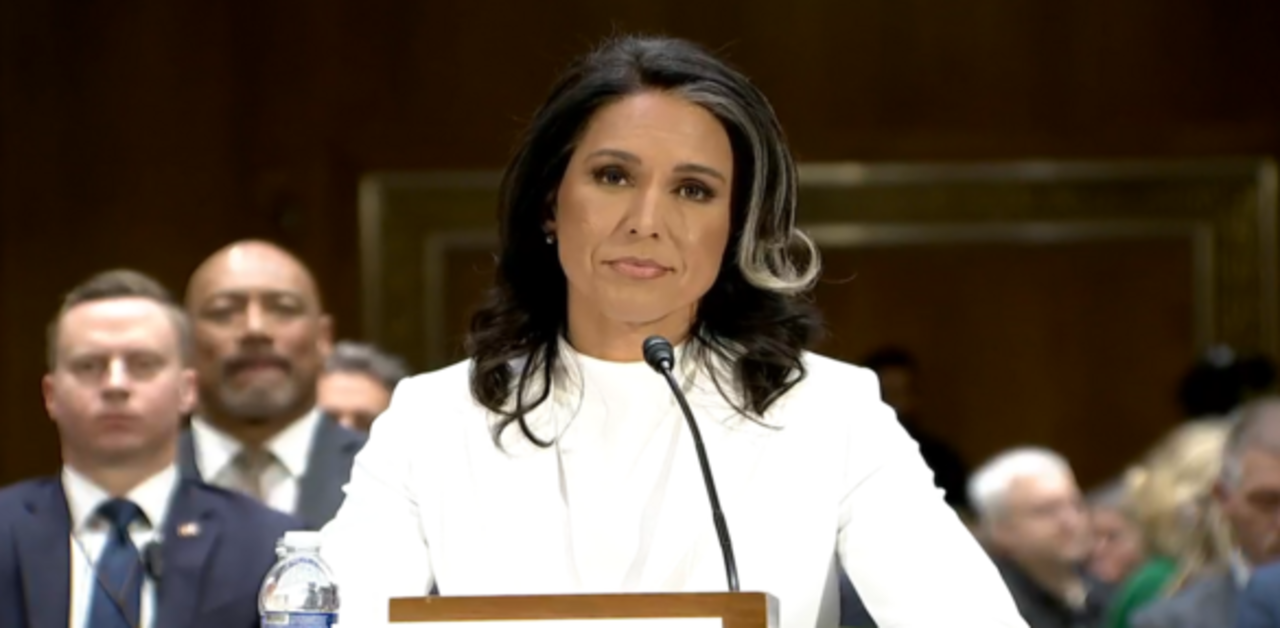
Tulsi Gabbard is facing fierce backlash after finally speaking out about President Donald Trump’s actions in Venezuela. Her message did not resemble the stance she previously took, where she warned that U.S. intervention would lead to “death and destruction” in the country.
Days after U.S. forces captured Venezuelan leader Nicolás Maduro, Gabbard, now the director of national intelligence, made her first public comment on the operation. She posted on X, “President Trump promised the American people he would secure our borders, confront narcoterrorism, dangerous drug cartels, and drug traffickers. Kudos to our servicemen and women and intelligence operators for their flawless execution of President Trump’s order to deliver on his promise through Operation Absolute Resolve.”
Gabbard had been one of the most vocal opponents of U.S. intervention in Venezuela. She viewed the pressure on Caracas as imperial overreach fueled by oil interests, not a genuine concern for democracy or human rights.
“The United States needs to stay out of Venezuela,” she wrote in January 2019. “Let the Venezuelan people determine their future. We don’t want other countries to choose our leaders—so we have to stop trying to choose theirs.”
She reinforced this position weeks later, stating, “The US needs to stop using our military for regime change and stop intervening in Venezuela’s military.” That spring, she warned that history shows how these situations end. “Throughout history, every time the US topples a foreign country’s dictator or government, the outcome has been disastrous,” she wrote. “Civil war or military intervention in Venezuela will bring death and destruction to the Venezuelan people and increase tensions that threaten our national security.”
This you? pic.twitter.com/45tTfWQ4AS
— Republicans against Trump (@RpsAgainstTrump) January 6, 2026
Gabbard also made clear what she thought motivated Washington’s interest. “It’s about the oil… again,” she said back then. This line has resurfaced recently as critics compare her past warnings to her current silence.
Now, she is part of an administration that openly acknowledges oil as a key goal. Energy Secretary Chris Wright declared this week that the United States would control Venezuela’s oil industry “indefinitely,” a remark that echoes the situation Gabbard once condemned.
Online reactions were quick and harsh with critics on X accused her of abandoning her principles after joining Trump’s inner circle. One said, “You are a complete disgrace. Spineless coward.” Another wrote, “Wow. You flipped quickly.” Another commenter proclaimed, “Sad to be you.”
Gabbard is not the only former opponent of intervention now in a tough spot. Steve Bannon, Trump’s former strategist, has also criticized U.S. military actions abroad. Unlike Gabbard, he has continued to speak out. Recently, he praised the Venezuela operation but questioned what the next steps would be. “So is this part of overall Hemispheric Defense, and we’re going to clean up this mess in Latin America?” he asked. “Or is this just the neocons talking him into it?”
The quietest response so far has come from Vice President J. D. Vance. He has long criticized U.S. military interventions, a view shaped by his service in Iraq. Earlier this year, in a group chat mistakenly shared with a journalist, he expressed frustration over strikes in the Red Sea, saying, “I just hate bailing Europe out again.”
Since the Venezuela operation, Vance has stayed silent. He missed an impromptu meeting at Mar-a-Lago and did not attend the press conference where Trump celebrated the mission and talked about taking over Venezuela’s oil. Instead, Secretary of State Marco Rubio has become the public face of the policy, a significant change given that Rubio and Vance are often seen as rivals for Trump’s eventual succession.
What connects all of them is the same calculation that crossing Trump has consequences. Bannon learned this lesson during Trump’s first term. Gabbard experienced it last summer after briefly warning against bombing Iran, only to quickly conform again, and a further break could cost her position.
This leaves the glaring question about many figures in the Trump administration and how much they sold their moral principles for power.