



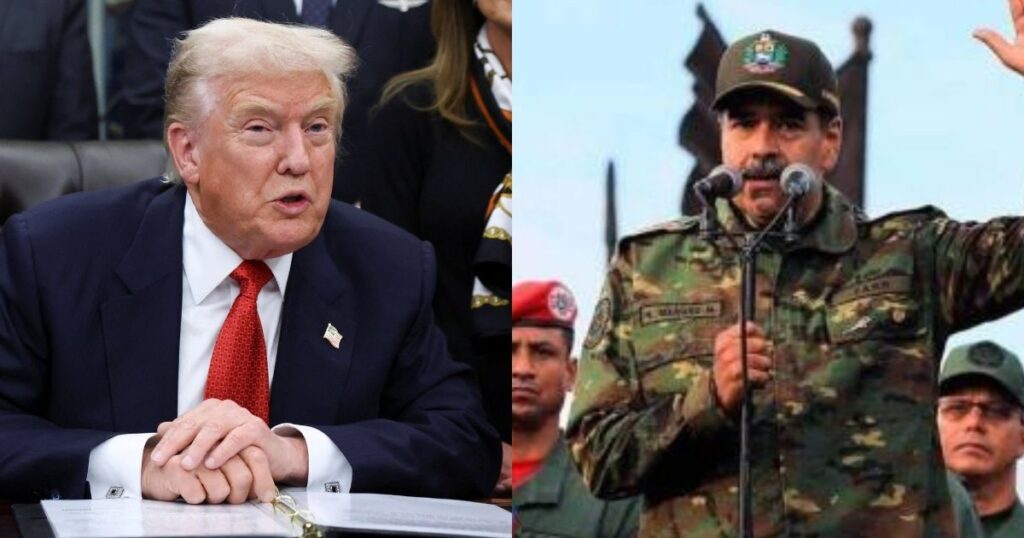
America has remained in the global spotlight in recent months due to its swift and sweeping decisions. This is perhaps the first time people have seen a global superpower undergo so many rapid changes in such a short period. From ceasefires to tariff policies, to debates over gender rules, to viral ICE raid videos, shifting visa regulations, and more, for better or worse, America is undergoing rapid change.
In recent news, the country deployed two F/A-18 fighter jets over the Gulf of Venezuela on December 9, in what appears to be the closest documented flight of U.S. military aircraft to Venezuelan airspace so far. An American defense official, who spoke on condition of anonymity, described the mission as a routine training exercise intended to demonstrate the jets’ operational reach.
View this post on Instagram
Additional details about the flights were provided, but the move came after months of increased U.S. military activity in the region. While America has previously sent B-52 and B-1 bombers along Venezuela’s coast, none appear to have flown as close as Tuesday’s F/A-18s, according to Fox News.
For observers of international affairs, America and Venezuela have had a long-strained relationship. President Donald Trump and senior officials have defended recent U.S. military strikes on suspected drug-smuggling vessels leaving Venezuela by alleging that Venezuelan criminal networks are sending lethal drugs laced with fentanyl into the United States.
According to USA Today, Trump has declared Venezuela a “narcoterrorist state” and claimed these networks are tied to a drug cartel he has labeled a terrorist organization. However, no verified evidence has been presented to support this.
Critics say the administration is confusing fentanyl with the cocaine supply, since UNODC data shows that most cocaine is produced in Colombia and then trafficked north through Central America or the Caribbean.
View this post on Instagram
Regardless, Trump has said he sees no need for a formal declaration of war, stating that the U.S. will “kill people that are bringing drugs into our country.” These operations began following American strikes on suspected drug-running vessels in the Caribbean and eastern Pacific, including a September strike on a ship allegedly departing from Venezuela.
Donald Trump has described these as retaliatory attacks, with the administration arguing they are part of Operation Southern Spear, which is aimed at stopping “narcoterrorists” responsible for American overdose deaths. Yet, Venezuelan President Nicolás Maduro has repeatedly denied the allegations.
Political tensions between the two countries escalated in November, when Trump instructed commercial airlines to treat Venezuelan airspace as effectively closed, aligning with FAA advisories. Defense analysts say Venezuela’s main threat comes from its own air and naval assets, including fighter jets, a limited number of surface vessels, and Russian-made air-defense systems.
US attack on Venezuela risks ‘Vietnam-style’ regional conflict, warns Lula adviserhttps://t.co/GiIRXhmpEG
— EndGameWW3 🇺🇸 (@EndGameWW3) December 8, 2025
As per retired Rear Adm. Mark Montgomery, America has the resources and the capability to launch a much stronger attack. Meanwhile, as per Fox News, former Venezuelan diplomat Isaias Medina similarly noted that the country’s military power appears stronger on paper than in practice.
Apart from political differences, Trump was also upset after he lost the 2025 Nobel Peace Prize to Venezuelan politician, activist, and prominent leader of the opposition party in the country, Maria Corina Machado. She won because of promoting democratic rights for the people of Venezuela.
Disclaimer: All details about the topic have been taken from secondary sources, which are mentioned. Inquistr does not take any responsibility for any changes in the scene in the coming weeks.


