



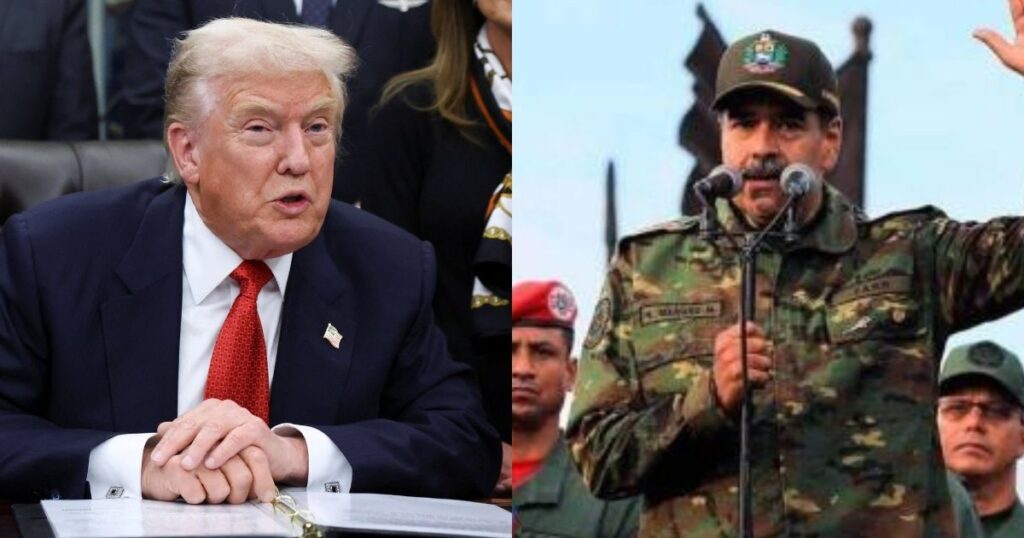
Venezuela is accusing the United States of the “greatest extortion” and actions “worse than piracy” after U.S. authorities seized two Venezuelan oil tankers in international waters, a dispute that has rapidly escalated diplomatic tensions and drawn global scrutiny.
At an emergency United Nations Security Council session on Tuesday, Venezuela’s permanent representative to the world body sharply criticized Washington’s maritime actions. Anadolu Ajansi reports that Samuel Moncada described the oil tanker seizures not as law enforcement, but as a modern form of coercion. “Today the masks have come off. All the toxic excuses used to poison public opinion are confronted with a harsh reality: senior U.S. officials announcing their real objectives,” Moncada said, adding that it was “not drugs, it is not security, it is not freedom. It is oil, it is mines and it is land.”
Venezuela’s complaint follows at least two high-profile seizures carried out by U.S. forces this month. According to reporting by Euronews, one vessel seized earlier in December was the Skipper, a tanker carrying roughly 1.8 million barrels of Venezuelan crude that Washington said was part of a “shadow fleet” moving oil sanctioned over alleged illicit trading ties.
🇻🇪 🇺🇸 #Venezuela accused Washington of “the greatest extortion” known in the country’s history at the #UN Security Council on Tuesday, during a meeting in which Russia and China sharply criticized the #US for putting military and economic pressure on Venezuela. pic.twitter.com/aRbcIEEFhx
— FRANCE 24 English (@France24_en) December 24, 2025
Caracas responded by accusing the U.S. Coast Guard and military of behaving like pirates on the high seas. As China Daily notes, Venezuelan authorities said these actions amounted to “a blatant theft and an act of international piracy,” and they warned the seizures would not go unpunished.
President Donald Trump‘s administration has defended its operations as part of an intensified sanctions enforcement strategy targeting the Venezuelan oil industry. During the Security Council meeting, U.S. Ambassador to the U.N. Mike Waltz said Washington would enforce “maximum” sanctions to deprive Venezuelan President Nicolás Maduro’s government of resources it alleges are funding criminal networks.
Maduro himself has refused to back down, framing the dispute as an existential confrontation over sovereignty and economic survival. In fact, per Euronews reporting, Maduro called the U.S. blockade and seizures “a campaign of aggression that goes from psychological terrorism to corsairs attacking oil tankers,” and warning that Venezuela was prepared to “accelerate the pace of our deep revolution!”
🇻🇪🇺🇸Venezuela accuses US of ‘extortion’ during UN debate over sanctions and military action pic.twitter.com/svSSfp01rh
— tut0ugh (@tut0ugh) December 24, 2025
The dispute has triggered legal and legislative reactions in Caracas. Venezuela’s National Assembly passed a law criminalizing support or participation in piracy and blockades against the nation’s oil commerce, with penalties including up to 20 years in prison for offenders.
International reactions have been mixed. Forbes notes that Chinese officials condemned U.S. seizures as a violation of international law, saying Washington’s actions “are a serious violation of international law” and that China “opposes illegal unilateral sanctions…without authorization from the UN Security Council.”
Recent U.S. actions against ships near Venezuela may embolden other countries to seize or detain ships, legal experts said. https://t.co/VkrpBStu2n @raymondorta
— Venezuela Law @VenezueLawyers LegalTech Firm (@VenezueLawyers) December 24, 2025
Despite the rhetoric and legal posturing, U.S. officials have maintained their focus. The U.S. argues that blocking sanctioned oil shipments is necessary to cut off revenue streams that, it says, fund illicit narcotrafficking and other criminal networks. Waltz stated that the sanctioned tankers operate as a “primary economic lifeline” for Maduro’s government and linked groups.
The twin tankers’ seizures have already disrupted Venezuela’s oil exports, which are crucial to its economy, especially at a time when alternative markets, like China, have become key buyers. U.S. pressure has forced Caracas to consider new legal and economic defenses in response to what it calls unilateral coercion.