



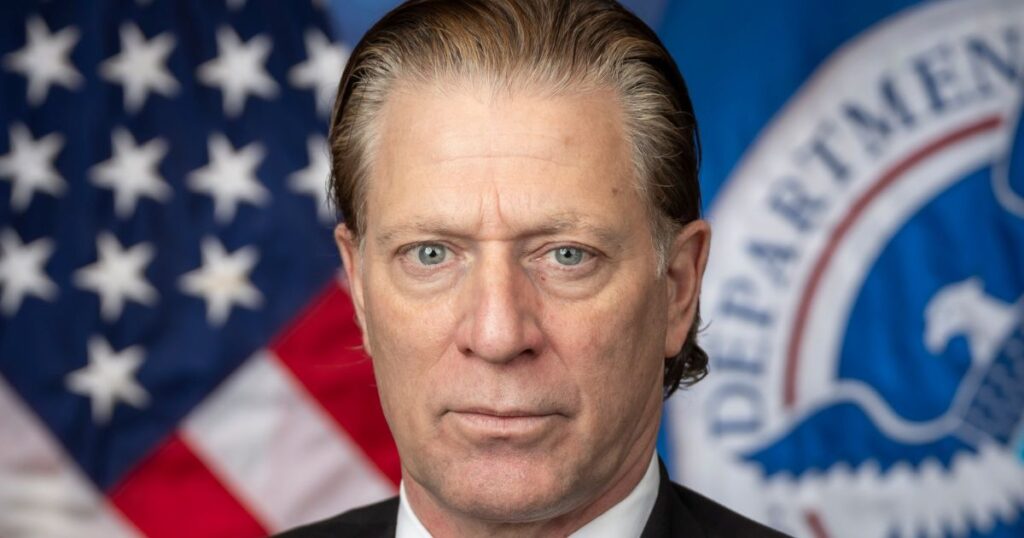
David Richardson, the acting head of the Federal Emergency Management Agency, has resigned after just six months on the job.According to multiple reports, his short tenure was marked by controversy, internal discord, and questions about his leadership during crises.
Richardson, a former Marine Corps officer and DHS official, quietly stepped down on November 17, 2025, according to ABC News. His exit comes amid growing concerns over FEMA’s direction and capacity under his leadership. Presently, it seems as if Karen Evans, FEMA’s new chief of staff, will replace him, per CNN.
Every time there’s a Republican president he puts some unqualified hack in charge of FEMA and people die as a result. pic.twitter.com/aZni1IcQxv
— Rachel Bitecofer 🗽🦆 (@RachelBitecofer) November 17, 2025
The former FEMA head gave his two weeks’ notice. But those in the know, reveal that the Trump administration would have been booted him from the role in the near future and that those plans had already been put in motion.
Upon receiving his resignation, a spokesperson expressed their gratitude towards Richardson. They thanked him “for his dedicated service and wish him continued success in his return to the private sector.”
🚨 BREAKING: Acting FEMA Director David Richardson resigns.
His sudden departure raises questions about the agency’s leadership amid ongoing emergency challenges. pic.twitter.com/h37GWJHVso
— Digi Gal 🌸 (@DigitalGalX) November 17, 2025
During his time in charge, Richardson rarely made public appearances. Of course, this sparked debate among political watchers. Critics say he was low-profile even during major disaster moments, including the Texas floods earlier this year. The disaster killed more than 130 people, yet the acting head only made an unannounced appearance at the flood zone more than a week later.
According to The Washington Post, in addition to overseeing FEMA, Richardson still maintained his other role at the DHS Office for Countering Weapons of Mass Destruction. His dual assignment apparently raised eyebrows internally.
CNN also reports that FEMA under Richardson struggled to prepare for hurricane season. The former marine infamously said that he was unaware that the U.S. had a hurricane season.
Our neighbors who lost homes, land, and livelihoods to the Hermits Peak – Calf Canyon Fire deserve better. FEMA must honor its responsibilities with transparency, urgency, and respect for the families still waiting for compensation. pic.twitter.com/aIS6JZkEnv
— Rep. Teresa Leger Fernández (@RepTeresaLF) November 17, 2025
Richardson’s leadership style had raised red flags from day one. At his first all-hands meeting, he warned staff, “I will run right over anyone” who doesn’t align with his reforms.
Richardson also wanted to have the last say and wanted to be the authoritative voice. decision-making centralized power too much. Per CNBC, he said, “I, and I alone speak for FEMA.” His response had many questioning if this was really how you run a response agency.
As such, he was repeatedly blocked from speaking to the public or at conventions. As one official asked, “Have you heard him speak?” Before explaining, “He does more damage than good.”
BREAKING🚨: FEMA Director David Richardson formally submits resignation! pic.twitter.com/gadePu2qtb
— Officer Lew (@officer_Lew) November 17, 2025
At the same time, he was also criticized for having no experience in the natural disasters sector. Richardson was initially tapped to take over the role from sacked Cameron Hamilton. The latter told CNN, “He never should have been there to begin with.” He also described Richardson as “unprofessional and overwhelmed.”
Staff turnover was high during his stint, per Al Jazeera. DHS placed several of its own officials into key FEMA roles just weeks before hurricane season, including personnel with little or no experience in disaster management.
Richardson’s resignation adds to wider concerns over FEMA’s future. With the Trump administration’s downsizing push, it could undermine FEMA’s ability to respond in future crises.
For now, FEMA enters another phase of uncertainty, even as disaster risk shows no signs of slowing down.


