


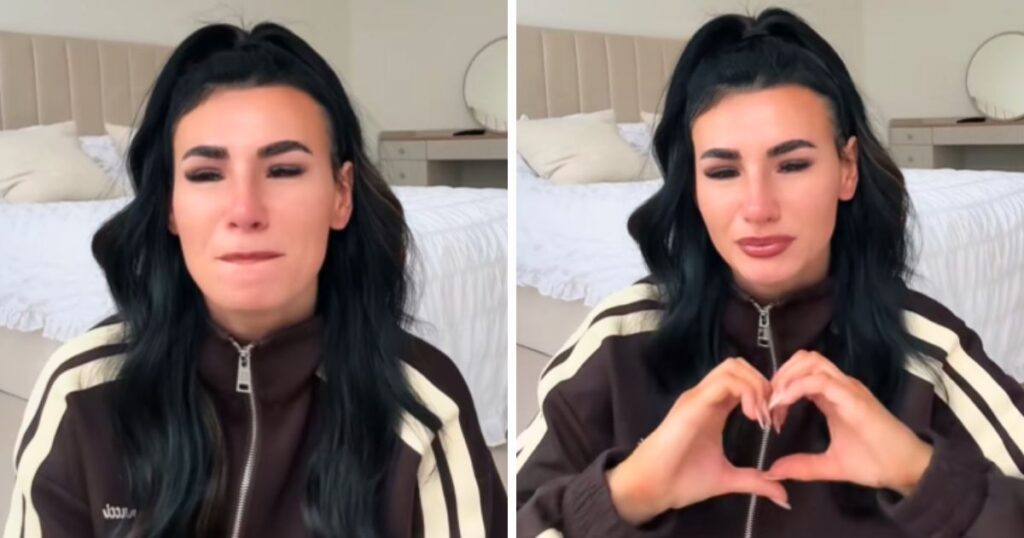
An influencer’s lie has come back to haunt her on TikTok, the platform where vulnerability often means viral. Creator Brittany Miller — known for her cooking, family vlogs, and mom-life content — has admitted she faked having cancer long before she gained 3.5 million followers. And it’s not going over well.
Miller’s act of transparency was shared in a video. In reference to her 2017 declaration that she was battling cancer, she said, “If I could go back and change what I did, I would.” But the admission only angered fans, who said the lie felt calculated.
Miller told a friend in 2017 that she had cancer and was undergoing radiation treatment. A fundraiser was also made on her “behalf,” but she says that after seeing people’s donations, she closed it. She insists that she “didn’t take a penny.” The problem is that Miller was found guilty of fraud by false representation in 2020. She was fined and placed on a one-year conditional discharge.
She then went on to be a successful influencer. Brittany’s desperation is seen in her recent apology video though. In 2017, she described herself as “depressed, suicidal, and lost,” after she said that the fake diagnosis was because she feared losing people.
@brittanyhmiller♬ original sound – Brittany
She clarified, “It was one stupid sentence that I said almost a decade ago.” But not all fans can empathize with the influencer.
The Sun has also reported that her past conviction (along with screenshots of the now-deleted fundraiser) has been circulated on social media. Many even feel duped by someone they once trusted. But we have to recall that several influencers are making up illnesses to gain sympathy or attention. Australian blogger Belle Gibson faked terminal brain cancer in 2014 to land a book deal and an app.
This phenomenon is referred to as “Munchausen by Internet” and is a disorder in which people fabricate illnesses online. The term was coined by psychiatrist Marc D. Feldman, who claims that it’s becoming more common on the popular platform. He told WebMD, “Some of these posts are intended to educate, but many (…) seem to be attempts to feel ‘special’ by having a dramatic diagnosis.” Feldman also said that likes can be more validating than money. But the sad part is that with a lot more engagement, these made-up stories about serious and/or life-threatening diseases overshadow real patients’ stories about fighting for their lives.
Miller still says that her lie was from before she was an influencer, and that her fiancé helped her “forgive” herself. She now wants to work as a mental health advocate. Perhaps she has good intentions, but people are suspicious about her confessing after so long. Can an influencer with millions of followers and a conviction become an advocate? Or is this just another algorithmic rebranding?