



Archaeologists are known to work under challenging circumstances. They excavate remains and undergo months of research, sometimes even under extreme conditions, to bring back necessary evidence from the past that can be studied, honored, and preserved today. In a generation where we are taught that the past is history, many forget that the past is what makes the present worth living.
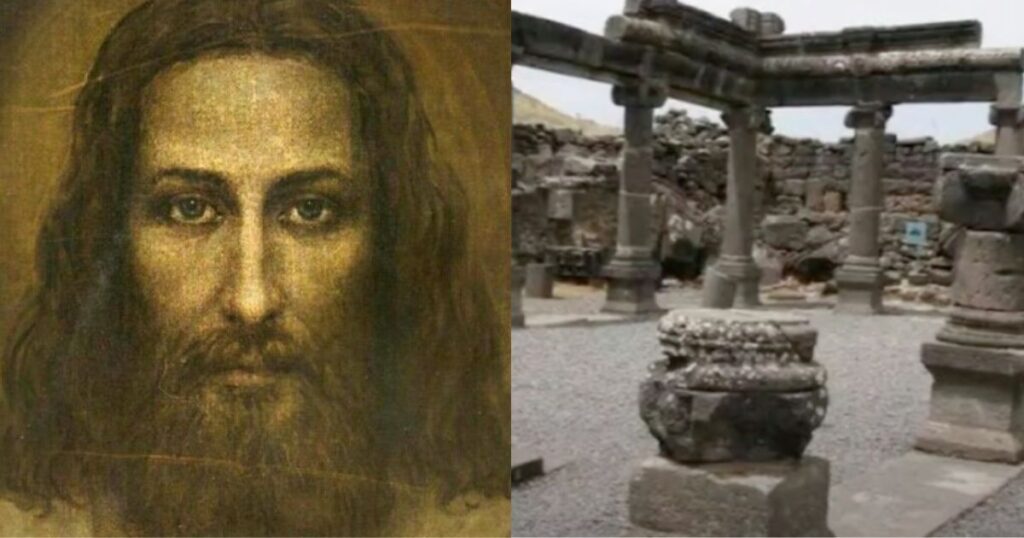
Recently, archaeologists believe they may have uncovered the remains of a first-century synagogue in Israel, a discovery already hailed as one of the most significant biblical finds in recent decades.
The ruins were found beneath a later structure in the ancient village of Chorazin (also spelled Korazim), a site long associated with the New Testament. Biblical texts recount Jesus preaching and performing miracles in Chorazin’s synagogue before condemning the village for lacking faith.
According to Mirror US, in the Gospel of Matthew, Jesus issues a stern warning: “Woe to you, Chorazin! Woe to you, Bethsaida!” However, despite centuries of speculation and pilgrimage, no physical trace of a synagogue from that period has been found. However, a breakthrough occurred during a 2024 re-examination of early 20th-century excavations at Korazim National Park, where a 4th-century synagogue had previously been uncovered.
Beneath its basalt stone floors, archaeologist Achia Cohen-Tavor and his team discovered a deeper layer of large stones arranged in an architectural pattern. After removing several layers, archaeologists found a big foundation with fragments of pottery, ancient coins, and everyday household items dating back to the first century.
WOW: 1,650-year-old Jewish treasure unearthed in Israel! 🇮🇱💰
Archaeologists discovered 94 ancient coins and ruins of a Jewish public building in Lod. This incredible find sheds light on Jewish life during the Roman era and the revolt against Constantius Gallus in 351 AD.… pic.twitter.com/6ij0pPTFGB
— Hananya Naftali (@HananyaNaftali) June 18, 2024
“This is a groundbreaking discovery,” Cohen-Tavor said. “I’ve conducted excavations around the world, and this is undoubtedly one of the most important of my career.” Interestingly, the artifacts found deep beneath the stones during excavation include ceramic sherds, which are said to be from the time of Jesus’s ministry in Galilee.
In a video released about the excavation, Cohen-Tavor explained the significance, “I can’t date the stones themselves, but I can date the pottery and coins found around them. That’s what gives us a likely timeline.”If confirmed, the remains could be those of the synagogue referenced in the Gospels, where Jesus is believed to have taught. This discovery has raised new questions and interests amongst biblical scholars.
These scholars who study the bible in ancient languages like Hebrew and Greek are shocked as the discoveries align with the archaeological evidence and historical context, strengthening the possibility that the site was once a center of Jewish worship during Jesus’s lifetime.
Archaeologists in Jerusalem’s City of David have unearthed a massive ancient structure that sheds new light into the pages of the Bible, once again pointing to the truth of the biblical account. CBN’s Raj Nair spoke with Danny “the Digger” Herman from Israel for more about the… pic.twitter.com/sfjef4Dr4R
— CBN News (@CBNNews) August 28, 2025
In addition, during the original 1905 excavation, archaeologists uncovered the later 4th-century synagogue. They may have mistaken the larger basalt stones beneath it for natural bedrock. As a result, they remained untouched for more than a hundred years. The later synagogue, constructed around AD 380 using local black basalt stone, is a significant historical structure in its own right.
It features three doorways and elaborate carvings of Jewish symbols, including the “Chair of Moses,” a stone seat used by the Torah reader. This type of chair is referenced in the verse from Matthew 23 in the bible.
This right here?
It’s the Theodotus Inscription — chiseled in Jerusalem over 2,000 YEARS AGO.
Discovered in the City of David and dating to the first century BCE, Theodotus, a Kohen, dedicates a synagogue “for the reading of the Torah and for instruction in the mitzvot.”
No… pic.twitter.com/rDTwpogJSV
— Jews Fight Back 🇺🇸🇮🇱 (@JewsFightBack) May 31, 2025
Similar stone chairs have been found at sites like Hammath Tiberias and the Greek island of Delos. While these findings have sparked further questions, archaeologist Cohen-Tavor claimed that more research is needed. “What we’ve uncovered are clues, compelling ones, but we can’t confirm a direct connection to Jesus without further evidence,” he said.
Therefore, if further findings can be confirmed to be authentic, the site will be declared a significant landmark for Christians that will shed light on the world in which Jesus Christ lived and taught.
Disclaimer: All information stated here is taken from secondary sources. Inquisitr does not confirm or claim any of the details above.