



A new bill has been introduced in Congress by Republican Senator Josh Hawley. This bill could provide a significant financial boost to millions of American households who are struggling with economic uncertainty.
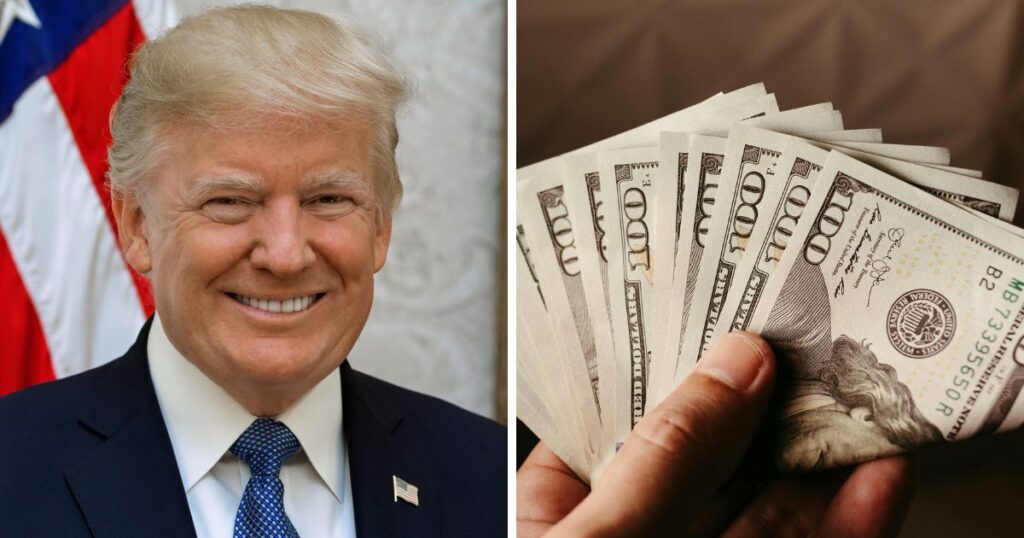
The bill has been named as Reimbursement for American Workers Act and it will be unveiled this week. The bill proposes a tariff rebate check program. This program would distribute at least $600 per adult and dependent child. This will mirror the COVID-19 stimulus payments that were issued in 2020.
This legislation aims to redirect funds collected through tariffs as direct cash payments to US workers and families. Many of these tariffs were implemented during the Trump administration.
Senator Josh Hawley has been a vocal supporter of President Donald Trump‘s trade policies. He has argued that American families deserve to reap the benefits of those tariffs.
“Americans deserve a tax break after four years of Joe Biden‘s policies that have devastated families’ savings and livelihoods,” said Hawley.
Just In: GOP Senator Josh Hawley (Missouri) proposes a Denmark-style plan where the US government pays 80% of worker wages.
“Beginning immediately, the federal gov should cover 80% of wages for workers at any US biz, up to the nat’l median wage, until this emergency is over” pic.twitter.com/BbcTgiIaXj
— Heather Long (@byHeatherLong) April 9, 2020
He then went on to say that his legislation would allow hard-working Americans to benefit from the wealth that Trump’s tariffs are bringing back to this country.
The bill has the following provision:
$600 Rebate Checks: The bill guarantees a minimum $600 payment per adult and dependent child.
Higher Payouts Possible: If tariff revenues exceed projections for 2025, the rebate could be even larger.
Income-Based Reductions: The full amount would phase out for higher-income earners:
- 5% reduction for joint filers with income above $150,000.
- 5% reduction for heads of household earning above $112,500.
- 5% reduction for individuals earning more than $75,000.
🔥Senator Hawley, responding to President Trump’s statement about tariff rebates, says he will introduce legislation in the Senate to send EVERY working person in America a check. pic.twitter.com/qZWOEviNRx
— XRP NESARA-GESARA QFS 3.0 (@NesaraGesara0) July 26, 2025
The rebate checks would be issued similarly to pandemic-era stimulus payments. It will utilize the IRS infrastructure and banking details provided through tax filings.
The bill is still in its proposal stage. Yet it has generated interest among lawmakers. This will give them a tangible way to address cost-of-living challenges and inflation, and they can present this as a solution to their constituents too.
Supporters argue that the plan provides a “Made in America” approach. And the money used will be from tariff revenue. There will be no borrowing or raising taxes for these payments.
This model ensures that the money that was originally collected from foreign goods entering the US economy, is returned to the American families.
However, critics question whether tariffs generate enough for the bill to make sense. They ask if there is a surplus revenue to sustain meaningful, widespread payments. They also “point out that tariffs can increase costs for American businesses and consumers. This rise in prices will balance out the extra money people are receiving.
Josh Hawley’s American Worker Rebate Act? Total scam. Sending tariff cash to Americans just fuels inflation.
We voted to SLASH the debt, not hand out $600 checks like it’s candy. Hawley’s out here playing dumb with our money.
PAY OFF THE DEBT, don’t waste it. @HawleyMO… pic.twitter.com/O8vKYqGXAA
— The Jake Buzz (@thejakebuzz) July 29, 2025
Still, for lower- and middle-income families, the idea of receiving a rebate check is always welcomed. It offers an opportunity to ease financial pressure. In an era where rising living costs and economic volatility has caused issues of homelessness and other familial problems, even the smallest of acc direct payments can provide much-needed relief.
This bill could represent a rare bipartisan opportunity. It could bring short-term economic relief to American households. However, it will also reignite debate over the roles of tariffs and trade policy in shaping the US economy.