



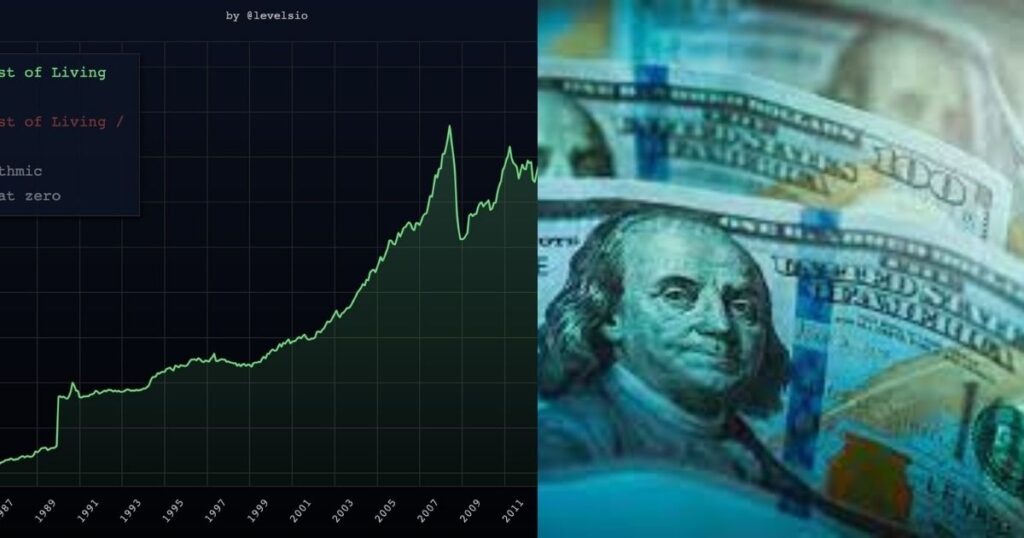
Every year, Social Security does a Cost-of-Living-Adjustment (COLA). It is based on the inflation rate. And its projection is usually done a year prior. For 2025, the adjustment was 2.5%. Based on this, the amount of social security payments changes.
However, it is not a foolproof method, and the projected COLA is usually done a year prior. For 2025, the adjustment was 2.5%.
The 2026 Social Security cost-of-living adjustment (COLA) is projected to rise by 2.5%. It is the same as seen in 2025. This adjustment shows the ongoing efforts to make sure that the benefits are at par with inflation. However, it understandably falls short every year.
Many retirees believe it is not up to the mark with what is necessary to keep pace with the real cost of living.
Experts and organizations like the Senior Citizens League (TSCL) believe that this projected 2.5% increase is based on modest inflation trends. These trends are observed in recent Consumer Price Index (CPI) data.
This projection marks the fifth consecutive year with a COLA above 2%. Yet many retirees are worried if this adjustment would be sufficient to combat the everyday inflation and their financial challenges.
The SSA uses CPI-W for its COLA adjustments. CPI-W measures price changes for urban wage earners and clerical workers.
However, critics don’t believe this is the right matrix since they do not show the spending habits of retirees. The maximum number of people who avail social security benefits is retirees or disabled people. These recipients spend more on healthcare and housing essentials.
Mary Johnson is a policy analyst from TSCL. She has noted that the current system is inherently flawed.
“The CPI-W doesn’t show the actual inflationary pressures seniors face,” she explained. “Retirees often experience higher price increases in categories the CPI-W underweights or overlooks entirely.”
Those who are living on fixed incomes, a raise of merely 2.5% is insufficient. Rising costs for prescription drugs, long-term care and utility prices are continuously growing. They hamper the purchasing power of those living on social security.
There are several seniors who either rely on credit cards or have to look at the family savings to just cover the basic essentials every month. This is true even after COLA increases.
Marjorie Collins of Ohio is a 71 year old retiree who said that she appreciated the small increase in the money but the truth is, she feels that she is falling behind more and more every year.
She also claimed that by the time the raise kicks in, prices will have increased again.
The Social Security Administration expects this increase will keep benefits in line with inflation. But the financial experts have warned that this little jump in money does very little to address the seriousness of the financial gap.
While the retirees are not satisfied by COLA, there is a real threat of a cut of the social security by 23 next year. The only thing that can save social security is if congress comes out with a plan that seems very highly unlikely.
In this context, small COLA increases are welcomed, but they are viewed by many as temporary band-aids over deeper structural issues. Advocates continue to push for the adoption of the CPI-E, an experimental index that tracks the spending patterns of the elderly more accurately, as the basis for COLA calculations.


