

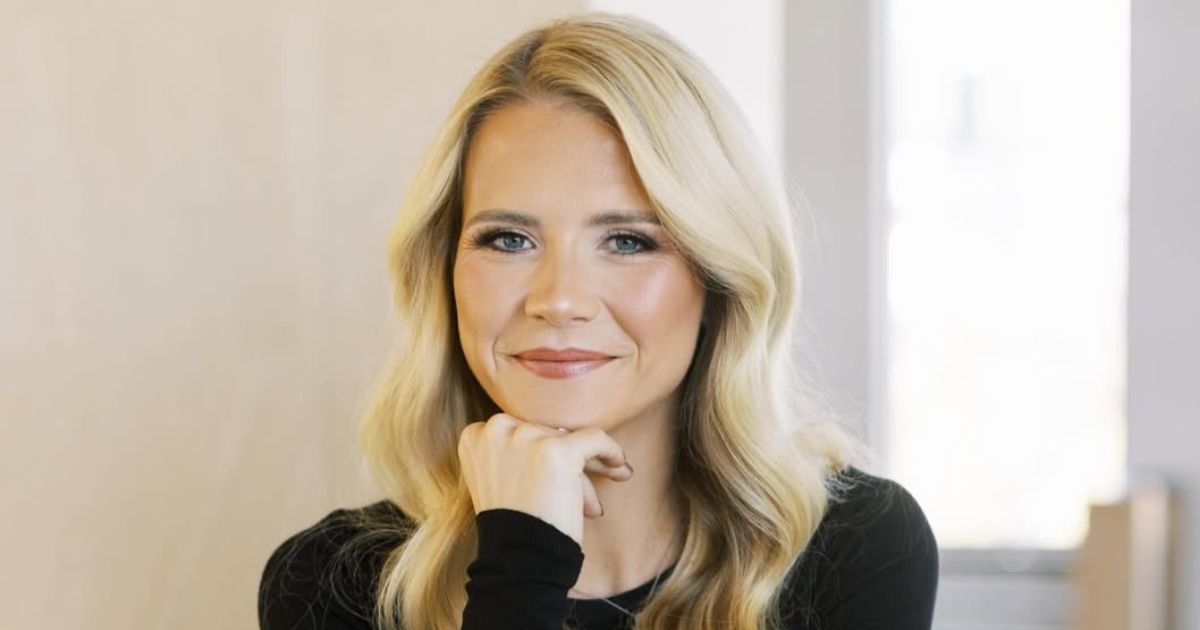
On June 5, 2002, Elizabeth Smart, a 14-year-old girl from Salt Lake City, Utah, was kidnapped from her Federal Heights home by Brian David Mitchell. The kidnapper and his wife, Wanda Barzee, held Smart captive for nearly nine months, first on the outskirts of Salt Lake City, and later in San Diego County, California.
Mitchell reportedly broke into Smart’s home, where she lived with her parents and five siblings, in the early hours of June 5, and abducted the teen from her bedroom, which she shared with her then nine-year-old sister, Mary Katherine.
While Katherine woke up during the kidnapping, she pretended to be asleep. Thinking the kidnapper had left with her sister, Katherine attempted to reach her parents’ bedroom, only to see him standing outside the room where the boys of the family lived.
The child narrowly avoided being seen by Mitchell and headed back to her bed, where she reportedly hid for over two hours. Katherine eventually woke up her parents, Ed and Lois Smart, informing them about the incident, but the pair believed she had a bad dream.
However, they realized the gravity of the situation after they found a window screen cut with a knife. The following day, Ed and Lois Smart appeared on TV to publicly request that the kidnapper return their daughter.
View this post on Instagram
Meanwhile, the Laura Recovery Center organized a major search operation, involving up to 2,000 volunteers each day, as well as dogs and planes. Unfortunately, the intensive community-led search came to an end with no trace of Smart.
Katherine, the only witness to the incident, told officials that the abductor threatened Smart with a knife (which the then nine-year-old mistook as a gun) and also described the man in as much detail as she could recall. However, she never had a chance to see his face.
The child’s statements were of little use, and no solid evidence like fingerprints or DNA were available at the scene. Hundreds of suspects were questioned, and several at-large criminals were sent back to prison, but Elizabeth Smart remained missing.
Richard Ricci, a handyman who had worked for the Smarts and had a history of drug abuse, was considered a potential person of interest early in the investigation. However, he was jailed on an unrelated parole violation and died of a brain hemorrhage in August 2002, while in prison.
Meanwhile, Mitchell and Barzee held Smart captive at a camp in the woods. The teenager also accompanied her abductors several times in public, but was never recognized by any individual due to how the duo dressed her, mostly using headscarves or a face veil.
Mitchell and Barzee decided to leave Salt Lake City with Smart in September 2002, relocating to San Diego County, California. They reportedly held the teen in an encampment in a dry creek bed in Lakeside, but also made sure to move in different camps across San Diego County.
In October 2002, Elizabeth Smart’s sister, Mary Katherine, reportedly had an epiphany that the voice of her sister’s kidnapper matched that of a man named Immanuel, whom the family had briefly hired for a day to work on the roof and rake leaves.
Investigators were skeptical about Katherine’s statement as the man had worked for the Smart family only for a day, some time earlier. However, the family made a sketch artist draw Immanuel’s face, releasing the drawing to the media in March 2003.
The image was displayed on shows on Larry King Live and America’s Most Wanted, before being recognized by Mitchell’s relatives. Meanwhile, two different couples spotted the kidnapper with a woman and a girl in Sandy, Utah, on March 12, 2003.
Once the sighting was reported, the Sandy Police Department immediately dispatched officers to the location. After cops made contact with Smart, she initially claimed her name was Augustine Marshall. However, she was identified as Elizabeth Smart during questioning and eventually rescued.
Officers also arrested Mitchell and Barzee after separating them from Smart. During her court testimony, Smart revealed that Mitchell declared himself to be a Davidic King who would “emerge in seven years, be stoned by a mob, lie dead in the streets for three days and then rise up and kill the Antichrist.”
Smart said that Mitchell allegedly told her she was the first of the many virgin brides he had decided to abduct. He also claimed that each of these brides would accompany him during his battle with the Antichrist.
The victim went on to reveal she was subjected to mental, physical, and sexual abuse during captivity. Mitchell allegedly r—- her multiple times, kept her shackled to a tree, made her drink alcohol and consume drugs, forced her to change her name, starved her, and fed her garbage. Smart also revealed how Barzee aided Mitchell in the abuse, labeling her the “most evil woman.”
Following her rescue, Smart went on to become an advocate for missing persons and victims of sexual assault. She also tied the knot with Matthew Gilmour in February 2012, and has three children currently.
Meanwhile, Barzee was sentenced to 15 years in federal prison in 2009 for her role in the kidnapping. However, she was granted early release on September 19, 2018, for previously uncredited time served.
On the other hand, forensic psychologists diagnosed Mitchell with having antisocial and narcissistic personality disorders. Debates surrounding his competence to stand trial went on for several years before he was declared mentally capable in 2010. He was sentenced to life imprisonment without the possibility of parole in 2011.
View this post on Instagram
A Netflix documentary film titled Kidnapped: Elizabeth Smart was released on January 21, 2026. The film recounts the harrowing ordeal Smart endured during her abduction, featuring first-hand accounts from Smart and her family members.
Speaking of the documentary, Smart told Netflix TUDUM, “I hope that people who watch this [documentary can see] that even after terrible things happen, you can still have a wonderful life.”
Revealing why she decided to open up about her story, Smart said, “After I was rescued, when I first got home, I did not want to talk about what happened with anyone. And when the trial finally happened, I remember sitting up on the stand, giving these answers, and feeling like there was no context around them.”
She continued, “I remember thinking that if all of this was going to be out there anyway, I wanted it to have some meaning, and for it to serve a purpose.” Elizabeth Smart concluded, “I wanted to have some ownership over my story. That helped me decide to share it.”