



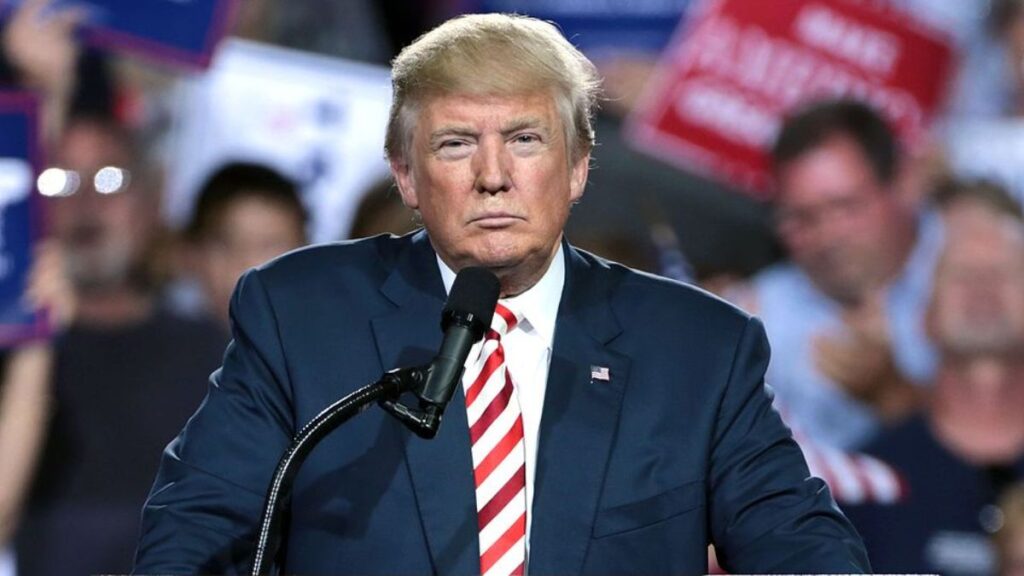
President Donald Trump opened a bipartisan governors meeting at the White House on Feb. 20 with a surprise move that quickly changed the tone of the room. After greeting nearly all 50 state leaders at a working breakfast, he turned to the press and said, “Thank you. You can leave now.”
The brief order, delivered in the East Room, ended media access just minutes after it began and set off a scramble of shouted questions as reporters were ushered out, per USA Today.
Trump said he wanted governors to speak “very candidly” and promised to take questions later. The annual winter meeting with the National Governors Association (NGA) has long been a bipartisan ritual in Washington, a chance for state leaders to compare notes with the White House. This year, it arrived with visible strain.
🚨 BREAKING: President Trump just walked into the governors meeting at the White House and the place ROSE UP in a standing ovation.
Then he looks over at the press and goes:
“I guess we’re going to be asking the press to leave… that way we can talk very candidly. You can leave… pic.twitter.com/FGqw1h6Y2j
— Charlie’s Voice Rising (@CharlieK_news) February 20, 2026
In the days leading up to the breakfast, Trump criticized Democratic Govs. Wes Moore of Maryland and Jared Polis of Colorado and initially signaled they would not be invited. The move prompted pushback from Oklahoma Gov. Kevin Stitt, the Republican chair of the NGA, who said the gathering could not be considered an official NGA event unless all governors were welcome.
The White House later reversed course and invited the two Democrats. Still, the NGA withdrew from formally hosting the session, saying it could not participate in a meeting that excluded members. Stitt said he would attend but clarified it was not an NGA-backed event.
As reporters were escorted out of the East Room, several shouted questions. One asked whether Trump was considering military action against Iran. “I guess I can say I am considering it,” he replied, without elaborating. He did not answer a question about whether he had spoken to Moore regarding a massive sewage spill into the Potomac River.
Trump: *walks in* Hello everybody…. I guess we are going to be asking the press to leave. That way we will talk very candidly… You can leave now. pic.twitter.com/RjaByMTHny
— Acyn (@Acyn) February 20, 2026
Earlier this month, a collapsed pipe known as the Potomac Interceptor released at least 200 million gallons of raw sewage into the river, according to regional officials. The system is overseen by authorities in Washington, D.C., Maryland and Virginia. Trump publicly blamed Moore for the incident in the days before the meeting. Moore has urged federal support for recovery efforts and said he would attend the White House session to work with governors of both parties.
The governors gathering has grown more pointed in recent years. At last year’s winter meeting, Maine Gov. Janet Mills told Trump “See you in court” after he warned her state could lose federal funding over his executive order aimed at barring transgender athletes from school sports. That exchange echoed through statehouses nationwide and marked a sharper edge in what had traditionally been a policy-focused forum.
This year’s event unfolded against the backdrop of upcoming midterm elections and renewed debate over federal and state authority. Former Montana Gov. Steve Bullock, who chaired the NGA during Trump’s first term, has said the meetings were once designed to address federalism — the balance of power between Washington and the states — rather than spotlight individual disputes.
.@POTUS invited the Fake News into his meeting with Governors — then immediately kicked them out: “You can leave now.” 🤣
Didn’t stop them from asking stupid questions though. pic.twitter.com/D6qegnbfxl
— Rapid Response 47 (@RapidResponse47) February 20, 2026
The president’s decision to clear the press drew swift reaction online. The White House “Rapid Response” account on X posted that Trump had invited the “Fake News” into the meeting before asking them to leave. Well-known anchor Wolf Blitzer said he could not recall a previous instance when a president opened such a meeting to cameras and then dismissed them moments later. Reporters and commentators across social media debated whether the move signaled a desire for privacy or a break from precedent.
Inside the East Room, the doors closed and the conversation continued out of public view. Outside, the questions lingered in the hallway, unanswered but unmistakably heard.