



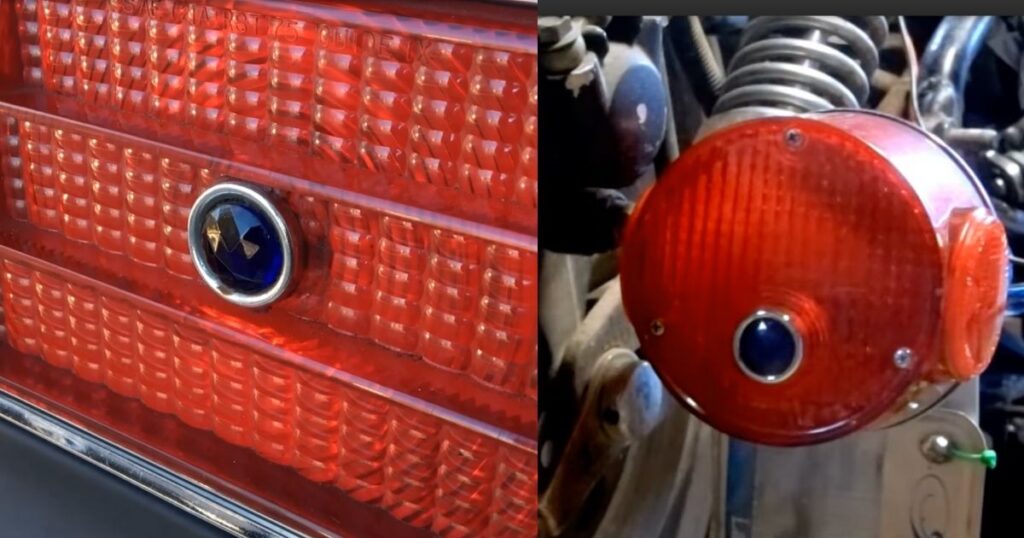
The world of automobiles is ever developing. New designs keep popping up. Whether cars or bikes, people always want to make changes to their vehicles. Every time there is a new customization, it remains popular for some time and then disappears when something new comes into the market. Among these ever-changing modifications, the fascination with the blue dot taillight remains strong.
The blue dot is still a common addition for enthusiasts looking to give their motorcycles a unique touch of design. However, motorcyclists must carefully evaluate the visibility issues and legal ramifications that accompany their visual appeal.
Many people may not be aware but this trend is not just a fad. This trend started in the 1950s. The blue dot tail light style became a defining feature of hot rod and custom vehicle culture. This alteration usually includes putting a tiny blue or purple lens into a car’s taillight. It is done to create a distinctive glow.
The addition reflected the spirit of the period and was more than just a practical addition. It was a symbol of individualism and defiance. Over time, the fad spread throughout the motorcycling community. This especially became famous among owners of antique Harley-Davidsons, café racers, and custom choppers. This trend connected contemporary riders to a timeless, past period of car design. The blue dot evolved into a symbol of nostalgia.
The blue dot is more than simply a style decision for many motorcycle riders. It has a clear relation to the past. The blue dot is a simple modification that lets riders copy vintage cars and custom motorcycles from the 1950s and 1960s.
Businesses like Mooneyes provided blue dot lenses and do-it-yourself kits that enable installation for the majority of fans. These stores have been important in keeping this trend alive. This trend is a great way to stand out from the crowd. Also, the process is so simple that anyone can do it.
The blue dot gives riders an air of nostalgia. Adding the blue dot on a motorcycle brings back the memories of a more carefree and rebellious era. It gives riders a means to live in the past.
Blue dot may be appealing, but the details of safety are still a topic of conversation. Some motorcycle riders claim that the blue dot improves brake light visibility in low light.
Yet, experts point out that red light has significantly better penetrating power in fog and bad weather.
The cool blue hues can make it harder to see, particularly on older motorcycles that do not have the latest LED technology.
Blue dots on motorcycle taillights, a trend dating back to the 1950s, are making a comeback on custom bikes like Harleys. While some argue they enhance visibility, they may reduce it in fog. The mod risks a fine due to federal regulations, but enforcement varies by location. pic.twitter.com/dt0Z1qFyNy
— NTC Feed (@NTC_Feed) May 6, 2025
The modification of the blue dot taillight is troublesome from a legal perspective. All vehicles, including motorbikes, are required by federal law to have red taillights. This regulation is in place to standardize illumination. Adding a blue dot is against these rules, and motorcycle riders who decide to do so risk fines or other consequences.
Another concern is that the blue taillight lighting is associated with emergency vehicles. Blue lights are for police, ambulances, and other emergency vehicles in various countries. On the road, this linkage could lead to confusion, particularly in low-visibility situations.
For motorcycle lovers, the blue dot taillight modification combines nostalgia, style, and history. It surely provides a distinctive option for customizing a bike. Yet, riders should be aware of the potential safety and legal ramifications.