Smithsonian museum opens first major health exhibition in nearly 30 years
Objects from a pioneering artificial heart to a Covid-19 vaccine vial trace medical advances and disparities in access.
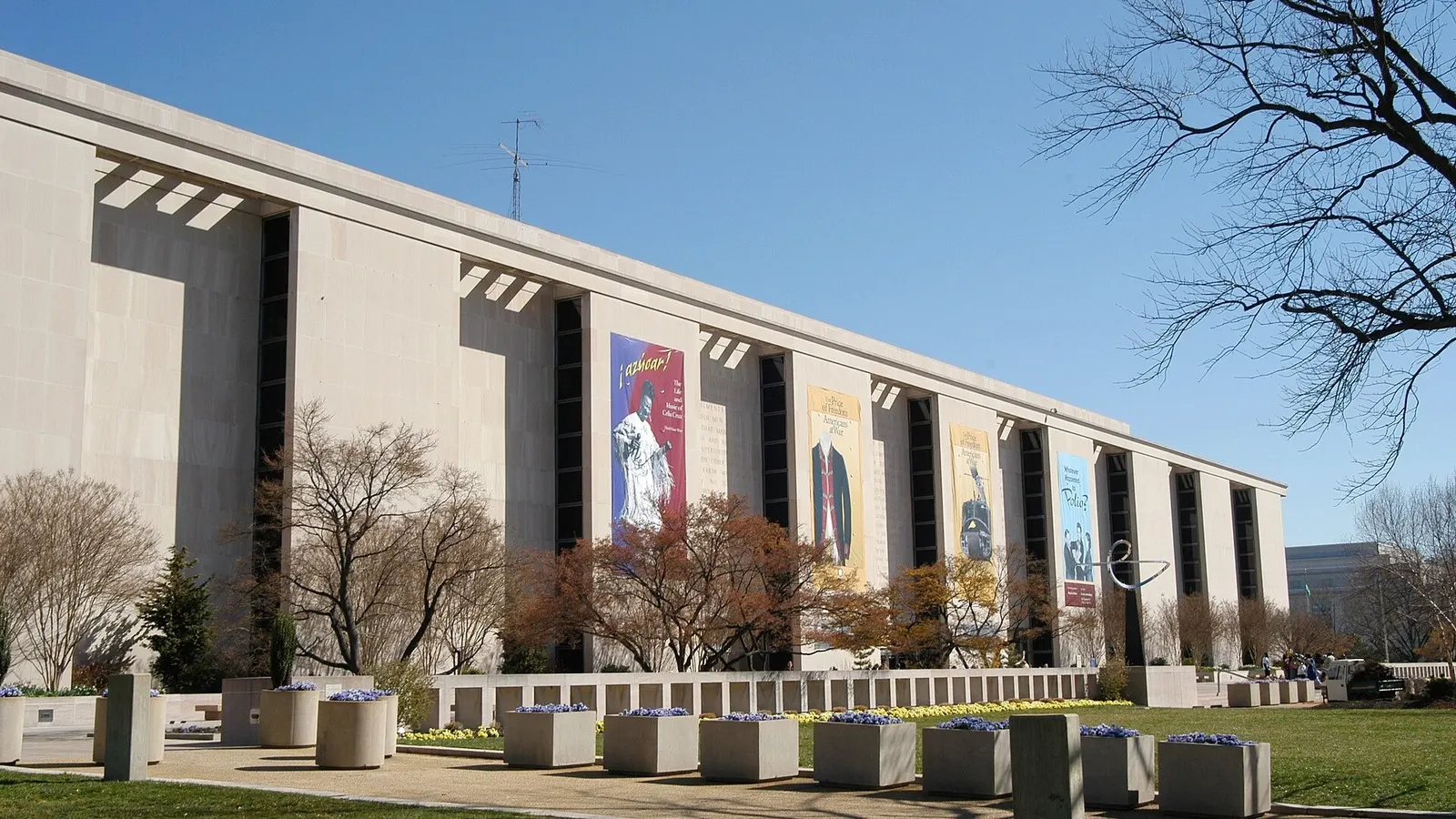
The Smithsonian's National Museum of American History has opened "First Do No Harm," an exhibition spanning centuries of American medical advances and the unequal distribution of their benefits.
Museum director Anthea Hartig, who oversaw its curation, told Smithsonian Magazine, a Smithsonian Institution publication, that access to lifesaving advances has ranged from unlimited for some people to very limited for others.
"Our museum hadn't done a major exhibition on health and medicine in nearly 30 years," Katherine Ott, a curator in the museum's Division of Medicine and Science, told the magazine.
Among the objects are nurse Sandra Lindsay's cracked-soled clogs, which she wore while treating patients at a Queens hospital during the Covid-19 pandemic. The New York City nurse became the first person in the United States to receive the authorized Covid-19 vaccine outside clinical trials in December 2020.
"We did no treatment to them, because the cracks and the losses were part of the story," museum object conservator Dawn Wallace told the magazine.
A nearby vial once held one of the earliest Covid-19 vaccine doses.
Other cases reach further back. They hold a syringe virologist Jonas Salk used to test his polio vaccine in the 1950s and a medallion preserving penicillin mold from bacteriologist Alexander Fleming.
Surgeon Domingo Liotta created the first total artificial heart, which Denton Cooley implanted in Houston on April 4, 1969. The exhibited device supported patient Haskell Karp for about 64 hours before he received a human heart transplant.
Another vaccine's origin lay at home. Microbiologist Maurice Hilleman took material from his 5-year-old daughter Jeryl Lynn's throat to his lab in 1963 after she contracted mumps. Hartig told the magazine that Hilleman could develop a vaccine "because his daughter got it."
A canister used to preserve the Jeryl Lynn viral seed stock is displayed at the museum. The "Jeryl Lynn strain" remains in use in measles-mumps-rubella vaccines, according to the magazine.
The exhibition examines disparities through documents including the 1985 "Report of the Secretary's Task Force on Black & Minority Health," commissioned by Reagan-era Health and Human Services Secretary Margaret Heckler.
"And in 1985, this report comes out, which for the first time was when the federal government acknowledged the discrepancies in health care," Hartig told the magazine.
A sputum flask made to prevent tuberculosis dates to the late 19th or early 20th century. People identifying as racial and ethnic minorities accounted for 90.1% of U.S. tuberculosis cases in 2023, the magazine reported.
Covid-19 vaccination disparities feature, too. Research from 2022 indicated that facilities in counties with higher Black populations were less likely to administer vaccines in May 2021, according to the magazine.
A separate March 2022 report from the Centers for Disease Control and Prevention found initial-dose vaccination coverage was 58.5% in rural counties and 75.4% in urban counties.
"Rural is a unique health care delivery environment. It's not just a smaller version of urban," Alan Morgan, CEO of the National Rural Health Association, told the magazine.
The HIV/AIDS section displays awareness buttons, pamphlets and belongings of the Rev. Steve Pieters, who spoke openly as a gay man living with AIDS in the 1980s. His medication bottles show "what he had to do to try, after he was positive for HIV, to stave off death," Hartig told the magazine. Pieters survived the decade and died of sepsis in 2023 at age 70.
A section covers the history of eugenics, and images contrast a boy who recovered from smallpox with another suffering from the disease. "The topics are pretty difficult for a lot of people," Ott told the magazine.
"First Do No Harm" will remain on view for about three years.