Pakistan sends troops to Saudi Arabia to bolster defenses against Houthi attacks
The military says the force will help protect Mecca and Medina; the Houthis warned any new coalition will fail and floated a ceasefire via Oman.
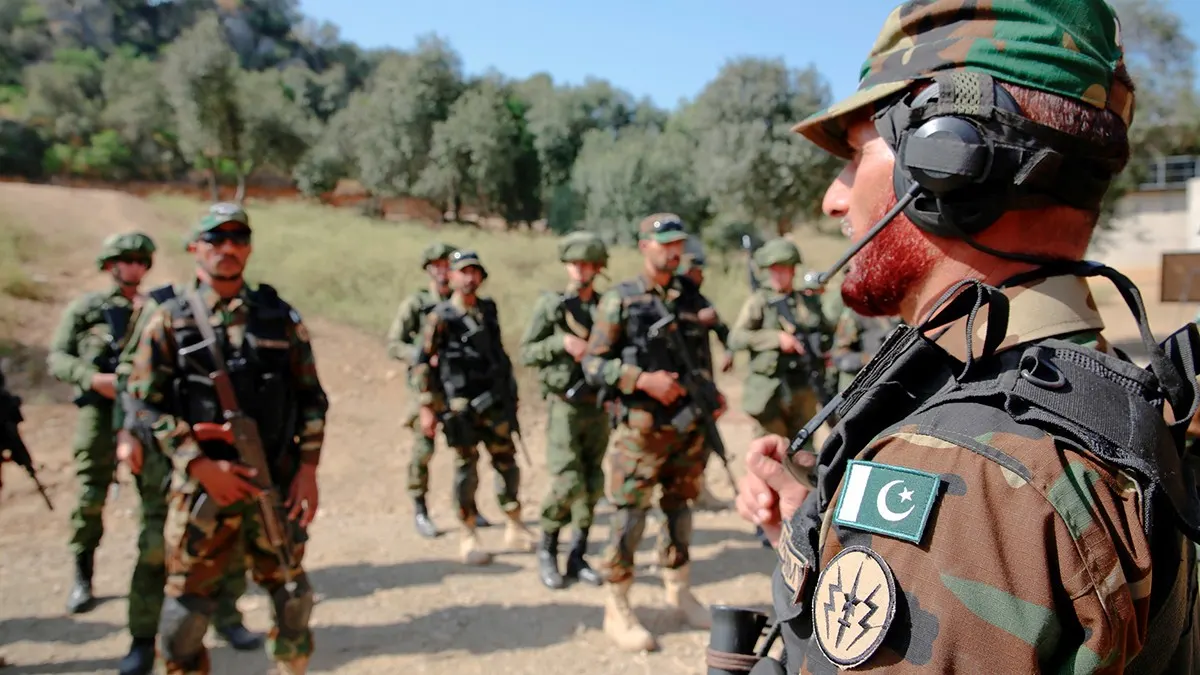
Pakistan's military said Sunday it is sending troops to Saudi Arabia to strengthen the kingdom's defenses against Houthi attacks, its first known deployment under a three-nation pact that includes Turkey.
Pakistani Defense Minister Khawaja Muhammad Asif and Saudi Ambassador to Pakistan Rajeh Albugamy attended a send-off ceremony Saturday. The military said one aim is protecting religious sites in Mecca and Medina, home to Islam's two holiest mosques.
"This deployment will contribute toward further strengthening the Kingdom's defensive capabilities amid emerging security concerns," the military's media wing, Inter-Services Public Relations, said in a statement. It said the troops would serve "within Saudi territory, under agreed commitments."
The statement did not disclose the number of soldiers, their assignments, how long they would stay or when they would arrive. Abdul Rahman Matar, Al Jazeera's Islamabad bureau chief, said the force includes about 100 soldiers of various ranks from the Pakistan Army's Lahore Corps in Punjab.
Pakistani soldiers are not new to the kingdom. They have been stationed there since the early 1980s to train and advise Saudi forces. Last month, Pakistan's Foreign Ministry said a "substantial" number of its forces were deployed in Saudi Arabia in a defensive capacity. It was not immediately clear how the new troops relate to them.
The three countries signed the Mecca Joint Defense Agreement on Aug. 7, declaring an attack on one member an attack on all three. They describe it as defensive, and Pakistan has repeatedly said it is not directed against any country, including neighboring Iran.
At a meeting in Riyadh last month, the three agreed on arrangements for the rapid deployment of military forces and equipment to Saudi Arabia. Their officials met again in Islamabad two days before Sunday's announcement. There they condemned Houthi attacks on Saudi Arabia as "heinous" and vowed closer military cooperation.
Asif previously said Pakistan would use "whatever means are available" to defend Saudi Arabia against Houthi attacks, though Pakistan has ruled out attacking the Houthis inside Yemen.
Houthis criticize Pakistan, Turkey
The Houthis answered on Saturday. Mohamed Ali al-Houthi, a member of the group's Supreme Political Council, said in a statement that Turkey and Pakistan had ignored "the (Saudi) aggression, the blockade, the killings and the ongoing crimes" in Yemen.
"Just as the previous coalition against our country … ended in failure, any future coalition will likewise fail," he said, referring to the 2015 U.S.-backed, Saudi-led coalition.
In early November, the Houthis accused Pakistan of joining Saudi strikes in rebel-held areas of Yemen, calling it "an extremely dangerous escalation that cannot be accepted or left unchallenged." Pakistan rejected the accusation.
The fighting continued through the weekend. Saudi Arabia said its defense system shot down missiles Saturday and Sunday, while the Houthis said they carried out five successful attacks on King Khalid International Airport and energy and military sites, UPI reported, citing EuroNews.
Shortly after Pakistan's announcement, the Houthi-affiliated al-Masirah outlet reported a Saudi attack on Yemen's Ras Isa port, where the coalition had earlier warned civilians to evacuate, Al Jazeera reported. Saudi coalition spokesman Turki Al-Maliki said coalition forces were responding militarily to what he described as Houthi "targeting of civilians and civilian objects."
Yemen's civil war escalated this summer, when the Houthis captured Yemen's Red Sea coast, imposed a blockade on Saudi shipping and launched direct attacks on Saudi Arabia. Saudi Arabia has accused the Houthis of firing missiles and drones toward Mecca and Medina since then. The Houthis have denied attacking the two cities.
Later Sunday, Mahdi al-Mashat, president of the Houthis' Supreme Political Council, said the group had presented a ceasefire initiative, conveyed to the Saudis through longtime mediator Oman. He said it would reopen the Sanaa airport and rebel-held ports in return for an end to Houthi strikes on Saudi airports and ports.
The plan would also allow Yemeni oil exports, with revenues paying civil servants' salaries, in return for the Houthis not attacking Saudi shipping and oil facilities, al-Mashat said. In a televised speech, he said the Houthis are willing to hold talks.
There was no immediate comment from Saudi Arabia or Oman.
Sources
- UPI: Pakistan troops to support Saudi-led coalition against Houthis - UPI.com
- Deutsche Welle: Pakistan confirms Saudi Arabia troop deployment amid ongoing Houthi attacks
- AP News: Pakistan will send troops to Saudi Arabia to strengthen defenses after Houthi attacks
- NBC News: Pakistan says it will send troops to Saudi Arabia to bolster defenses following Houthi attacks
- Al Jazeera: Pakistan sends troops to Saudi Arabia to boost defences against Houthis