China's fixed-asset investment falls 8.1% as factory growth slows
Retail sales rose 0.4% in October, below the 0.8% gain analysts expected and down from September's 1.1% increase.
China’s retail sales, factory output and investment missed forecasts in October, official data showed Monday, with fixed-asset investment falling 8.1% in the first 10 months of the year.
Retail sales increased 0.4% from a year earlier, the National Bureau of Statistics said, below the 0.8% gain analysts had expected.
The increase slowed from September’s six-month high of 1.1%, despite a week-long holiday in October. A separate survey by financial data provider Wind put economists’ forecast at 1.07%, the South China Morning Post reported.
The property downturn has reduced household wealth for a fifth year, while consumer spending has remained weak. Nikkei Asia reported that policymakers are holding back on broad stimulus.
Factory growth slowed, too. Industrial output increased 4.8% year over year, below the 5.3% forecast in a Reuters poll. September’s increase had been 5.5%, a five-month high.
The drop in fixed-asset investment from January through October, which includes property and infrastructure, exceeded analysts’ expected decline of 7%. CNBC said this year’s decline had no precedent outside the Covid-19 period.
One labor measure improved. Surveyed urban unemployment slipped to 5.1% from 5.2%, coming in below estimates.
For people aged 16 to 24, excluding students, the September unemployment rate was 18%, near its highest point in a year.
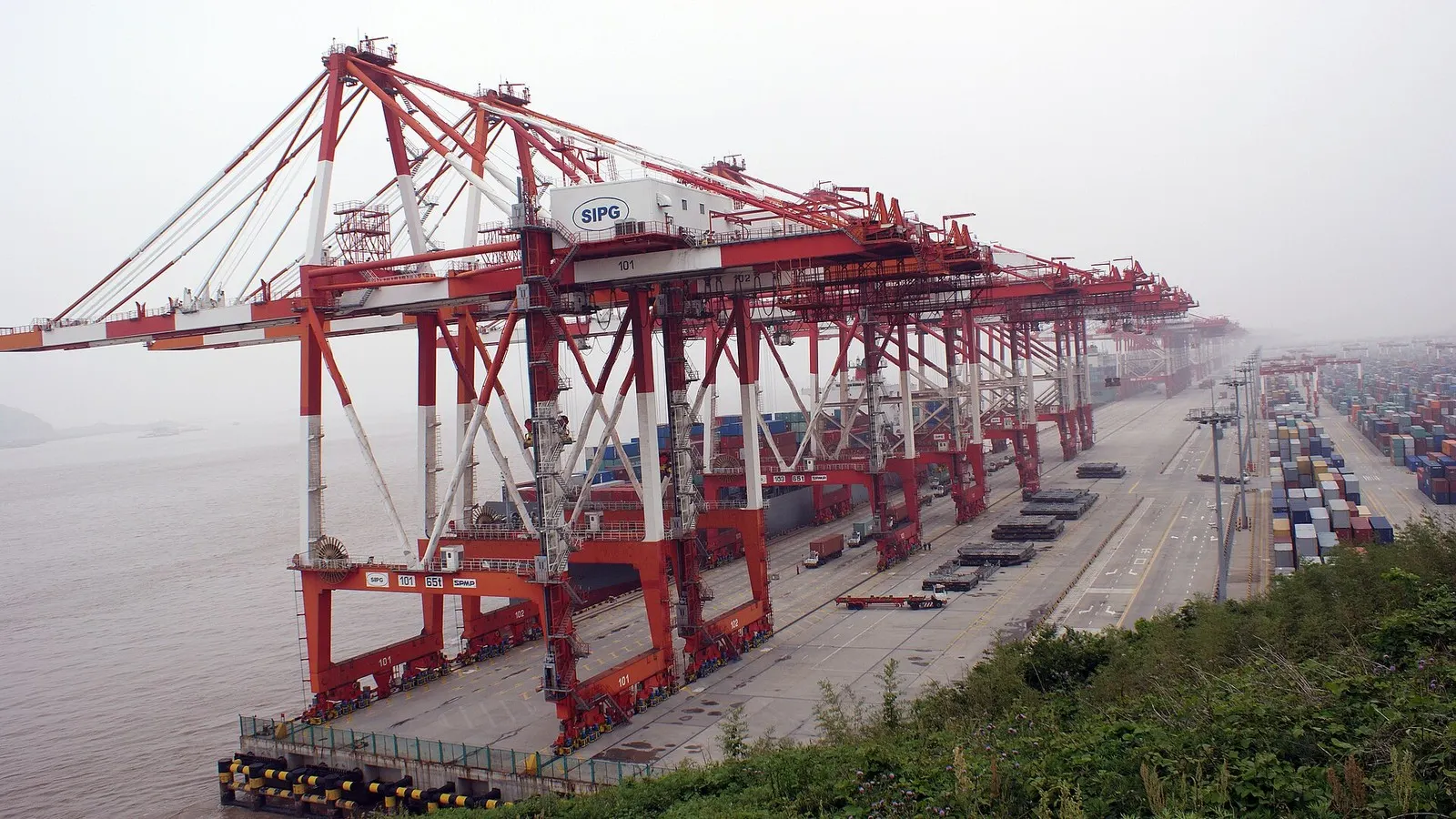
Exports, by contrast, rose more than expected, gaining 35.2% in October. China’s trade surplus reached $1 trillion by October, faster than it ever had before.
The surplus is on course to exceed last year’s record $1.2 trillion.
Consumer inflation eased to 0.7% in October, the first slowdown after two consecutive monthly increases. CNBC said the combination of subdued inflation and strong exports depicts an economy increasingly dominant in global markets while struggling to generate prosperity at home.
Worldwide demand for artificial intelligence equipment and technology has driven much of the export momentum.
Zhiwei Zhang, president and chief economist at Pinpoint Asset Management, said “The market was already worried” about a slowdown in AI capital spending before a matter involving Nvidia renewed scrutiny of restricted chip flows to China.
“Now the risk has become even more serious,” Zhang said, and he sees further downside risk to global growth next year.
China’s major trading partners have stepped up calls for its economy to rebalance, while Citi Research analysts said additional European Union trade restrictions pose a downside risk to exports next year.
“More EU trade measures targeting China look plausible to us, potentially adding to tensions ahead,” the Citi analysts said. They said Beijing is likely to consider reasonable, practical concessions in negotiations, including import pledges, sector-specific deals and cuts to value-added tax rebates.
The economy grew 4.5% in the third quarter, rebounding from three-year lows.
Goldman Sachs forecasts growth of 4.6% in 2026, compared with 5% in 2025, followed by 4.5% in 2027.
The bank forecasts consumer inflation at 0.8% this year and 0.5% next year. It pointed to weak domestic demand and abundant aggregate supply, along with easing commodity-price momentum and potential disruption from AI.
In a note Monday, Goldman said its growth forecast keeps China on course for Beijing’s target of doubling 2020 per capita income by 2035.
Sources
- CNBC: China’s slowdown deepens in October as industrial output, retail sales, investment miss estimates
- Nikkei Asia: China's factory output grows but household spending remains subdued
- scmp.com: Breaking | China’s economic activity falters in October amid sluggish retail sales | South China Morning Post