



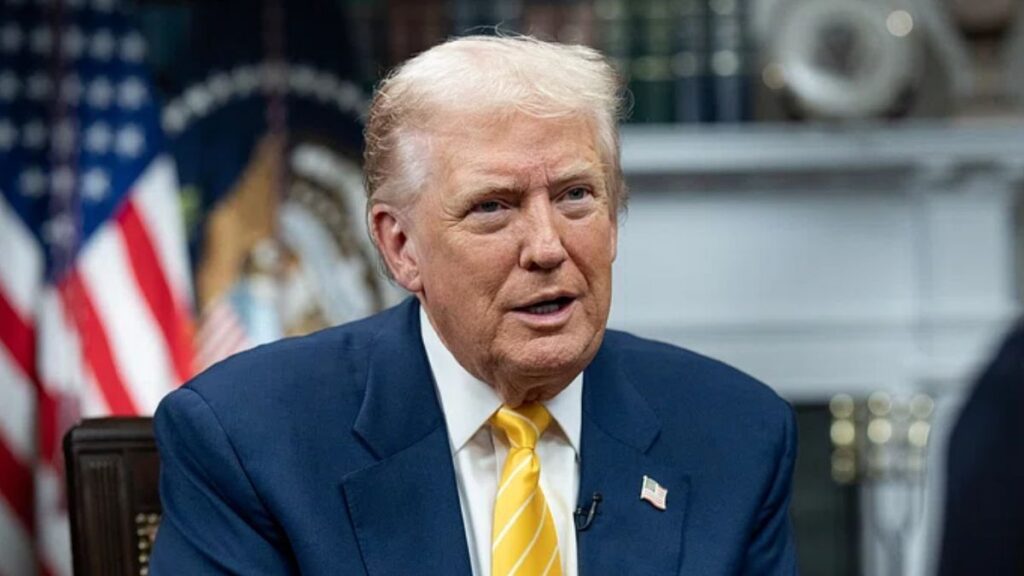
Donald Trump stated that Iran has agreed to suspend its nuclear program indefinitely as negotiations towards a final agreement edge closer. But, doubts remain as key details about the deal remains unresolved and Iran has still yet to publicly confirm the claim.
In a phone interview with Bloomberg, Trump said “most of the main points are finalized” and suggested talks to finalize the deal could take place as soon as this weekend. He described the process as moving quickly, adding that a final agreement to end the conflict would “probably” come together in the near future.
The deal comes after the United States and Israel teamed together in airstrikes against Iran at the end of February. Trump’s comments could mean that there has been a significant shift in positions. If his remarks are confirmed, it could indicate the possibility of the military operations coming to an end since the Iran’s nuclear program has played such a major role in the war.
🚨IRAN REOPENS STRAIT OF HORMUZ🚨
IRAN’S FM:”PASSAGE FOR ALL COMMERCIAL VESSELS THROUGH STRAIT OF HORMUZ IS DECLARED COMPLETELY OPEN.”
TRUMP CONFIRMS: “FULLY OPEN AND READY FOR FULL PASSAGE.”
BLOCKADE LASTED DAYS, COSTING IRAN BILLIONS.
WILL IT STAY OPEN AFTE….Show more https://t.co/IH2BGw6SRL pic.twitter.com/qTCs50vYVD
— Money Ape (@TheMoneyApe) April 17, 2026
However, the situation remains uncertain because of two reasons. For one, Iran has not publicly confirmed that they are stopping their nuclear program as yet. But, they have reopened the Strait of Hormuz, which is a key global shipping route for many countries. This waterway carried about 20 percent of the world’s oil supply and Iran declared that it was fully open to commercial traffic and shipping.
At the same time, Trump indicated that U.S. pressure would continue in Iran. The president acknowledged the reopening of the strait, he said the American naval blockade against Iranian ships and ports would stay in place until a deal is reached. And it is the very nature of this dual messaging—progress toward a deal while continued military pressure continuing— that highlights exactly how fragile and changing the negotiations are at this point.
One major point of contention is around financial incentives. Earlier reports indicated that for giving up its enriched uranium stockpile, Iran could receive up to $20 billion in frozen funds. But, Trump stated that the country would not receive any frozen funds as part of the agreement.
The 79-year-old also indicated that the U.S. would help Iran to clear naval mines from the Strait of Hormuz. This could also be seen as a sign that both parties could be attempting to stabilizing the situation as talks continue.
🚨 WOW! President Trump just said this:
“We will MAKE LEBANON GREAT AGAIN!”
Trump and Marco Rubio held the first Lebanon-Israel talks in DECADES, peace has broken out
MASSIVE WIN for the region!
And the Iranian threat will officially be DONE. 🇺🇸 pic.twitter.com/rZSeTMIFm8
— Eric Daugherty (@EricLDaugh) April 17, 2026
Even though there are definite signs of progress, the lack of direct confirmation from Tehran is creating doubt and unease. Together with the continued enforcement of military sanctions, it has led to questions about how close the U.S. and Iran really are to coming to a final agreement.
In the meantime, the negotiations towards peace are not the only ones moving forward. The fighting between Israel and the Iran-backed Hezbollah group has been temporarily been halted as they reached an agreement for a 10-day truce in Lebanon. This may be another signal that there is space for diplomatic progress between these two nations too.
Interestingly, the news that the Strait of Hormuz is now open for the “remaining period of ceasefire” immediately led to an economic win, after warnings of a possible slowdown. The cost of a barrel of Brent crude oil fell sharply to below $90 a barrel, after having cost more than $98 mere hours before.