



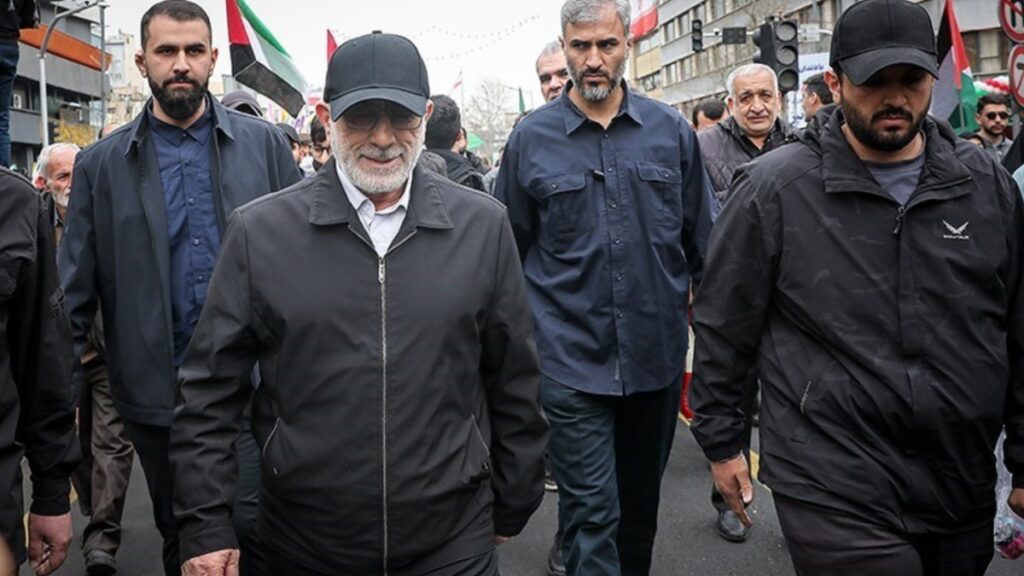
Iran’s top civilian and security leaders attended Tehran’s annual al-Quds Day rally on Friday. This happened just hours after U.S. Defense Secretary Pete Hegseth stated that Iran’s leadership was “desperate and hiding,” describing them as “cowering,” and added, “that’s what rats do.”
Iranian state media and several news reports showed President Masoud Pezeshkian, Foreign Minister Abbas Araghchi, and national security chief Ali Larijani among those at the demonstration in the capital.
These public appearances followed U.S. attempts to portray Iran’s leadership as weakened after nearly two weeks of strikes by the U.S. and Israel. Hegseth also said Iran’s new Supreme Leader, Mojtaba Khamenei, was “wounded and likely disfigured,” questioning his ability to lead since he issued a statement in writing instead of appearing on video.
Reuters noted that there have been no images of Khamenei since the Israeli strike at the war’s onset killed much of his family, including his father, former Supreme Leader Ali Khamenei.
Images released by Iranian state media showed more senior officials attending Quds Day rallies in Tehran, including Foreign Minister Abbas Araghchi, President Masoud Pezeshkian and cleric Alireza Arafi, a former member of Iran’s interim leadership council and head of the… https://t.co/HApvi24J0x pic.twitter.com/tV0s5cZMuM
— Iran International English (@IranIntl_En) March 13, 2026
The rally in Tehran presented a different public image. State television showed Pezeshkian greeting supporters and taking selfies in the rain. Other officials, including judiciary chief Gholam Hossein Mohseni Ejei and police chief Ahmad-Reza Radan, were also visible at the march, according to AFP reporting in The Economic Times.
Larijani told state TV that the recent attacks on Tehran were “out of fear, out of desperation,” claiming that bombing demonstrations represented failure rather than strength.
Iran’s Supreme National Security Council Secretary Ali Larijani stated that the people’s message during the Quds Day march is their steadfast opposition to the enemy. pic.twitter.com/nFOuDqIjmQ
— IRNA News Agency ☫ (@IrnaEnglish) March 13, 2026
The march occurred on al-Quds Day, an annual event in Iran aimed at showing support for Palestinians and opposing Israeli control over Jerusalem. ABC reported that Iranian media portrayed Pezeshkian and Araghchi’s presence as an act of defiance. Al Jazeera and other sources noted that the rally continued even as strikes hit near central Tehran, resulting in at least one woman reported killed along the demonstration route.
This rally marked one of the clearest public displays by senior Iranian officials since the February 28 strike that killed Ali Khamenei and started a succession process within the Iranian government.
Mojtaba Khamenei issued his first statement on Thursday via a television presenter, promising to keep the Strait of Hormuz closed and urging neighboring countries to shut U.S. bases or face being targeted by Iran. An Iranian official informed Reuters earlier this week that the new supreme leader had sustained minor injuries but was still in operation.
The war expanded further on Friday. Reuters stated that the United States had struck more than 6,000 targets in Iran over 14 days, while Iranian drones were spotted over Kuwait, Iraq, the United Arab Emirates, Bahrain, and Oman. Additionally, the report and other sources confirmed that six U.S. service members died when a refueling aircraft crashed in western Iraq.
For now, the Tehran rally provided Iran an opportunity to show visible continuity at the government’s top levels, despite Hegseth questioning whether the nation’s leadership was in hiding.
The images from the capital did not clarify the condition of Mojtaba Khamenei, but they did demonstrate that many of the country’s highest officials were willing to appear in public as the conflict entered its second week. The new Supreme Leader had always maintained a low profile prior to the conflict and is not a well-known figure in Iran.


