



A group of lawmakers from both parties is asking the Government Accountability Office to look into how the Justice Department managed the release and redaction of records related to Jeffrey Epstein.
This adds new pressure on the department, months after Congress ordered the records to be made public. Senators Jeff Merkley, Lisa Murkowski, Ben Ray Luján, and Dick Durbin sent a letter on March 11. They want the GAO to conduct an independent audit of the department’s redaction practices and report to Congress.
The senators believe the Justice Department may not have followed the Epstein Files Transparency Act. This law, signed by President Donald Trump in November 2025, required the department to release the records with only limited redactions for victim privacy and national security. The lawmakers pointed out that the law explicitly prohibits redactions based on political sensitivity or damage to reputations.
In their letter, the senators noted that several reports highlighted issues with how the records were handled. These include incomplete disclosures, inconsistent redactions, and the release of some victim-identifying information.
Text messages from 2019 reviewed by CNN reveal that the governor of the US Virgin Islands told Jeffrey Epstein he would intervene in a regulatory dispute on his behalf. CNN’s Andrew Kaczynski reports.
Read more: https://t.co/pJtOfhJVTz pic.twitter.com/bivfZKDV7v
— CNN (@CNN) February 25, 2026
The Washington Post reported that lawmakers asked the GAO to check how the files were reviewed, what guidance officials used, how many staff were involved, and whether the department followed the law correctly.
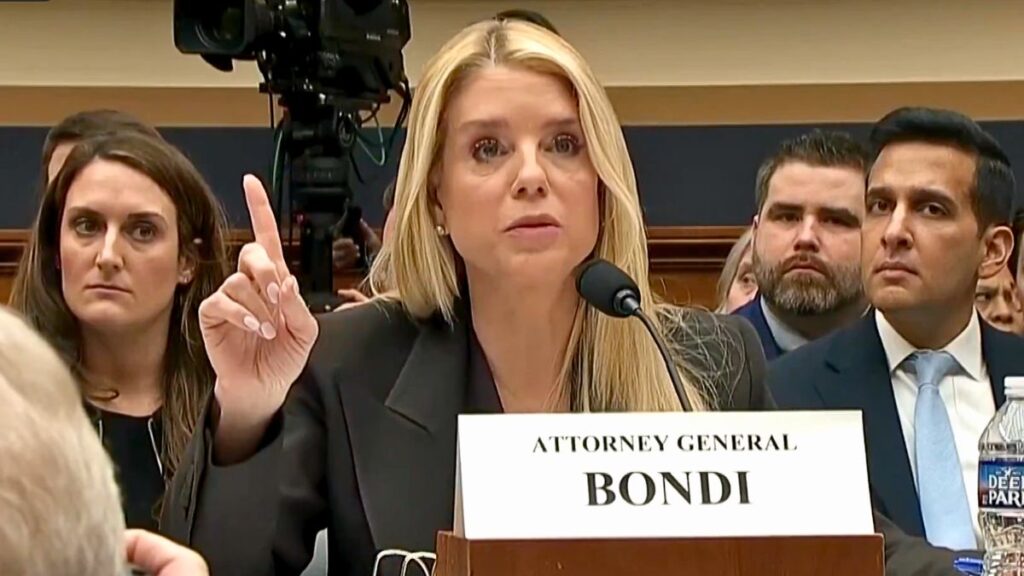
This request adds to an ongoing congressional review of the Justice Department’s management of the case files. The House Oversight and Government Reform Committee voted on March 4 to subpoena Attorney General Pam Bondi for a closed-door deposition regarding the department’s compliance with the law.
All Democrats on the panel and several Republicans supported this vote. The Washington Post also reported that lawmakers criticized the department for missing the law’s deadline, withholding some records from public access, and sometimes failing to protect victims’ identities properly.
Pam Bondi says the DOJ is done releasing Epstein files.
More than half of 6 million documents remain sealed.
Sen. Kennedy: “Release everything.”
Rep. Mace: “The days of cover-ups are over.”
The DOJ’s response: no. pic.twitter.com/vrC0vLFsXS
— Epstein File Search (@epsteinsearchin) March 9, 2026
The Justice Department has defended its actions. During a House Judiciary Committee meeting last month, Bondi stated, “More than 500 attorneys and reviewers spent thousands of hours carefully reviewing millions of pages to comply with Congress’s law. We’ve released more than 3 million pages, including 180,000 images, all to the public, while doing our best within the time frame set by the legislation to protect victims.”
Reuters also reported in February that the department sent lawmakers a letter with a long list of politically exposed persons named in the files, even when those individuals were mentioned only in press articles or other incidental documents.
Concerns about the department’s compliance have lingered since late December. At that time, the Justice Department admitted it would not meet the statutory deadline and revealed that more potentially relevant files had been found.
The Associated Press reported that federal prosecutors in Manhattan and the FBI identified over a million additional documents that could relate to the Epstein case, which delayed the full release. The AP also mentioned that lawmakers from both parties had already called for an inspector general review, insisting that victims should receive “full disclosure” and the guarantee of an independent audit.
The new GAO request indicates that scrutiny from Congress is not letting up. With lawmakers in both the Senate and House continuing to seek answers, the Justice Department now faces growing demands about whether it followed the law, applied redactions consistently, and provided the complete public accounting that Congress requested.